
An unprecedented judicial scandal with long-term effects. “In order to have a fair debate, we have to start from what happened in the last 10 years”


The documentary “Captured Justice” once again revealed the camps of Justice, each of them trying to convince why justice is on their side. The debate, with the exposure of all the flaws of the system, is absolutely necessary, draws the attention of the former head of ANI, Horia Georgescu.
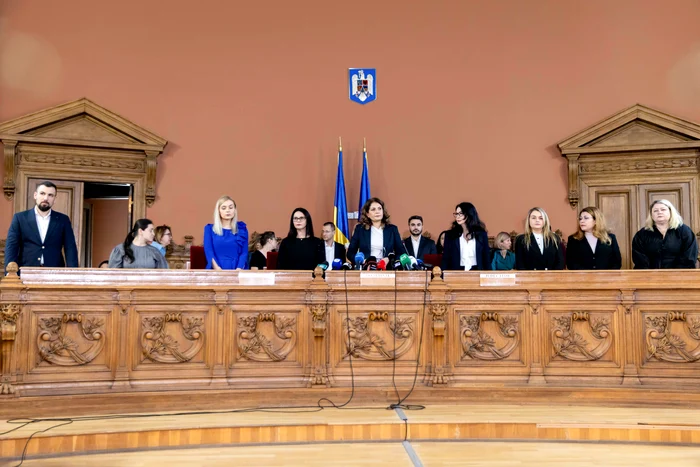
“The documentary certainly puts a nail in the credibility of the judiciary”. Photo: Inquam
The documentary “Captured Justice” made by Recorder generated wide debates in the world of the judiciary and in society. The magistrates constituted in the camps were joined by members of civil society, simple people (some outraged by the situation in the system, others convinced that they were presented with a well-written movie script) or activists with old states. Politicians, in turn, sensed the opportunity and took a position. What we see today seems like a battle front where the combatants are facing each other more fiercely than ever for the seizure of power. What we don't see is who or if anyone is trying to address the needs of the average citizen for whom, if he needs to seek justice through the courts, things drag on for years.
Strongly supported and promoted online, or circulated, as those who believe it is an organized action and not just journalistic, the documentary “Captured Justice” has been generating discussions in all media for more than 72 hours. How they are conducted will become clear if a return to the “show of handcuffs” is intended or if the moment will be used to scrutinize the real dysfunctions of the system.
It is certain that around 600 active magistrates out of the 6,500 have positioned themselves, until Friday, on the side of the “reformists”, the majority on the list being, as in the Recorder documentary, the prosecutors. Among them, Laura Codruta Kovesi, the former head of the DNA resigned before taking over the leadership of the EPPO. Several retired judges and prosecutors were added to them.
About what the Romanians saw in the documentary “Captured Justice”, what they did not see and should have seen, about the reactions triggered and the scenarios related to who uses the moment created, I spoke with the former head of the National Integrity Agency, Horia Georgescu, who in turn went through a trial in which he was sent to court by the DNA, later being acquitted.
“The documentary certainly puts a nail in the credibility of the Romanian Judiciary”
The interest in the topic of Justice generated by the Recorder documentary should be exploited to discuss with all the actors involved and find solutions where problems are identified. A debate is needed, admits Horia Georgescu, but with all the cards in front and analyzing including the practices of 10 years ago, and these strongly contested:
“The Recorder's report showed some elements that supposedly do not work in the Judiciary. But, in order to have a fair and comprehensive debate, we must also start from what happened in the Judiciary in the last 10 years. And here I am referring to some similar situations reported by other magistrates, when certain cases were handled by the “cover” method and in which the judges showed a fear if they did not dictate sentences that were in favor of the National Anti-Corruption Directorate. So, in order to have a fair debate, we must start from these premises”.
The analysis of the events that happened in the recent past should also be based on a non-public report of the Superior Council of Magistracy which shows that more than 800 people were acquitted without decisions of the Constitutional Court and without legislative changes, says Georgescu, “and in this situation, no one answered and no one raised issues that would call into question what happened”.
“It is obvious that what the Recorder reports must first be verified by the competent institutions. And here we are mainly talking about the CSM and the Judicial Inspection. For the rest, there are some testimonies of some magistrates in the system, or who worked in the system, which bring some situations to attention. But from here to having a complete picture of what is happening in the judiciary, I repeat, it must be approached completely and with a broad perspective on things, because otherwise we can only see things from one perspective”the former head of ANI drew attention.
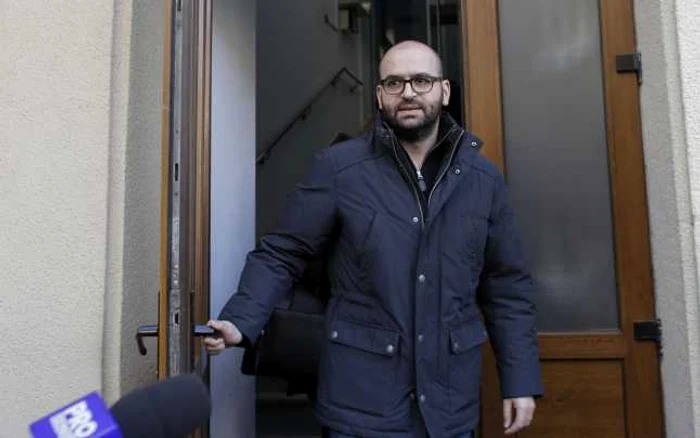
Horia Georgescu, accused by the DNA, acquitted by the court PHOTO: Inquam Photos/George Călin
A first effect of the wave of indignation created by the journalistic material has already occurred. “The documentary, for sure, puts a nail in the credibility of the Judiciary in Romania”Georgescu pointed out.
The reaction of President Nicușor Dan is very important in this regard, believes the former head of ANI:
“Things need to be debated. It's very important how will president dan react in this situation and how it will relate to what the magistrates say. Because, if we are to talk about fear, the fear was that a magistrate in the past would not dictate a solution favorable to DNA and he would be arrested. There are wiretapping warrants, there are all kinds of methods that were used at the time. So it's complicated to make a verdict. It is obvious that a debate is needed in this sense”.
System vulnerabilities and undisputed figures
Less discussed than the sentences handed down in the exposed cases are the issues that deserve at least as much attention: the lack of prosecutors, the lack of resources in terms of specialization in the prosecution of certain cases, the very high caseload/magistrate, etc. Even how a sentence is pronounced should be discussed, Georgescu believes: “Magistrates give sentences according to the law, not by who we like or not. That is, the popular justice of handcuffs, which we all know and the debate in society was extensive, was a deep mistake and greatly discredited the judicial system. I would look and, I repeat, statistically, the acquittal rate that the prosecutor's offices had in the last 10 years. This is where we have to go. Because if we have a payment rate of 80%, against a payment rate of 10% or 20% – which is quasi-accepted in the international legal community -, I think this can be a technical benchmark and this is where we should start”.
On the other hand, the positioning of certain “activist” magistrates, as Georgescu calls them, risks deepening the cleavage between prosecutors and judges: “Many of them, I don't want to generalize, are from those who gave decisions in court or managed cases in the sense that the law did not matter, but whether a person was publicly controversial or not. I say this with all responsibility and some of the reasons of some judges of the Court of Appeal who wrote in black and white in certain cases are famous, that – although it is not a prejudice, this is accidental -. Which is far beyond the letter of the law”.
Although it is difficult to predict how the moment will be cut, “this matter will further question the justice act, no matter how we look at it”Georgescu also drew attention.
The Superior Council of the Magistracy is the forum in a position to manage the situation created, and from this point of view the positioning of President Nicușor Dan, who showed that the judicial system must solve its problems, is evaluated by the former head of ANI as a balanced one.
“There may be suspicions that someone wants to influence a verdict one way or another”
The moment is a turning point and brings face to face a conservative political spectrum, which does not want changes, arguing that legislative changes have already been made that led to the lifting of the Cooperation and Verification Mechanism (MCV), which means that from a technical point of view things are set, and a political spectrum consisting of the USR, part of civil society and activist magistrates who want the return “to another status quo”, to a situation that in the past has generated great controversy, abuses and a 80% payment rate in DNA files, Horia Georgescu also showed: “I think that President Dan's solution is correct and the solution will also find its way there, within the judicial system, without slippages, without abuses, with the compliant application of the law. We are in vain surprised by some acquittals, as long as the decisions given were contrary to Romanian legislation and the jurisprudence of the Constitutional Court”.
A change in legislation at a time when discussions cannot be conducted “coldly” would not be appropriate, Georgescu believes: “I don't think that at this moment a change in the legislation is opportune. What should we change? We changed the Criminal Code. Appointments changed in 2022. What should be changed? To benefit other interest groups? In this situation we are not talking about a change in the interest of the citizen, but we are talking about a change in the interest of another group, another vision”.
As for one of the scenarios presented, namely that through the movements generated they would like to remove the head of the High Court of Cassation and Justice, Lia Savonea, accused of orchestrating the way the system works, so that the file on the role of the former SRI deputy Florian Coldea can be secured a favorable final sentence, Horia Georgescu says that it is a mistake to focus on individuals:
“Florian Coldea has a case pending before the Court of Appeal. It has been circulated in the press that certain networks can take advantage of this type of debate, in the sense of eliminating the president of the High Court, Lia Savonea, who has proven a strong leadership in Justice. My opinion is that this is where the big mistake is. Instead of focusing on the fundamental issues of Justice, which we discussed earlier, we limit ourselves to individuals. Obviously, any matter can be speculated in one direction or another. It is difficult to draw a conclusion at this moment, but there can certainly be suspicions that someone through a public or media debate wants to influence a verdict in one way or another”.


