How Romania came to close thousands of cinemas. “It was a phenomenon that hangs very hard in the performance of any Romanian films,” says Tudor Giurgiu – Infography


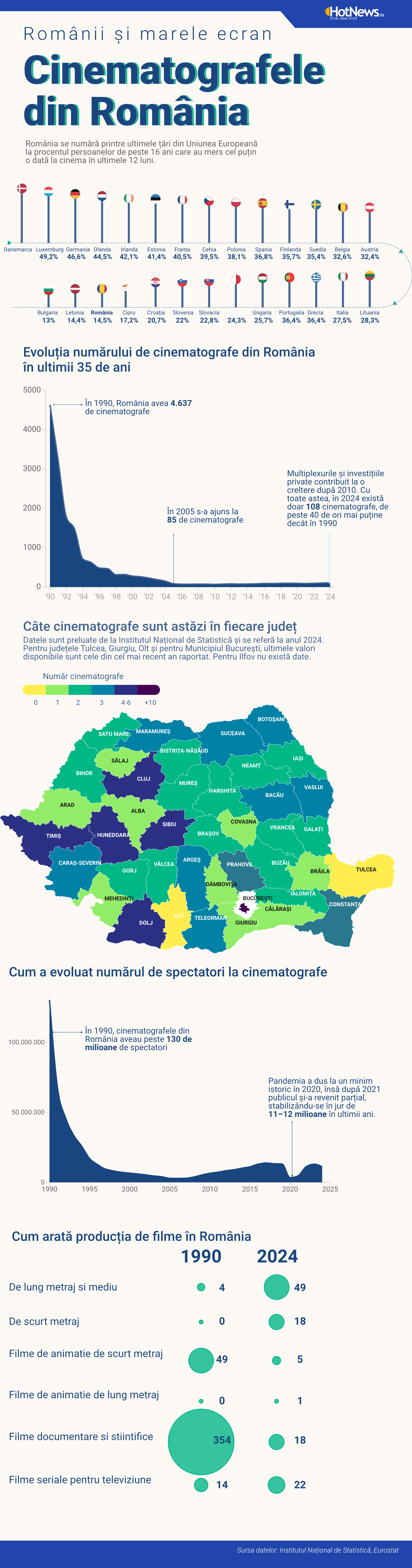
Romania had, in 2024, 108 cinemas, which hosted over 11 million spectators. The number is a substantially smaller one than the “apparent glory period”, as the director Tudor Giurgiu calls it. In '90, there were 4,637 cinemas and film installations throughout the country. Since then, a decline followed, which then overlapped “paradoxically over a revival of local cinema”. This did not happen only in Romania, but also in other European countries.
- This article was carried out within the cross -border project Pulse by Stefania Gheorghe (Hotnews, Romania), Federico Caruso (OBCT, Italy), Francesca Barca (Voxerop, France), Petr Jedlička (Deník Referndum, Czech), Lena Kyriakidi (Efsyn, Greece).
“Before 1989.” It is the direct answer given by the Ada Solomon film producer, (“Asphalt Tango”, “Aferim!”, “The terrible Ivana”, “Alișveriș”) when asked by HotNews about the glory period of the Romanian cinema.
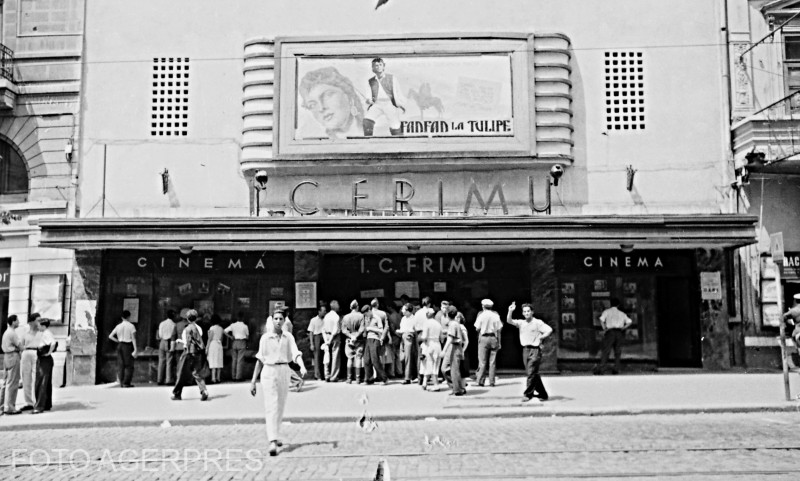
“What was different was that you didn't have such an offer a click away, including television, there were two programs, and in recent years, before Ceausescu's fall there were two hours a day. That was all you had,” she says.
So walking to the cinema was a very common and popular activity.
So popular that, in 1990, in Romania, 4,637 cinemas and film installations operated, that is 40 times more than they are today.
Box office films were doing over 1 million tickets sold. Today, the box office successes are from 100,000 tickets sold, says Ada Solomon.
The impression is also shared by Tudor Giurgiu, film producer and president of Transylvania International Film Festival (TIFF).

“The apparent glory period, if we judge from the perspective of the cinema and entrances to the cinema, it was the one before 1989, when going to the cinema was probably the only activity, besides the theater, of pure entertainment.
The year in which no Romanian film was produced
After the fall of the communist regime, the decline and closure of the cinemas began, writes Osservatorio Balkani is Caucaso Traseuropa (OBCT). Then, the post-communist administration had to reorganize entire sectors from zero, including the cultural sector.
The decline felt towards the end of the 1990s. “The management of the state network Romania Film did not know how to keep up with the privatization, with the new type of market economy. The cinemas have degraded, the quality of the films and it. The year 2000 is a complete year of reset, because it was the year in which zero Romanian films were produced,” explains Ada Solomon.
“Until the appearance of the malls it was a continuous degradation of the exposure offer,” says Ada Solomon.
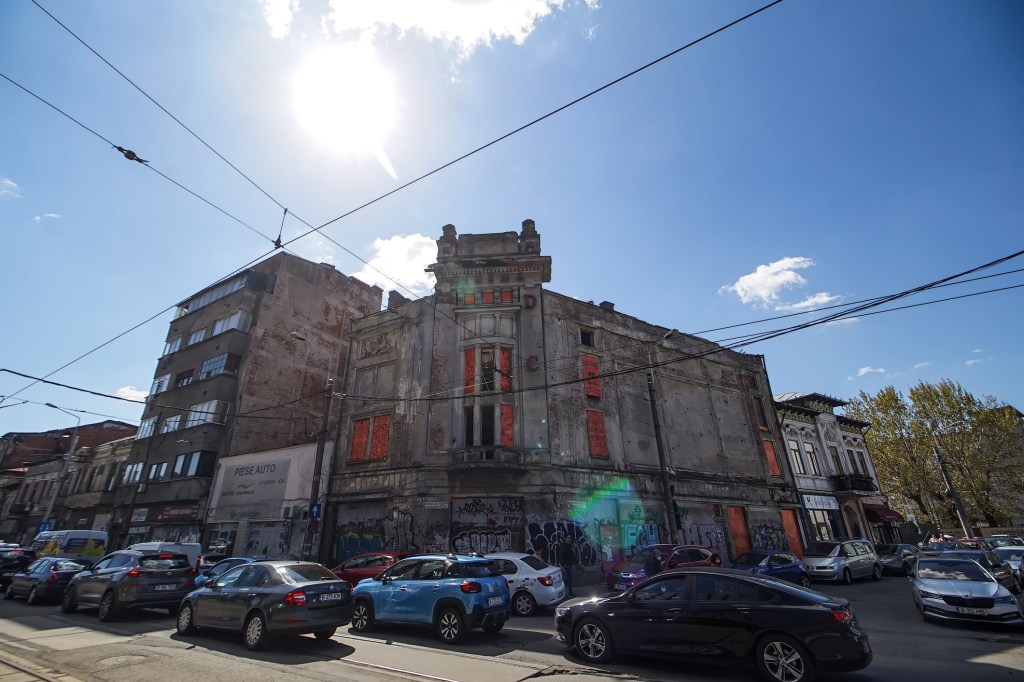
An example is the Marconi cinema, which has been in comparison for over 20 years. In July 2025, ARCEN announced the taking over of the space and transforming it into a cultural space by 2029.
Romanian films, better sold abroad “Due to the lack of cinemas”
When it comes to the decline of Romanian cinema, Tudor Giurgiu talks about “real estate robbery and lack of vision”.
“It was a robbery, a crime, but that spent with the extensions of the authorities and I am inclined to believe, even with their blessing. It was a phenomenon that today hangs very hard in the performance of any Romanian films, because we do not have sufficient rooms related to the population of the country, and, of course, this decline, this state of death. Local cinema, ”explains TIFF President.
He claims that, after 2005, the Romanian films were awarded on international scenes and were sold better abroad than in the country “because, in particular, the lack of cinemas, where they could be shown.”
And in the Czech Republic, cinemas were opened. Now they open others
The situation of Romania is not a singular one. The Czech Republic, a country that has almost 11 million inhabitants, 8 million less than Romania, now has 1,200 cinemas throughout the country. It seems like a high number, being ten times higher than the number of cinemas in Romania.
In reality, here was a decline. In 1989, 2,025 cinemas operated throughout the country, so about 800 cinemas were closed.
Now, however, new cinemas appear, mainly in small cities, where movies are designed in cultural spaces, and the rooms are also used for balls, anniversaries of the city or other events, writes Deník Referendum
The similar example in Italy
A similar example comes from the city of Milan, the economic engine of Italy. Here, in the 1960s there were 160 cinemas. Today there are only 30. Less than ten are in the center of the city, and the rest are in large shopping centers.
“In the 1970s and 80s you could park anywhere, you arrived quickly and comfortably at the most central cinemas. Now, if a movie ends late and there are no means of transport, or you use your personal car, or stay at home,” says Giuseppe Rausa, author of several volumes on the history of cinema, for Obct.
He says, however, that the cinema also has a part of responsibility for the decline, because “he did not know how to differentiate and cope with the terrible competition of television and his channels around the 1990s, and the public, a demotivated, started to go to the cinema only for the big productions, pushing many small rooms.”
“The narrative has changed”
As well as in Albania. In 1999, Tirana had nine cinemas, and today it remained with three: Agimi Art Center, Maks Velo, on the outskirts of the city, and the cinema of the Central Film Archive.
In addition to the three cinemas in the state administration, there are a few other cinemas in the malls.
“There is still a lot to do, but the narrative has changed: the cinema is increasingly regarded as a heritage, not just as a business,” says Jonid Jorgji, director and head of the Agency for Creative Industries within the Tirana City Hall.
The number of cinemas in a country is directly linked to another aspect: that of consumption. And in this chapter Romania does not occupy a leading place. In fact, Romania is among the latest EU countries for the percentage of people over 16, who have gone at least once to the cinema, in the last 12 months. And this in the context in which the popularity of streaming platforms has increased.
More details, in the second part of the article, which will appear on Hotnews.

The PULSE project is a European initiative to promote cross-border journalistic partnerships, co-financed by the European Commission (DG Connect) within Multimedia actions by Grant Agreement LC-0272862. HotNews.ro collaborates in the project with other prestigious publications in Europe: Delfi (Lithuania), Deník Referndum (Czech Republic), the largest Austrian newspaper Der Standard (Austria), some of the largest publications in Greece – Efsyn, El Confidential, Spain, the largest Polish newspaper Gazeta Wyborcza, the oldest analytical and information site. MediaPool, one of the largest HUVG HUVG and Italian newspaper with economic profile for 24 hours, one of the oldest and most powerful publications in the peninsula.
Three renowned transnational media organizations-OBCT (Italy), N-OST (Germany) and Voxerop (France) will coordinate the project activities.