Threats from company keeping Russian assets frozen in EU revealed by probe into banker's strong ties to Moscow: 'You don't want to end up like this, do you?'

Euroclear, the Belgian securities institution that keeps most of Russia's assets “frozen” in the European Union, says the institution's chief executive secured protective services after being threatened, but denies that the banker who made the threats had any role in its activities. The reaction comes after a media investigation discovered the situation and the fact that the man in question had traveled to Russia numerous times, reports EUobserver and La Libre Belgique.
Olivier Huby, a 68-year-old banker, is a member of the Board of Directors of Mfex, a subsidiary of Belgian financial services giant Euroclear. It holds 193 billion euros worth of Russian Central Bank assets, frozen by EU sanctions after Vladimir Putin launched his full-scale invasion of Ukraine in February 2022.
Huby has no formal managerial or advisory role within Euroclear, but his position gave him privileged access to the institution's top executives in the run-up to EU negotiations with Belgium over the use of Russian assets to buy arms for Kiev and cover other needs of the Ukrainian state.
Investigative journalists found that Huby has such strong ties to Russia that he flew to the Putin-led country 155 times over the past 10 years, according to a joint investigation by EUobserver, Belgian magazine Humo, Belgian newspaper De Morgen and British NGO Dossier Center.
It alleges that Huby abused his privileges at Euroclear to try to arrange meetings between the depository's managing director, Valérie Urbain, and his Russian intelligence contacts. According to the investigative journalists' sources, Huby threatened Urbain and a second Euroclear executive after they refused the meetings.
Despite the threats, Urbain received no Belgian police protection and the French security firm Euroclear said it had never heard of him. “This raises serious questions about whether Euroclear, a real jewel of the EU, which manages €41 trillion worth of foreign assets, was adequately protected,” writes EUobserver.
The banker's ties to Russia
Analyzing Huby's travels, investigative journalists found that he booked 155 flights to and from Russia between January 1, 2015, and December 18, 2024. The information on his travels was obtained by the Dossier Center, a London-based NGO funded by Russian businessman Mikhail Khodorkovsky, one of Putin's exiled opponents.
The banker's travels included 14 flights after the total deterioration of relations between Russia and the EU following the invasion of Ukraine, after which Huby stopped traveling to Russia for a year.
He flew mainly to Moscow and St. Petersburg, but also to more exotic places, including Siberia, to places like Arkhangelsk, Izhevsk, Kazan, Krasnoiarsk, Novosibirsk, Tomsk and Yekaterinburg. His wife, Annette Huby, flew to and from Russia about 40 times during the same period, sometimes with him, sometimes alone.
“Huby is on the radar of several intelligence services,” a Western intelligence source told investigative journalists.
A second intelligence source said: “The frequency of his flights [în Rusia] raises suspicions and deserves further investigation”.
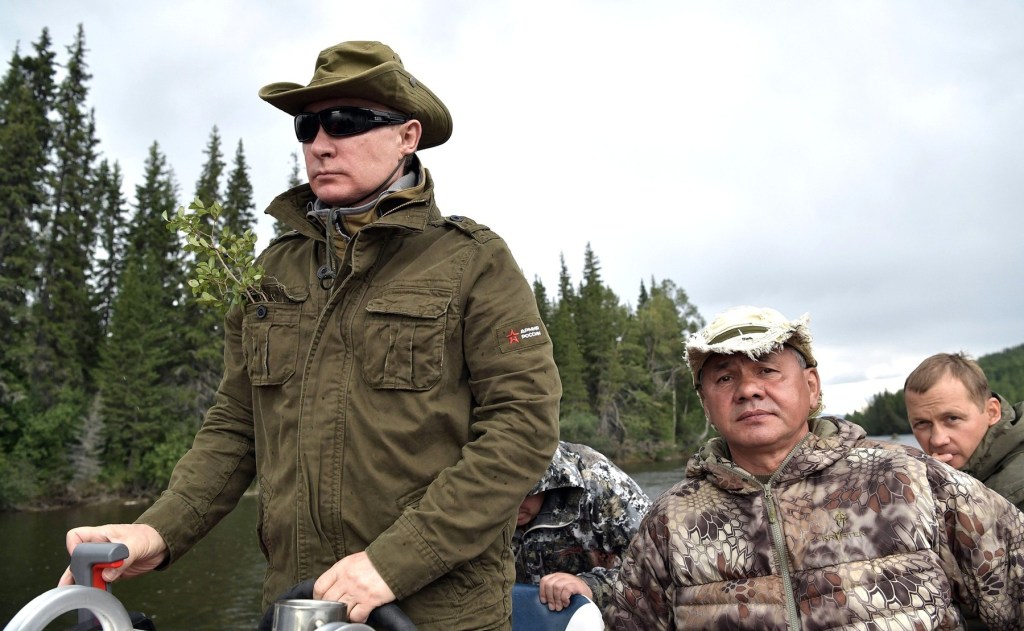
Huby also mentioned in an online biography that he is a member of the Russian Geographical Society (RGS), which, despite the seemingly innocent name, has a strong political side. RGS was chaired by Putin and its president was former defense minister Sergei Shoigu, with the society working closely with the Russian armed forces.
According to an earlier investigation by Radio Free Europe and Radio Liberty, a deputy director of the RGS in Murmansk recruited agents for the internal FSB intelligence service in Norway until 2022. “RGS and its Murmansk branch, which I have been following for years, operate as a Kremlin-co-opted tool for influence and soft power abroad, while also conducting monitoring and intelligence-gathering activities,” said Kari Aga Myklebost, a professor of Russian history at Norway's Arctic University in Tromsø.
Putin and Shoigu's club organized events in Budapest and Vienna, including this year. “RGS is not yet subject to US or EU sanctions and can operate quite freely, I suspect,” states Myklebost.
The CEO of Euroclear, threatened
Turning to Huby's alleged threats against Euroclear executives, sources cited by investigative journalists say the man first approached Urbain at a high-level meeting shortly after she became CEO on May 7, 2024.
“He said: 'Two of my friends want to see you.'” He showed him their photos [pe telefon] – two high-ranking Russian intelligence officers … who wanted to meet Valérie Urbain in Geneva. She was shocked,” a source close to the events told EUobserver on condition of anonymity.
A second Belgian source, also close to the events, confirmed the details of the story, adding that the two Russians in Huby's photos were white men in their 50s, wearing military uniforms.
For her part, Urbain requested protection from the Belgian police for herself and her family shortly after the incident. But his request was rejected by Belgium's National Crisis Center, even though his risk had been assessed at the highest level (three to four) by the Coordination Unit for Threat Analysis. The information was confirmed by the Belgian authorities, without explaining the reason for the negative opinion.
Eventually, Urbain hired a bodyguard on his own from a private Belgian security firm. Later, however, Euroclear turned to a much larger French protection company called Amarante to protect its management.
The banker also threatened a member of Euroclear's Board of Directors
Huby also asked a member of Euroclear's Board of Directors in the middle of last year to meet with his Russian intelligence contacts and threatened to “burn down his house” or that his pet “suddenly die” if he did not comply, sources told EUobserver.
The Euroclear board member was involved in a violent incident outside a bar one evening in the first half of this year. And Huby later contacted Urbain saying: “You don't want to end up like this, do you?”, sources told EUobserver. Urbain declined to comment.
The other member of Euroclear's Board of Directors said he was suffering emotional stress from these experiences and asked not to be named publicly.
Asked by phone why he flew to Russia so often, Huby said: “It's my private life.”
“I'm not even a councilor anymore [al Euroclear] … I haven't been to Brussels since 2022,” he added. He told investigative journalists he had to hang up the phone because his taxi had arrived, and he didn't answer any other calls. When asked by email if he had threatened his colleagues at Euroclear, he didn't answer.
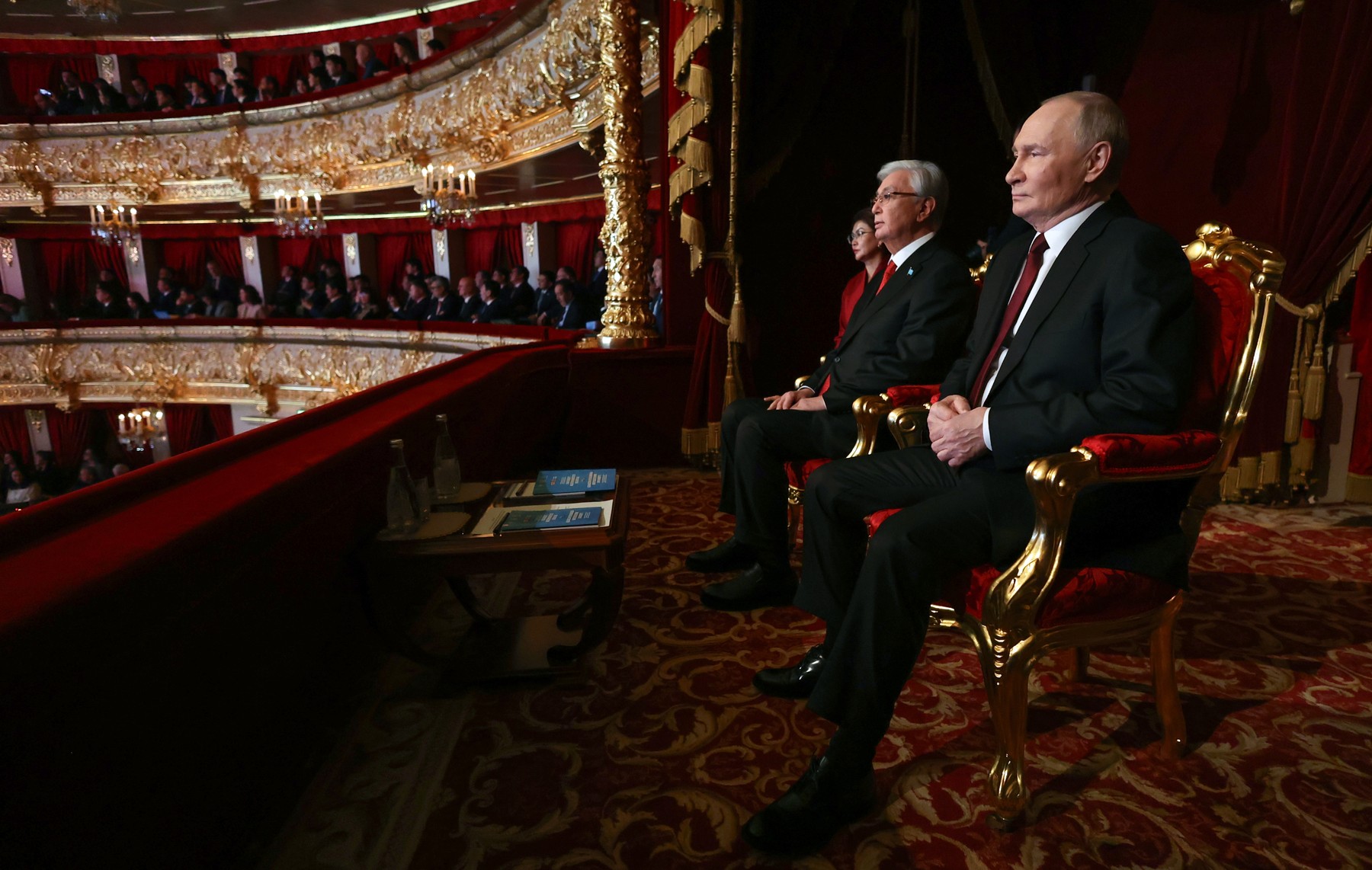
Euroclear says that the banker is passionate about ballet and the Bolshoi Theater
Thomas Churchill, a spokesman for Euroclear, provided more details after speaking to the director of Mfex about the Belgian newspaper investigation.
“He [Huby] he went to Russia only for personal reasons, never for Euroclear. As you probably know, he's quite involved in ballet, that is, at the Bolshoi,” Churchill said. “He is [de asemenea] donor for the work in France and Russia,” added the spokesperson.
Churchill did not respond when asked why Huby's appreciation for the Bolshoi, which has no theaters outside Moscow, would have him flying to destinations as far away as Siberia.
The spokesman instead pointed out that the nature of Mfex's role in the Euroclear group structure meant that Huby had “no managerial capacity [în cadrul instituției]. “He has no responsibility over frozen Russian assets,” Churchill added.
When asked about Huby's alleged threats to Urbain and the other director, the Euroclear spokesperson said: “Valérie Urbain said publicly that she received threats. She didn't say from whom. I won't say that either, but she was threatened.”
Suspected of working for Russian intelligence agencies
Another Euroclear employee who knew Huby well told investigative journalists that his Belgian colleagues also suspected that he was working for either Russian or French intelligence services or both as a double agent.
“If you were to believe Olivier Huby, he knows all the big names in France or Russia. He liked to suggest that he was well connected. A strange character… we thought: DGSE?” said the Belgian employee of Euroclear.
DGSE is the acronym for the French Foreign Intelligence Service.
“The kind of questions he was asking … he wanted information that he normally shouldn't have had access to. And he was traveling to Russia so often,” said the Euroclear employee who knew him.
“We kept him away from everything. He didn't have access to Euroclear information,” he added.