Referral to the ICCJ in connection with the new project on the reform of magistrates' pensions, on the table of the CCR


The Constitutional Court of Romania is discussing, on Wednesday, December 10, the notification of the High Court of Cassation and Justice in relation to the new project of the Bolojan Government regarding the reform of magistrates' pensions.
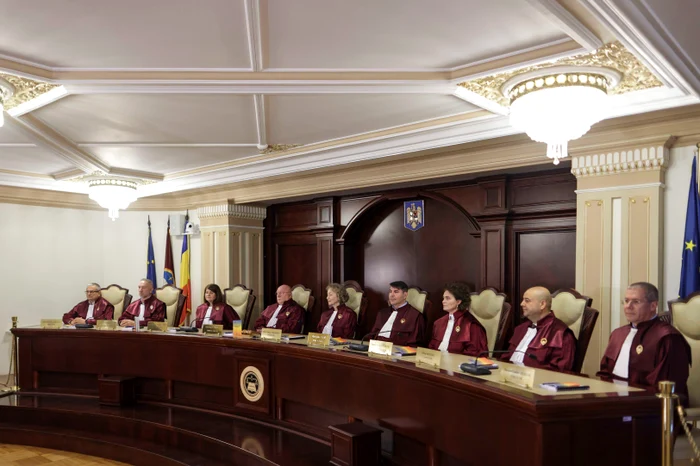
CCR discusses the ICCJ referral on Tuesday. PHOTO INQUAM Photos Octav Ganea jpg
It happens after, last Friday, the judges of the Supreme Court decided, with unanimity of votes, to refer the Constitutional Court (CCR) in relation to the new project regarding the reform of magistrates' pensions.
The magistrates were summoned by the President of the Supreme Court, Lia Savonea, to express their position, within the United Sections, in relation to the new project of special pensions for judges and prosecutors. The 102 judges present at the meeting voted unanimously to refer the CCR.
According to the ÎCCJ judges, the project presents “normative gaps, violates international standards, and its emergency character was not demonstrated or was built on a counterfactual reality”.
“The normative project discriminates against magistrates against other categories of beneficiaries of service pensions, brutally violates the independence of the judiciary, de facto eliminates the service pension for magistrates, violates the international standards established by the jurisprudence of the European Court of Justice, the European Court of Human Rights, it also violates the binding nature of the decisions of the Constitutional Court”, said Victor Alistar, spokesman for the High Court.
“The urgency of the project was not demonstrated or was built on a counterfactual reality for the following reasons. On the one hand, the invocation of conditionalities from milestone 215 of the PNRR was taken out of context and is inconsistent with reality, according to the documents communicated by the European Commission. (…) The invocation of the economic conditions that would require intervention was not justified by the Executive, lacking any kind of data that would show the economic impact for the following years and that, thus, could have justified the urgency invoked”, Victor Alistar sent.
Also, according to the ÎCCJ, the law creates “an obvious discrimination between the categories of service pensions, being clearly unfavorable to magistrates, although they are the only ones with guaranteed constitutional status”.
“For all other categories, the minimum calculation standard is 65% of the gross allowances, while for magistrates it is much lower. Compared to the other categories that benefit from service pensions, only in the case of magistrates is a drastic ceiling applied, respectively limited to 70% of the net income, while in other categories there are imitations related to the net value are much higher, from 80% upwards. The discrimination is obvious and unjustified, given the conditions in that the budgetary effort for the payment of magistrates' pensions is minimal, compared to the total expenditure for service pensions.”, also transmitted the spokesperson of the ÎCCJ, Victor Alistar.
The ÎCCJ listed, in a press release, the reasons why it considers this law to be unconstitutional: it discriminates against magistrates compared to other categories of beneficiaries of service pensions; brutally violates the independence of justice; de facto eliminates the service pension for magistrates; violates the international standards established by the jurisprudence of the CJEU and ECHR; violates the binding character of the decisions of the Constitutional Court; uses ambiguous and unclear terms and presents normative gaps that make the law incompatible with the standard of clarity and predictability in a rule of law.
“It de facto cancels service pensions, creating for magistrates who do not meet the retirement conditions on the date of entry into force of the law, the reduction to the cancellation of the service pension character, and for future generations it will become even inferior to that of the public pension system. The law violates the independence of the judiciary in relation to the standards of the statute established by the Decisions of the CJEU, ECHR and the CCR. All these courts have issued express and explicit decisions that make the legislative solution to be incompatible with guaranteeing the independence of the judiciary. The law violates previous decisions of the CCR that expressly sanctioned normative solutions identical to those included in the current draft and thereby violates the principle of the supremacy of the Constitution and the binding character of the decisions of the CCR”shows the Supreme Court.
The judges consider that the challenged law creates a disadvantageous and discriminatory legal regime for magistrates regarding their right to pension, in relation to professional categories in similar or similar situations (other beneficiaries of service pensions).
In the statement of reasons accompanying the draft law, there is no substantiation based on figures in relation to the financial impact of the new regulation.
“In the system of service pensions, of the total of over 200,000 beneficiaries of service pensions, 90% belong to the defense and public order system (approximately 190,000 people, soldiers, policemen, SRI, SIE, SPP officers, civil servants with special status, gendarmes, etc.), and over 10,000 belong to the other professional categories (magistrates, clerks, civil servants parliamentarians, members of the diplomatic and consular corps of Romania, civil aviation personnel and the staff of the Court of Accounts).For the payment of the rights of all categories of beneficiaries of service pensions (including those of magistrates, but other than those of the defense and public order system), the required budget was 2.2 billion lei. The total budget allocated for the payment of military pensions in 2024 exceeded 14 billion lei. The largest part of this amount is allocated by MAI, with a budget of over 7.36 billion lei, followed by MApN with over 5.5 billion lei and SRI, with over 1.08 billion lei. The statement of reasons is rather intended for the public communication of an untrue narrative than for the official and rigorous substantiation of the need to change the legal framework only with regard to magistrates“, the CCJ transmits.
We remind you that the Bolojan Government has approved the new project to modify the magistrates' pensions, which provides for a phased increase in the retirement age to 65. The amount of the pension cannot exceed 70% of the net allowance received in the last month of activity.
Superior Council of Magistracy. gave a negative opinion to the project,
The magistrates requested that their pension be almost at the same level as the last salary received, while Prime Minister Ilie Bolojan insisted that the pension should not be higher than 70% of the last net salary received.
The first draft of the magistrates' pension reform was declared unconstitutional by the CCR on October 20, following a referral submitted by the High Court of Cassation and Justice.
Then, the CCR reasoned that the Government did not request, within the time frame provided by the law, an opinion from the CSM, even if it is advisory.