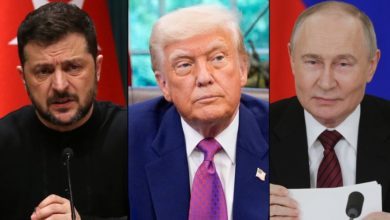
In Europe, considerations are beginning to emerge that next summer may be the last “without war.” Poland is preparing for a possible conflict with Russia, just like the Scandinavian countries. Is it just panic or a real threat?
I don't know if this is the last summer without war. However, I am convinced that we will face a conflict with Russia. I'm not a prophet, but I can draw conclusions based on long-term signals, trends and individual player motivations.
In an interview for Aktuality.sk, Czech Ukrainian scholar Dawid Swoboda, an expert in the field of contemporary Ukrainian history and Russian-Ukrainian relations, and a long-time employee of the Institute for the Study of Totalitarian Regimes in Prague, explains Putin's motivations. It also answers questions such as why Trump is moving away from Europe, who he thinks is a strong European leader and why it is in Poland's interest to defend Ukrainian airspace.
I would say it was a kind of leveling and calming step. Europe is interested in making its mark and showing unwavering support for Ukraine, in the face of the American president's initiatives, which not only fail to take Ukraine's vital interests into account, but in recent days have confirmed the fears of people who perceived the Trump administration as an ideologically motivated player hostile to deeper European values. For me it is déjà vuback to what happened in February.
I refer to JD Vance's speech at the Munich Security Conference. What was said there now appears again in the new American strategy [bezpieczeństwa]. The entire context of these events only superficially looks like an effort to achieve peace. In fact, these are rather empty diplomatic gestures that neither side takes seriously. And if anyone takes them at least a little seriously, it is the American administration. However, she does not want a just peace, but a quick ceasefire so that Donald Trump can present it as his next diplomatic achievement.
On Tuesday Trump said European leaders are weak. Is he right?
In a sense, yes, but the answer to this question has several dimensions.
First of all, yes, they are weak.
Secondly, it is worth noting that this is what Donald Trump is saying, who is not using the power of the United States for a just cause, but rather in the interests of some vulgar deal quickly concluded with Vladimir Putin.
Thirdly, European leaders are weak also because the term “European” means a very loose entity that is not used to a unified foreign policy. However, history is now definitely pushing it in this direction.
Finding quick and effective unity at a time when we must prepare for the real threat of a Russian attack is extremely difficult. If Europe achieved this, it would be another Western civilization miracle.
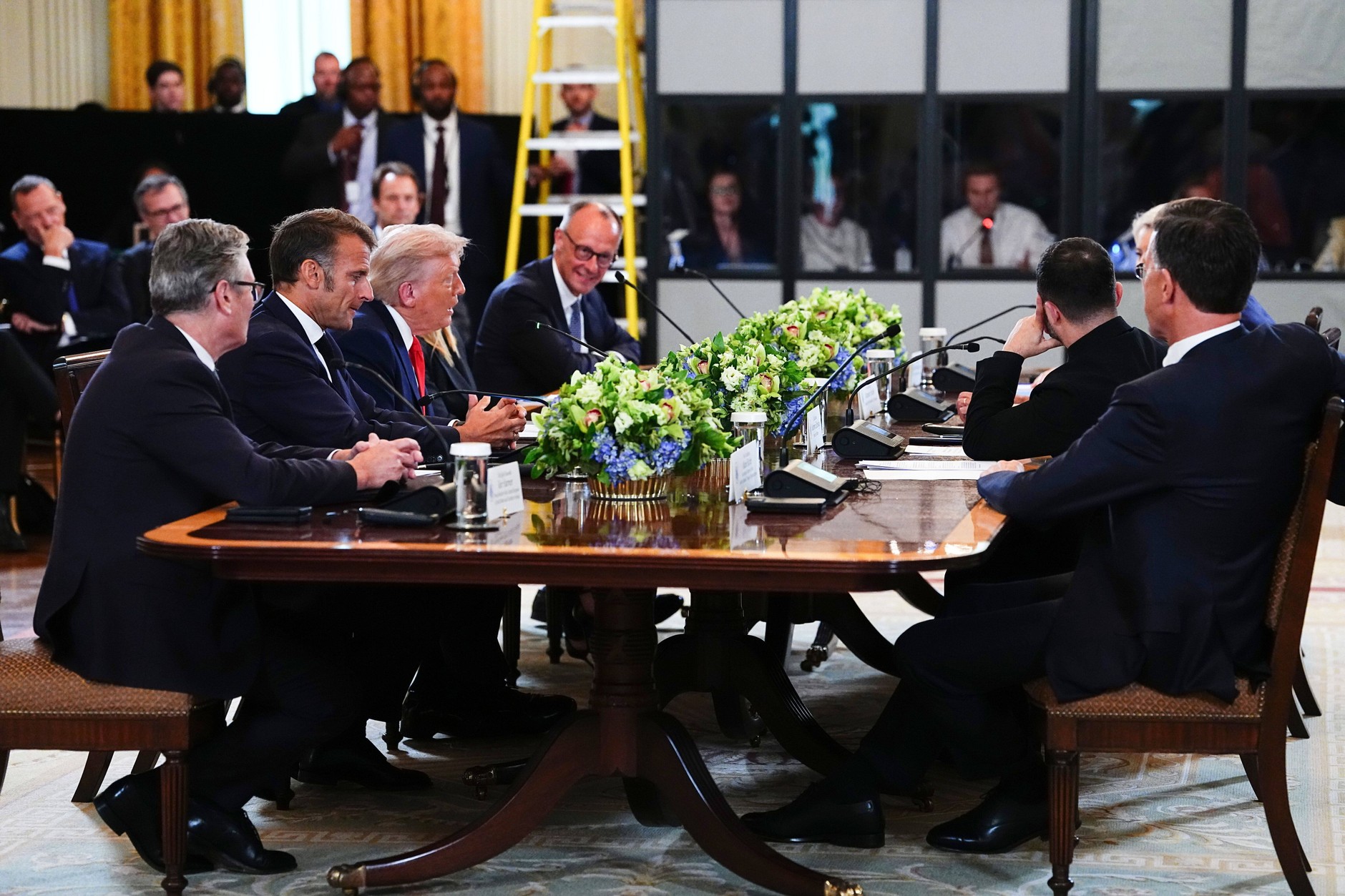
Meeting of European leaders with the US President in the White House. From the left: British Prime Minister Keir Starmer, French President Emmanuel Macron, Donald Trump, German Chancellor Friedrich Merz. On the right, Secretary General Mark Rutte (back) and President of Ukraine Volodymyr Zelensky, Washington, DC, USA, August 18, 2025.AARON SCHWARTZ / POOL / PAP
Is there anyone in Europe today who can be called a strong leader?
I would evaluate it individually and always in the context of how strong and culturally predisposed the society of a given leader is. Germany has undergone a significant change in recent months that brings it into line with the times much more than, for example, the Czech Republic. You could say that European leaders are currently going through something of a sort casting for stronger personalities.
Germany, Great Britain and France are traditionally strong. Smaller countries can surprise, sometimes positively, but their ability to influence the direction of Europe is naturally limited by the size of their economy or defense industry.
The article continues below the video
In his new strategy, Trump also talks about leaving Europe. He also mentions that The European Union should take over the leadership of NATO by 2027. How to interpret this? Isn't it symbolic that his speech Russia appreciated?
Exactly. Trump's strategy aims to gradually turn the United States away from Europe. This is not just Donald Trump's wish, but a clearly formulated line that his administration is following.
In the context of what you mentioned – that Russia also appreciated it – we return to the problem of “the world divided into spheres of influence.” Trump imagines the international environment as a space where great powers agree on who owns what. And Europe, in his opinion, is no longer the priority interest of the United States.
Speaking of spheres of influence, is it possible that Trump wants to join forces with Russia against China? After all, the United States is China's biggest rival. Could this be his tactic?
This used to be a popular concept. In the first months of Trump's first term, many tried to explain his behavior and excessive helpfulness towards Putin in this way.
However, there is one fundamental problem: this is a completely wrong assumption.
Russia has nothing significant to offer America, and America has nothing significant to offer Russia. They can become closer within the framework of economic interests, yes. And yes, the conflict in Ukraine is an obstacle that Trump would like to cynically and quickly remove. But ideological interests are much more important for Moscow and Beijing today.
Moscow and Beijing are getting closer to each other in a natural, not accidental way. Russia knows that without China it will not achieve its goals in Europe. And Putin knows that he would not be able to wage his war for a fifth year if he did not have China's support. Why would he suddenly break off this cooperation?
So what could the United States offer Russia?
Very little. Yes, America can stop supporting Ukraine and cut it off from intelligence information. It's all true. But Russia needs something else. I need a counterweight to China, not another trade deal.
America, in turn, cannot lift sanctions lest it look like an open capitulation to Moscow. Trump simply wouldn't survive this with the US elections approaching and the Republican Party divided.
Russia may cooperate with the US in the Arctic or polar regions, but this is not enough. In a real military conflict with China, the United States would have no reason to rely on Russia. Putin knows full well that there is no long-term future without China.
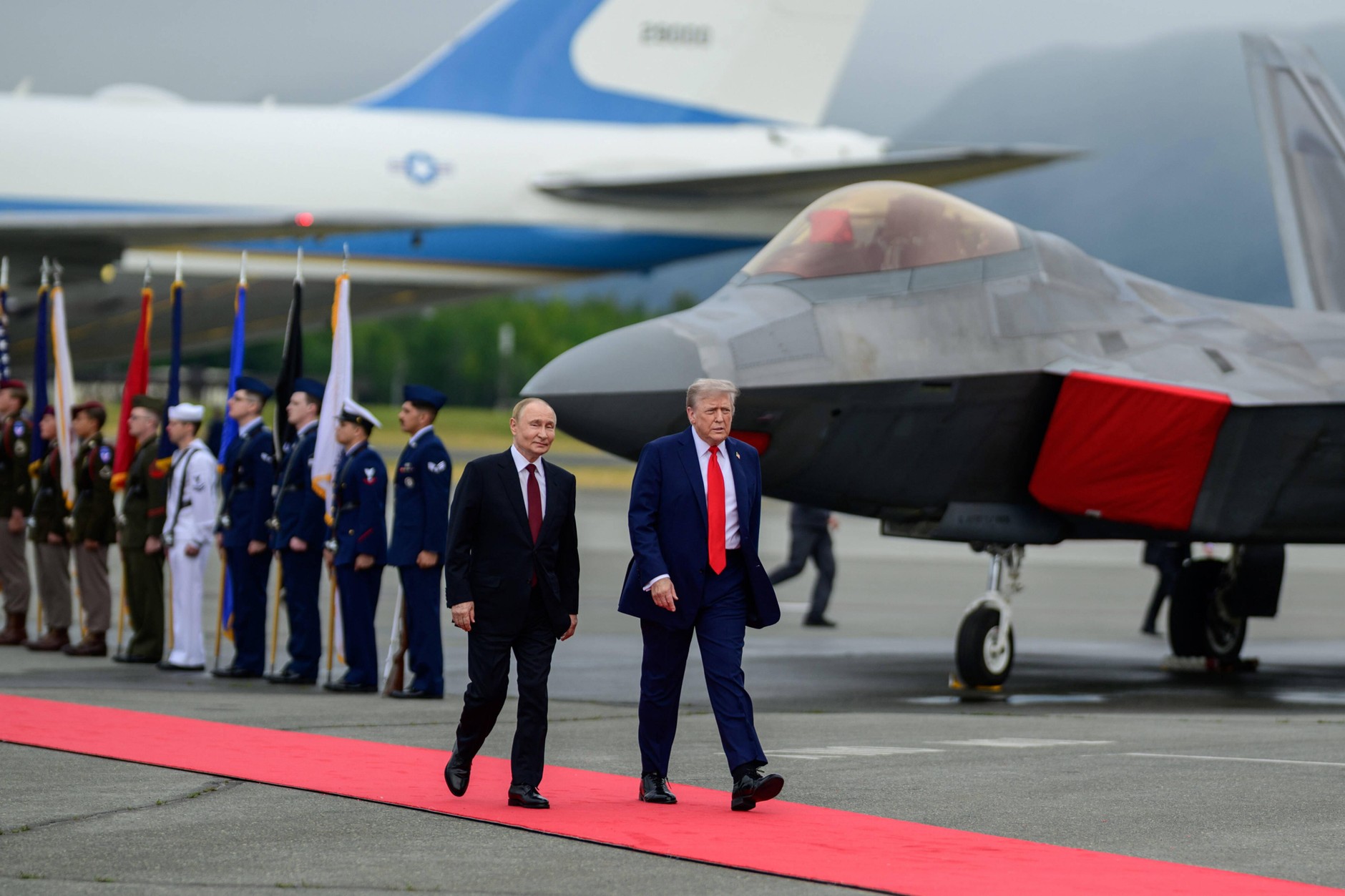
United States President Donald Trump (L) and Russian President Vladimir Putin during a meeting in Anchorage, Alaska, US, August 15, 2025.The White House / PAP
The new American strategy, especially the retreat from Europe, raises concerns. In Europe, considerations are beginning to emerge that next summer may be the last “without war.” Poland is preparing for a possible conflict with Russia, just like the Scandinavian countries. Is it just panic or a real threat?
I don't know if this is the last summer without war. However, I am convinced that we will face a conflict with Russia.
I'm not a prophet, but I can draw conclusions based on long-term signals, trends and individual player motivations.
Putin wants to change the world order. He is 73 years old, but he will be here for a long time. Bad people live long. They are not burdened by their conscience. Psychopaths live to a ripe old age, it's simply a fact.
At the same time, however, he will not live forever. And he has reason to hurry. Trump offered him a huge opportunity. Russia is no longer pretending to be confused, as it was a few years ago. Putin has an incentive to strike at Europe before it becomes too strong and too united.
America does what it does. This is another chance for Putin.
There is growing nervousness in Europe. Every day there are new incidents – balloons from Belarus over Lithuania, Romania reports airspace violations, there is talk of provocations. Czech President Petr Pavel said that if Russia crosses certain limits, you should shoot. The Russians replied that they would then “direct their missiles to Prague”. Is Pavel wrong? Shouldn't we be more decisive?
The problem lies elsewhere. I respect Petr Pavel, but I envy people who can say a platitude and earn applause as if it were a brave statement. What he said is true, although it should be formulated even more precisely: we need to determine the scale of the threats.
But another issue is much more important: Europe should start protecting Ukrainian airspace.
At least its western part, from Kiev towards the west. Because what is happening to Lviv or Ivano-Frankivsk is not only Ukraine's problem. This is a threat to Poland, Slovakia and Romania.
Poland has not taken any action yet because it is afraid of the reaction of its NATO allies. And no one wants to come out on their own. However, if Europe made a joint decision to protect Ukrainian airspace, it would relieve Ukraine and allow it to transfer forces to the front, increasing its chances of survival.
It is also important that most of the attacks on western Ukraine are drone attacks. These are not people. Shooting down drones is not an escalation. It's defense.
However, Moscow has long discredited the word “escalation” and uses it as a pressure tool. Europe is still falling for this.
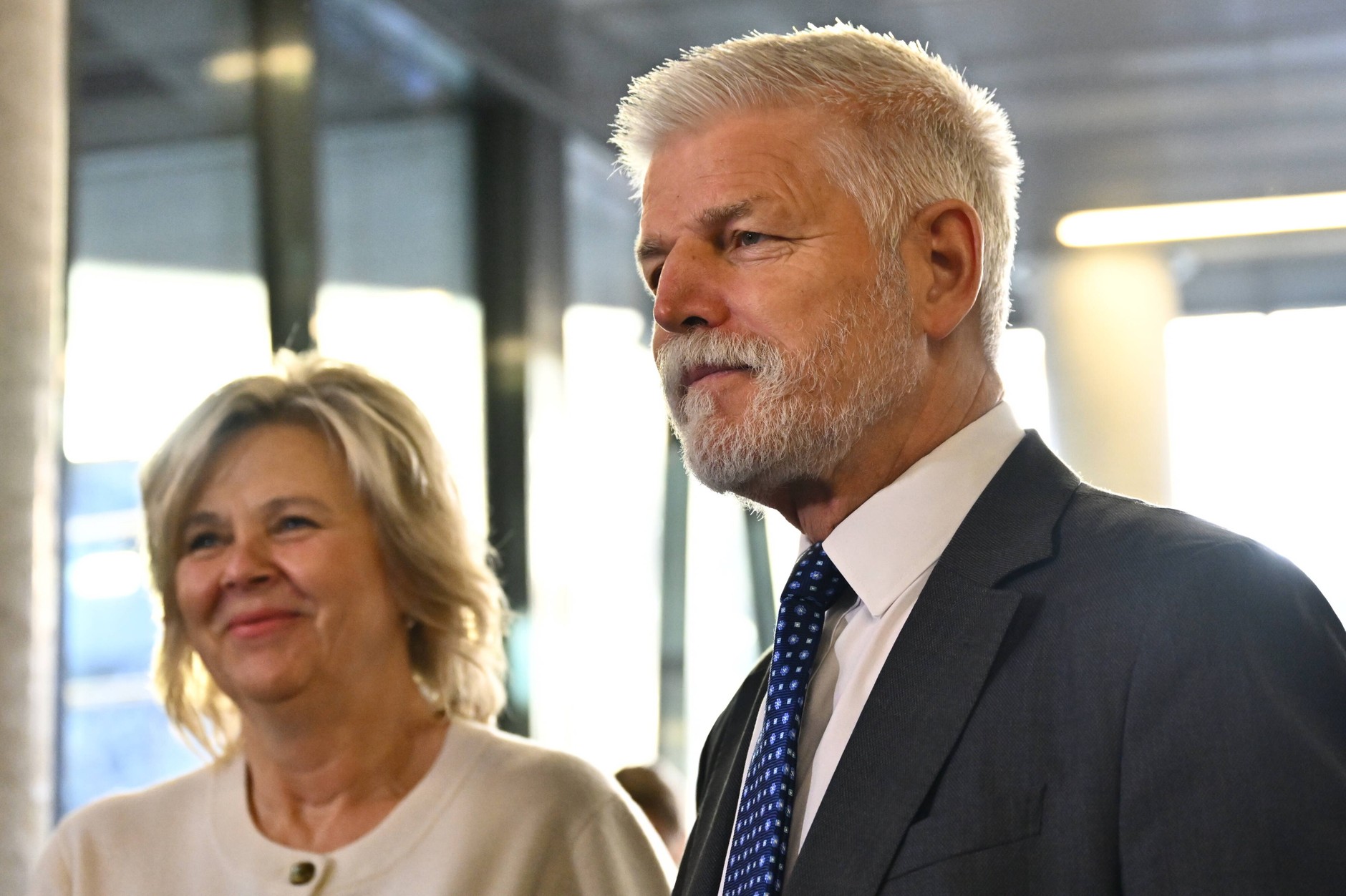
Czech President Petr Pawel with his wife Ewa during a visit to the Center for Nanomaterials, Advanced Technologies and Innovation in Liberec, Czech Republic, December 10, 2025.Radek Petrasek / PAP
What do you think the next year will look like for Ukraine? We see that the front is almost unchanged, Russia is increasing the pressure, and Trump in the US is changing the entire foreign policy. What developments are realistic?
The most realistic scenario is very simple: Ukraine will face an extremely difficult year. I don't think it will be able to make significant territorial gains. At this stage of the war, it is no longer about moving the front quickly, but about the long-term ability to survive, function and resist. Another problem arises, namely that America is gradually withdrawing from its dominant role as a supporter of Ukraine.
If we add to this what we are currently observing from Russia, we get a very unpleasant picture. Moscow no longer conducts war as a fight for specific lines on the map. It is a war of attrition, aimed at ruining the country from the inside: destroying the energy sector, paralyzing the infrastructure, exhausting the population.
Ukraine will therefore fight not only for territory, but for the very functioning of its state.
In this situation, it will be absolutely crucial whether Europe can stand on its own feet and take over some of the burden that the United States has so far borne. Without European air defense and European ammunition, Ukraine's problems will deepen significantly.
This does not mean that Ukraine will lose. This means that survival will be much more difficult than before.
I’m Ashley Davis as an editor, I’m committed to upholding the highest standards of integrity and accuracy in every piece we publish. My work is driven by curiosity, a passion for truth, and a belief that journalism plays a crucial role in shaping public discourse. I strive to tell stories that not only inform but also inspire action and conversation.