Cap on the Cup » A different foray through a part of the history of the Cluj University football team


Article by Octavian Cojocaru – Published on Thursday, 25 December 2025, 22:44 / Updated on Thursday, 25 December 2025 22:49
“Cap on the Cup”, a recent editorial from Cluj (from the Casa Carții de Știința publishing house), signed by Marius Mureșan, PhD assistant professor at the Faculty of History and Philosophy of Babeș-Bolyai University, approaches in a special style a part of the history of the Cluj University football team.
The author analyzed in detail the first four editions of the Romanian Cup in which U Cluj played a role. From the inaugural edition, from the 1933-1934 season, and until 1965, when the “red caps” got their hands on the trophy, the only one in the club's showcase, the “black-and-whites” made four finals: three lost, one won.
The author took care of the smallest detail – you can see the training of a doctor in history. He also shared with the readers something of the flavor of the era, not only results and other dry statistical data.
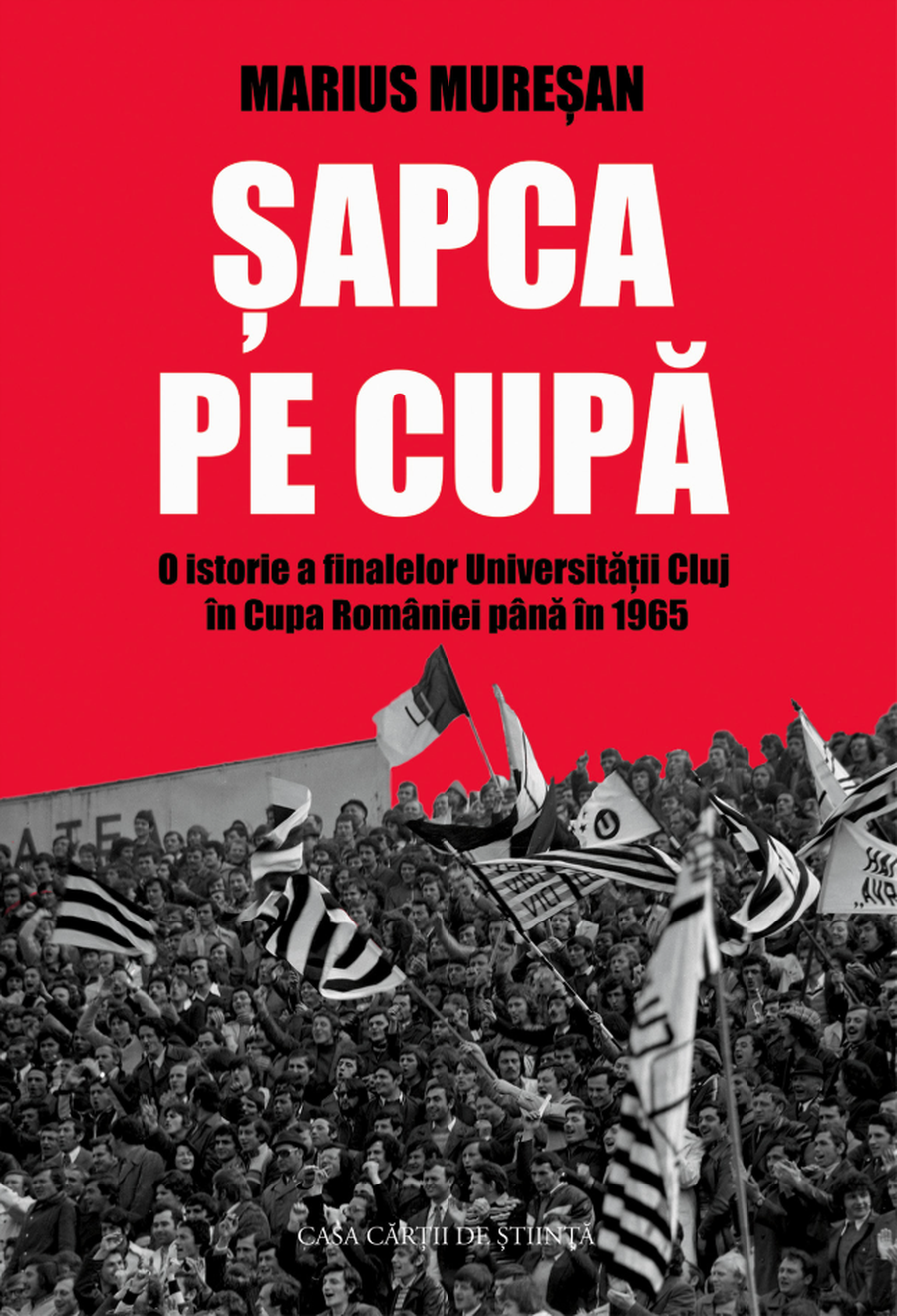
“The Hat on the Cup” book cover
The first edition of the Romanian Cup, 1933-1934, also gave rise to a first scandal. U Cluj qualified for the final, where they would meet the dreaded Ripensia. Surprisingly, the match was scheduled in Timișoara, on July 8, 1934. Ripensia won 3-2, but the “students” filed a memorandum, demanding a replay on neutral ground, in Bucharest. What happened, the actual final being scheduled for September 30, 1934, at the “ONEF” stadium, which during the years of communism was renamed “Republic” and which was demolished because it stood in the way of the plans to build the People's House.
At that first edition, Ripensia won clearly, with 5-0, obtaining the trophy. The premiere was made by Alexandru Vaida Voievod, former prime minister of Romania between December 1, 1919 and March 13, 1920. The first final was to be played under the patronage of King Charles IIbut it was no longer possible, and the players were content to shake hands with Alexandru Vaida Voevod.
The second edition in which the “red caps” reached the final was the one during the war, from the 1941-1942 edition, but also this time they “cashed in” categorically in the final: Rapid – U Cluj 7-1. The band from Cluj was in the famous episode of the “bejenie” in Sibiu, between 1940 and 1945, while Northern Transylvania was transferred to the borders of Hungary as a result of the Vienna Dictatorship. Back then, the “U” was a symbol of resistance. And no one mocked her for the worst defeat in the Cup final (the maximum difference in the finals was six goals)
The third edition in which the U's dreamed of their first trophy was in 1949, the final of which was the latest in calendar terms, played on 18th December (just a week before Christmas!) at the former Venus Stadium, then rechristened 'ICAS'. It defeated CSCA Bucharest 2-1, obtaining the first trophy in the history of a club that in years to come will become Steaua, the most successful group in domestic football.
In the 1964-1965 edition, U Cluj qualified for the final of the Romanian Cup according to a criterion unimaginable today: age. Concretely, the “students” finished tied with Progresul București, but, in order to separate them, the organizers calculated the average ages of the players. U was a more “young” idea and went to the finals.
Then, on July 11, 1965, it was the “astral day” of the University, which managed to capture the only trophy in the club's showcase to date! It was 2-1 in the final with FC Argeș, after a match in which Zoltan Ivansuc overshadowed the then young Nicolae Dobrin, who was only 18 years old, but had “exploded” since he was not even 15 years old in the elite of our football.
“Cap on the Cup” is a book that deals with only a few episodes from the life of the University of Cluj, but rendered alertly and without discounting the essential details.