According to AI model quality rankings, Russia lags far behind. On the Russian-language platform LM Arena the best domestic model ranks only 25thbehind older versions of ChatGPT and Gemini.
Stanford University's Global AI Vibrancy Tool ranks Russia 28th out of 36 analyzed countries, which shows the weakness of the entire ecosystem – from research, through investment, to commercial implementation.
The next part below the video:
Sanctions cut Russia off from chips and computing power
The biggest blow was the Western ones sanctions that cut Russia off from modern chips and model training equipment. The sale of advanced semiconductors, including Nvidia chips, was blocked not only by the US, but also by countries that dominate the production of high-end components – South Korea, Taiwan and Japan. Imports of GPUs and other chips to Russia have fallen by over 80%. compared to the pre-war period – reports the Wall Street Journal.
At the same time, the country does not have the technology or components to quickly reproduce their production at home. Russian factories aim to be able to produce chips in 28 nm lithography only around 2030, while leading manufacturers are already moving to 2 nm. The direct result is a chronic deficit of computing power – GPU resources are insufficient even for current needs.
Even before the war, Russia was heavily dependent on foreign technologies – even locally designed chips were produced in foreign factories, including: at TSMC. After the restrictions were introduced, the country's dependence on China became even deeper.
The share of China and Hong Kong in the supply of Russian GPUs and advanced components increased from about one fifth before the war to over 90 percent. Some Russian AI models are based on Chinese open models, and technological cooperation with Beijing has been officially included in the tasks of the government and Sberbank. Experts are already talking directly about technological dependence, which is “vassal” in nature.
Small market and small capital, i.e. AI without scale
Even simply using foreign AI solutions has become complicated. After disabling Russian bank cards abroad, payment for access to models such as ChatGPT requires cards from other countries or the services of intermediaries. As a result, Russian companies operate in conditions of uncertainty and constant workarounds, rather than building stable infrastructure and products.
Hardware weakness and dependence on China are only part of the problemu. The Russian AI sector is also suffocating due to lack of capital and a limited market. In conditions of geopolitical isolation, Russian AI companies attracted only about USD 30 million last year. venture capital financing – for comparison, OpenAI itself has acquired multi-billion funds.
Managers operating in Moscow admit, according to the Wall Street Journal, that with closed markets and the small scale of the economy, the possibilities for development and expansion are drastically limited. Without access to global customers and investors, building competitive models and applications becomes practically impossible.
The exodus of staff is even more severe. After the invasion of Ukraine IT specialists, engineers and scientists left the country en masse. Official data say at least 100,000. IT employees who left in 2022 and did not return, and forecasts indicate a deficit of over 400,000. IT specialists by 2030
In the case of AI, experts estimate that 70-80 percent the best talents already work abroad – in startups and technology companies in the West. This makes groundbreaking AI projects in Russia virtually unrealistic today. Even if you manage to get the hardware, there are not enough people who can build world-class solutions on it.
Technological sovereignty only in speeches
The authorities in Moscow do not officially admit defeat. Putin emphasizes that Russia must have sovereign AI systems and cannot allow for critical dependence on foreign solutions, especially in the context of military competition with the West. Officials say domestic models are rapidly improving and are on par with Western models.
However, even the leaders of state champions talk about a huge gap – like the head of Sberbank, Herman Gref, who stated that most Russian economic sectors are “millions of light years” away from using AI. Declarations of technological sovereignty collide with the realities of sanctions, dependence on China and the flight of the best specialists.
The next part below the video:
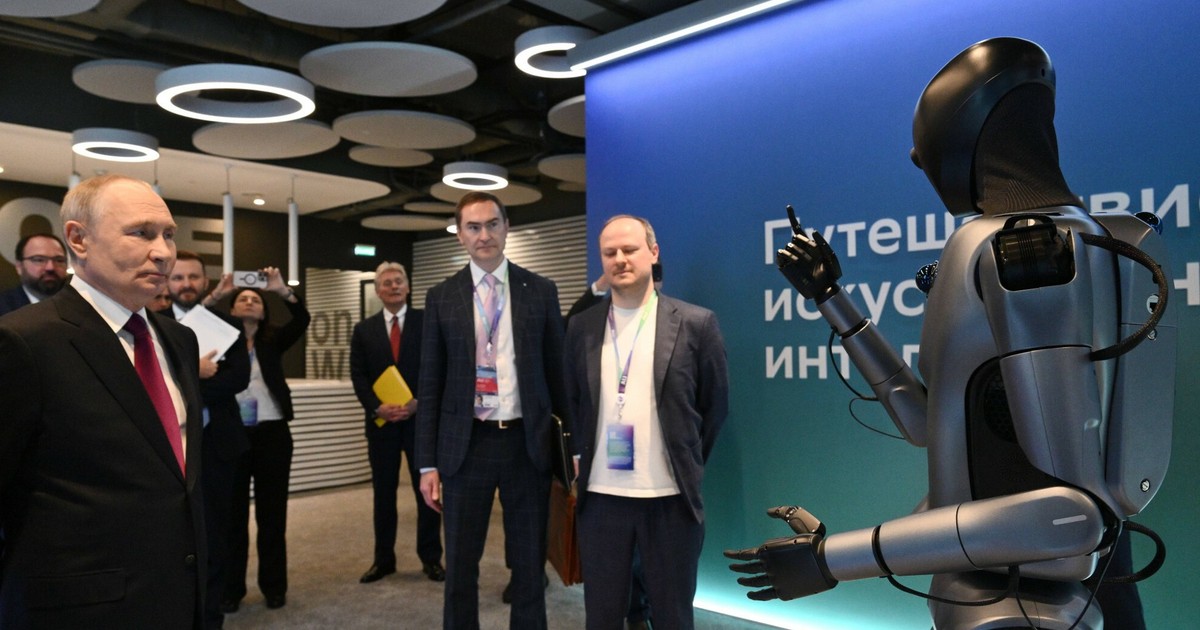
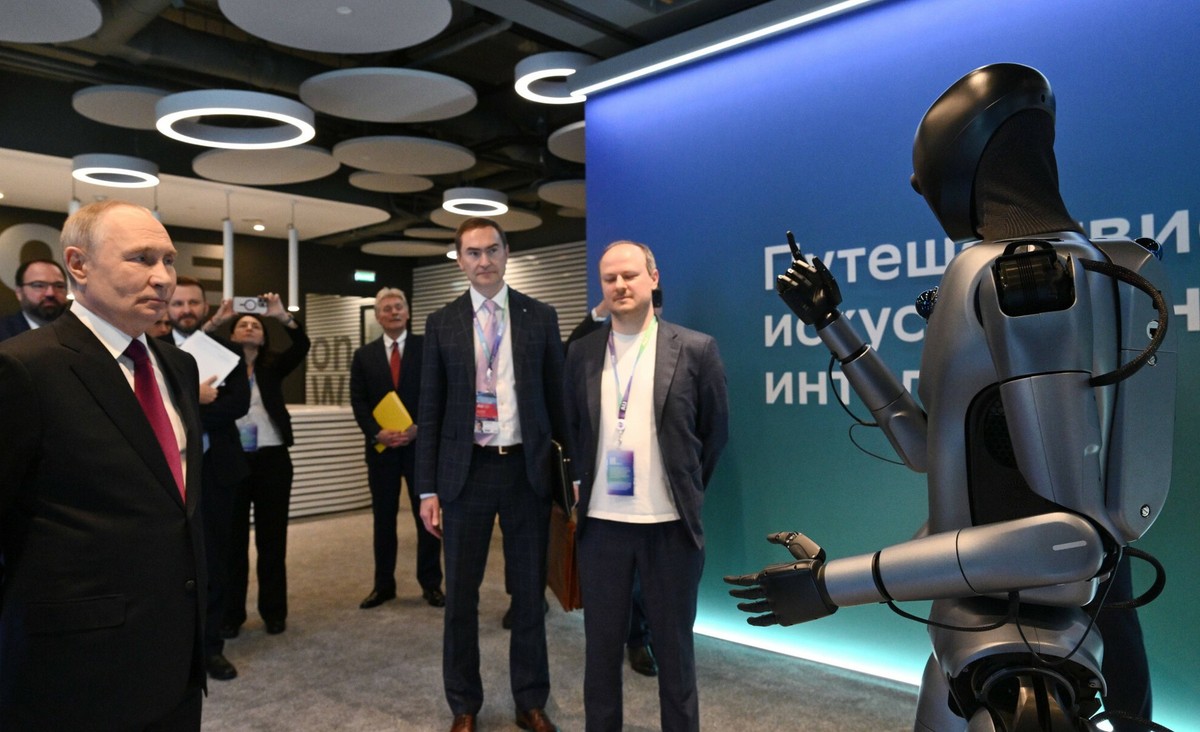
The failed demonstration of the first humanoid robot with AI functions in Moscow has become a symbol of the current state of Russia's technological ambitions. AIDOL barely took a few steps across the stage to the sound of the “Rocky” theme before it fell over and the presentation was interrupted. The organizers assured that “the robot will draw conclusions from its actions”, but for many observers it was an image that accurately reflected the broader situation.