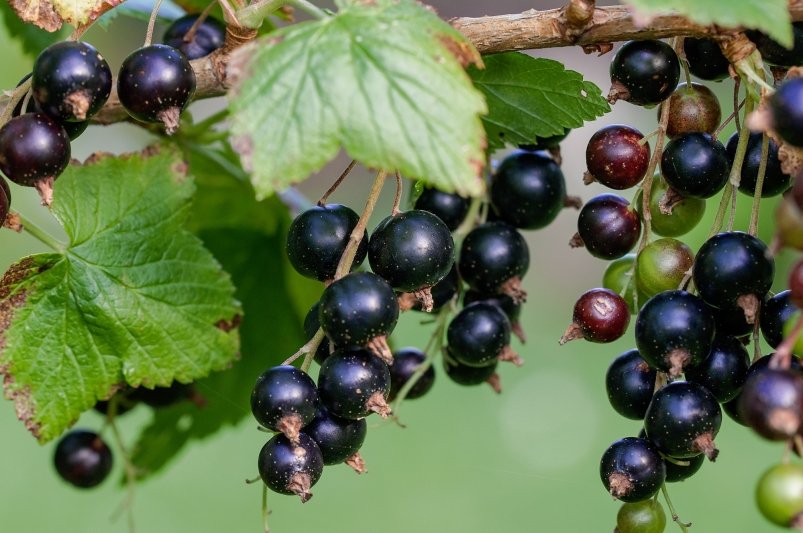
If you are tired of tart, sour currants that sting your throat and require a kilogram of sugar even for compote, pay attention to the Black Pearl variety. This is not just a berry, but a piece of summer in a black shell: dense, aromatic, with a rich fruity taste, a light cherry note and honey sweetness without bitterness.
What makes Black Pearl special:
- High sweetness – sugar content up to 12-14%, acidity is minimal. Berries are delicious even without sugar.
- Large berries – weighing 2-3 g, shiny, like varnished, do not crumble when ripe.
- Long-term fruiting – harvesting begins in July and continues until mid-September, especially with regular harvesting.
- Frost resistance – can withstand down to –35°C without shelter, ideal for Siberia and the Urals.
- Disease resistance – almost not affected by powdery mildew and anthracnose, even in wet weather.
How to grow:
- Plant in a sunny place; in the shade the berries become smaller and lose their sweetness.
- The soil should be light, fertile, with a neutral reaction. On heavy soils, make raised ridges.
- Water moderately, especially during berry set. Excess moisture reduces sweetness.
- Feed with compost in spring and ash after harvest.
- In autumn, prune old branches. This stimulates the growth of young fruit shoots.
“Black Pearl” will become your favorite variety. In August, when others have already harvested everything, black rubies sparkle on your bushes, ready to be collected until the cold weather.
Question and answer:
Why are currants sour?
Due to the variety, lack of sun, overfeeding with nitrogen or early harvest. Even sweet varieties lose their taste in the shade or with excess moisture.
Is it possible to grow sweet currants without fertilizers?
Yes, if the soil is fertile. Mulching with compost and fertilizing with ash once a year is enough.
Is it suitable for freezing?
Great. The berries are dense, do not burst, retain their shape, color and vitamins. After defrosting, they do not turn into mush.