Europe cuts off Russian gas until 2027. Romania, among the few countries that covers its consumption from domestic production

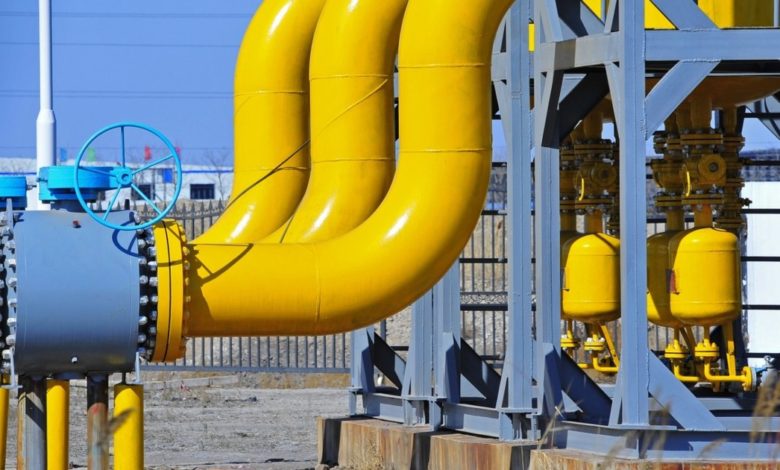
The recent political agreement between the Council of the European Union and the European Parliament, which obliges member states to stop gas imports from Russia until 2027, raises major questions about how it will be implemented. While Europe is looking for legal solutions, the energy expert Dumitru Chisăliță warns, in an analysis for “Adevărul”, about the “painted molecule” phenomenon and explains why Romania is in an exceptional situation.
PHOTO Archive
The European Council and the European Parliament have reached an agreement whereby natural gas imports from Russia will be phased out by 2027, as part of efforts to completely reduce energy dependence on Moscow. The measure introduces a progressive and mandatory ban on both liquefied natural gas (LNG) and pipelines, setting a total halt to LNG imports by the end of 2026 and pipeline imports by the fall of 2027.
Immediately after the announcement of the agreement, Hungary communicated that, together with Slovakia, it intends to challenge this plan at the Court of Justice of the European Union (CJEU), which it considers an “unacceptable dictate” of Brussels, arguing that it would violate EU treaties and endanger national energy security.
The decision taken in Brussels represents a major step in the EU bloc's energy security strategy, but the road from intention to reality depends on several factors. Dumitru Chisăliță, president of the Intelligent Energy Association, believes that achieving this goal is possible, but emphasizes the need for total political consensus, which is currently lacking.
“I think there is a possibility for this to happen, but the two countries that today are opponents of this measure must be convinced in order to be able to discuss the definition of the objective”.
states Chisăliță.
In his opinion, without the accession of these states, the prohibition mechanism risks remaining incomplete.
The “painted” Russian gas phenomenon
Beyond the political opposition of some member states, the great challenge is the indirect routes through which Moscow's gas continues to supply Europe. During the last 3 years of war in Ukraine, the European market witnessed a paradoxical situation where imports were decreasing in statistics but not in pipelines.
“In the last 3 years, since the conflict in Ukraine, even if there were gases that arrived in Europe as not being Russian gases, they were physically Russian molecules “painted” in other colors, under other flags and so on. Turkey imports Russian gas, imports Azerbaijani gas and sells Russian gas to Europe as Azerbaijani gas. In fact, indirectly, the Russian molecule reaches Europe only because it is, I repeat, under other flags”, explains Dumitru Chisăliță.
For the EU agreement to have an effect, it is vital to find solutions for such situations.
Impact on prices: Optimistic scenario versus reality
A major fear related to the import ban is the possible explosion of energy prices. However, the expert's analysis indicates that the economic effects strictly depend on the severity of the measures applied. If the European Union limits itself to banning direct contracts, the market will remain stable.
“The first measure, the strict one regarding the direct contracts through which gas reaches Europe, I don't think it will influence the price of gas in Europe. The other situation, in which we propose that these exchanges no longer exist and, in fact, the Russian molecule will no longer reach Europe under other flags, I think it would influence the price of gas quite a bit”, warns the specialist.
For now, the discussions are focused on the first option, which is why the expert does not believe that there will be a spectacular price increase in Europe.
European industry remains vulnerable
Even in the absence of immediate price shocks, the specter of a supply crunch looms over large industrial consumers. Energy-intensive sectors are the first to feel any fluctuation.
“I think all industrial sectors are exposed. The most exposed are those in chemistry, petrochemicals, metallurgy, the glass industry, the porcelain industry. And here, the cement industry would have the biggest problems,” points Dumitru Chisăliță.
Since natural gas is essential in many production processes, the domino effect could also affect other economic branches.
Romania, an “island” of energy stability
In this complicated European context, Romania is in a privileged position. Unlike many other import-dependent member states, our country has quite solid domestic natural gas production.
“Fortunately, Romania currently has a production of natural gas almost equal to its consumption. If we look at the quantities of gas we store from our own production and the consumption from the winter of 2024-2025, we can say that, taking into account the quantities of gas stored, Romania did not have to actually import natural gas.”, emphasizes the president of the Intelligent Energy Association.
The imports made so far had a strategic role, not one of immediate necessity.
“At the current level of consumption, production and stockpiles, we are in an exceptional situation in Europe and as such there should not be a risk to security of supply at the moment,” concluded Dumitru Chisăliță.