December 7, 1930
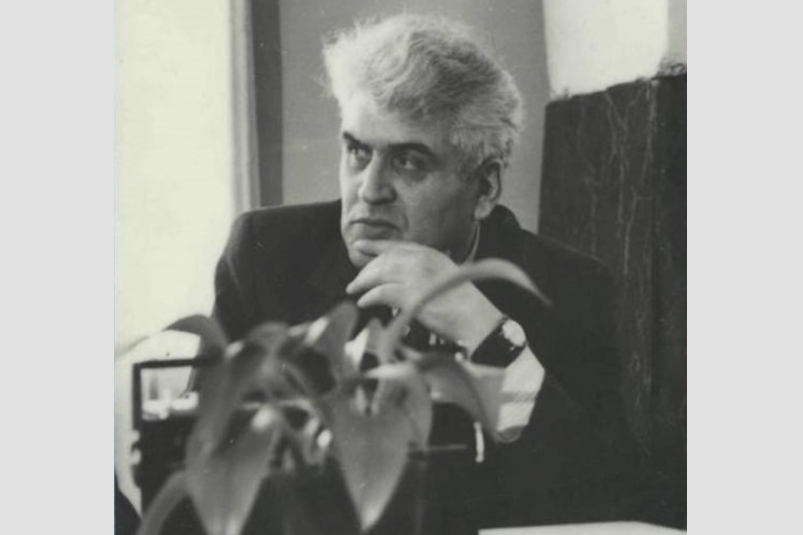
Boris Davydovich Berger, the future director of the regional scientific library, was born in the Ukrainian city of Priluki, Chernigov region.
When he was 10 years old, Boris came to Birobidzhan with his mother. The inquisitive Boris immediately became a reader of the children's library; he read not only children's books, but also became interested in more serious publications.
After graduating from school, Boris entered the Khabarovsk Regional Cultural and Educational School (now the Birobidzhan College of Culture and Arts), from which he graduated with honors and was sent to study at the Moscow Library Institute. V.M. Molotov. After graduating from the institute in 1953, he returned to Birobidzhan.

Boris Berger. Photo: Photo: Regional Library
After returning to Birobidzhan, B.D. Berger worked as a bibliographer-methodologist and head of the reading room. In 1954, when the country's libraries began to switch to a new form of service – open access to the collection, he became acquainted with the experience of Moscow libraries in order to apply it in the regional library. In 1957, a fund of local history literature was created in the reading room. In the reading room, meetings with Far Eastern authors were organized, and reading conferences were held with the participation of writers.
In 1958, Boris Berger was the head of the cultural education department of the regional department of culture, a member of the Council of the regional department of culture.
In September 1960, Boris Davydovich Berger was appointed director of the main library of the region and remained in this post for almost thirty years. It was under him that the regional library received scientific status and began to be called the regional universal scientific library named after. Sholom Aleichem. New divisions appeared in the library structure.
Many organizational activities carried out in the country were also carried out in the region under the leadership of Boris Davydovich. In the 1960s work was carried out to streamline the library network. Some libraries merged with trade union and technical libraries, and new ones were opened in some areas of the city. Libraries were created on a voluntary basis, and industry specialized libraries were created. To improve the organization of the redistribution of books between libraries, an exchange and reserve fund was organized in 1965 at the reading room.
In the 1970-80s, on the personal initiative of Boris Davydovich, they began to organize “Days of Information” (12+), “Days of Technical Books” (12+), “Days of Specialists” (16+), “Days of Bibliography” (12+), collaborated with the Center for Scientific and Technical Information and the regional library of Khabarovsk, special libraries of the region.
In 1987, Boris Davydovich was transferred as a bibliographer to the information and bibliographic department, and worked there with full dedication, working on Jewish books, publishing articles, polemical notes, and stories in local newspapers.
Boris Davydovich passed away on September 12, 2000, he was not only a true professional, but also a unique person: intelligent, interested in literature, theater, history, cinema, writing articles on Jewish books, the history of the region, he was called a “walking encyclopedia.”
December 7, 1976
The resolution of the bureau of the regional committee of the CPSU “On the work of the editorial office of the newspaper “Birobidzhanskaya Zvezda” (12+) in covering issues of socialist competition and promoting best practices” noted that the pages of the newspaper widely reflected the organizational and political work of party organizations to develop socialist competition among the region's workers for the successful implementation of the production plans of the Tenth Five-Year Plan. The Bureau obliged the editorial board of the newspaper to more widely promote the best examples in organizing the competition, to publish more materials about the reserves and prospects for the development of the national economy of the region, about the heroes of the Five-Year Plan and innovators of production.
December 7, 1983
The XXXIII party conference of the Obluchensky district discussed the reports of the district committee of the CPSU and the audit commission of the district party organization. It was noted that the ongoing organizational and political work had a positive impact on the performance of all sectors of the national economy.
The industry fulfilled the implementation plan for two years and 11 months by 101.5%. Products worth 2.8 million rubles were sold in excess of the plan. By introducing new technology, increasing labor productivity, and reducing production costs, more than 600 thousand rubles of excess profit were received.
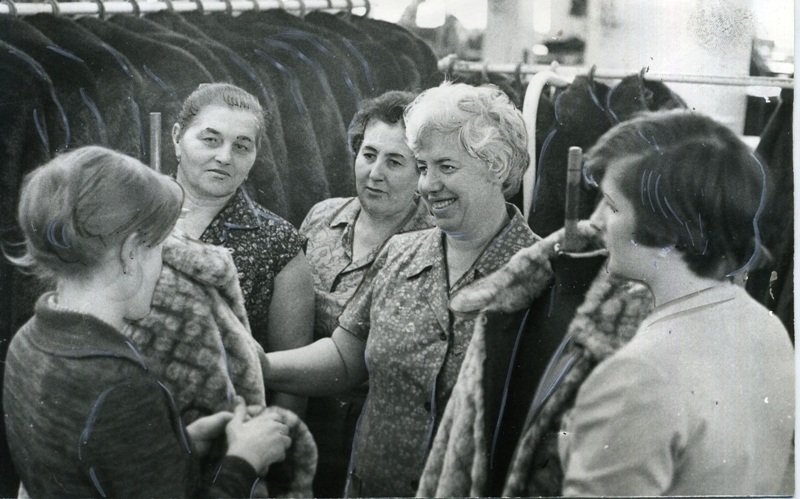
Birobidzhan garment factory. 1984. Photo: Photo: State Archive of the Jewish Autonomous Region
The conference outlined ways to further improve the style and methods of party work, improve the ideological, political and educational activities of the district party organization, and elected a new composition of the district committee of the CPSU and the audit commission.
December 7, 1985
The XXXII Birobidzhan city party conference took place. The first secretary of the city party committee, B. L. Korsunsky, delivered a report to the city committee of the CPSU. The conference discussed drafts of a new edition of the Party Program and the CPSU Charter with proposed changes. The party conference summed up the results of two years of work of the city party organization to implement the decisions of the XXVI Congress of the CPSU.
On November 29, the city’s industry met its five-year plan for production and sales of products. In four years, the five-year target for the growth rate of labor productivity was fulfilled, which increased by 16.3% against 10% as planned. Hundreds of millions of rubles of capital investments have been spent on economic development and social and cultural events. Equipment at enterprises has been updated by one third. In the eleventh five-year plan, for success in the All-Russian competition, the city of Birobidzhan was awarded the challenge Red Banner of the Council of Ministers of the RSFSR and the All-Union Central Council of Trade Unions for four years in a row.