This is how most new apple varieties are now created – far from the orchard, in the laboratory. Scientists from Washington State University have been working for over 20 years to breed the perfect apple.
They think they have finally succeeded. The Cosmic Crisp variety hit the market on December 1, 2019. It was the largest apple premiere in the history of the United States, preceded by an investment of half a billion dollars, $10 million. spent on marketing and two decades of breeding and testing.
Let's take a look at what it took to create the “perfect apple” and why some hope it will save Washington state's apple industry.
Read also: One such root can cost as much as a car. Business is booming
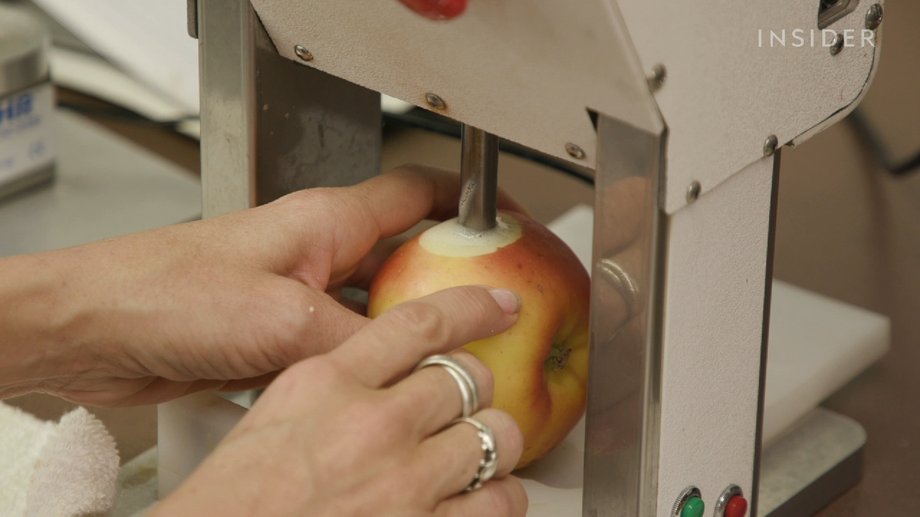
Cosmic Crisp is set to change the apple market forever
|
Business Insider
Apple breeding in the laboratory. What is crucial?
By the late 1990s, Washington's apple industry was on the verge of collapse. This happened because out of over 40 thousand hectares of trees were used to grow apples, which were losing popularity: Red Delicious.
This apple used to be the star of supermarkets, but is now criticized for its bland taste and floury texture.
By the end of the decade, farmers had lost about $760 million. within three years. That's when Bruce Barritt stepped in.
“I eat an apple every day,” says Bruce Barritt, former director of the Tree Fruit program at Washington State University.
Bruce began breeding a variety called Cosmic Crisp. The goal was to obtain a fruit that was as beautiful as Red Delicious, but also had a sweet taste and a pleasant crunch.
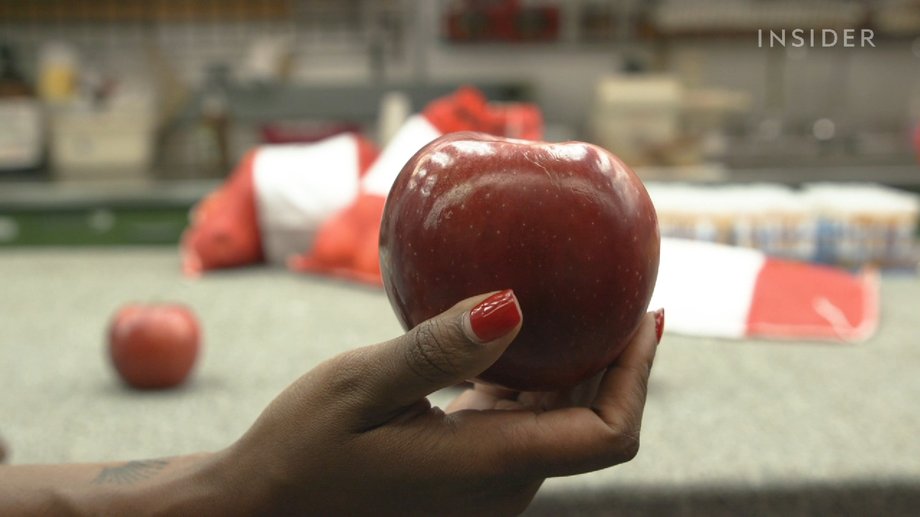
From the laboratory to store shelves. This is how the most expensive promoted apple in the world was created
|
Business Insider
We bet everything on one card – Red Delicious apples. This is not good economically. If we produce more and more of something that people like less and less, it is not a good business model
– admits Barritit.
Since then, growers have increased production of other varietiesBut Red Delicious it still accounts for nearly one-third of the state's apple orchard acreage.
To successfully take its place, a variety Cosmic Crisp it had to be good for consumption for at least 12 months, which is about six months longer than Red Delicious.
This is due to the fact that autumn is the most important period for the apple industry. Farmers then harvest almost all the apples consumed for the rest of the year. So the goal is to create an apple that tastes as good in March as it does in October.
To create Cosmic CrispBarritt crossed the varieties Honeycrisp and Enterprisedue to their crispiness and storage properties, respectively. And so it took thousands of trials and errors.
– I'll take a bite. It's soft and horrible. We sowed 10 thousand seeds from which trees grew. We looked through all of them and several showed promise, and the most promising was Cosmic Crisp – says.
— During the first few years of breeding the seeds Cosmic Crisp they grew into seedlings. In the fourth year, the seedlings turned into trees and bore their first fruits. In 2008, although the Cosmic Crisp variety did not yet have a name, it showed promising characteristics, he adds.
— The selection that is now called Cosmic Crisp was one of 10 selections. This meant that we were entering a phase where we were receiving large quantities of fruit, which allowed us to conduct an in-depth assessment of the fruit
– recalls Kate Evans, interim director of the Tree Fruit program, Washington State University.
Read also: Not only for aristocrats. Suffolk black ham has 200-year-old roots
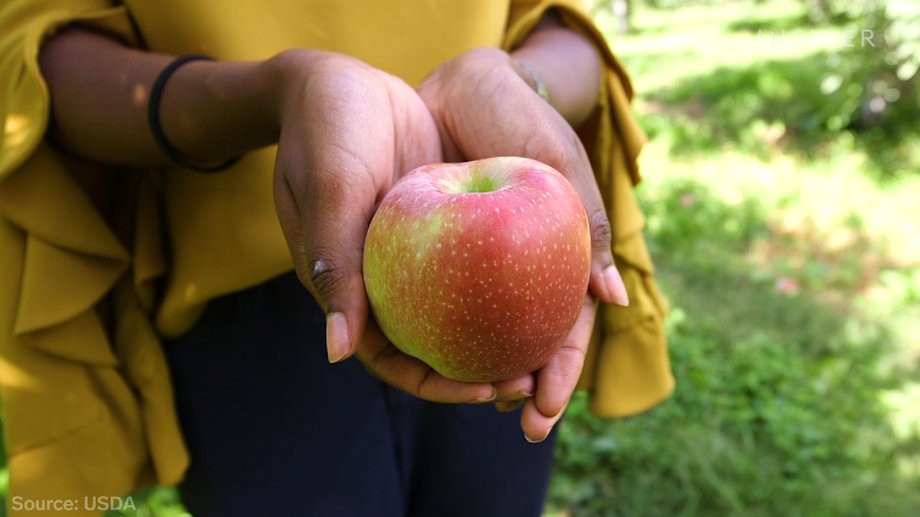
Scientists wanted to create the perfect apple
|
Business Insider
Creating a new apple variety is time-consuming and… expensive
Over the next 11 years, this in-depth evaluation included a multitude of tests assessing size, shape, color, crunchiness, juiciness and sourness. The WSU team tests apple ripeness using iodine to determine the best harvest time.
Iodine binds to the starch in fruit. As the fruit ripens, the starch turns into sugar. When the fruit is completely purple or black after being stained with iodine, it is truly unripe. It has a lot of starch
– explains Evans.
The lighter the flesh, the sweeter the apple.
“The juice inside the apple makes it pleasant to eat,” says Barritit.
There are hundreds of consumer-favorite varieties on the market, so how can a new apple have any chance?
— It takes a big budget, a big industry and a big product. All these elements have to come together, he replies.
Cosmic Crisp however, it has them all. To catch up with the competition, $10.5 million was allocated for apple marketing alone. It even has its own advertisement. This variety is available exclusively to growers in this state for the first 10 years.
— Breeders deserve this advantage. They contributed to the development of the research project. This gives them a 10-year head start – praises Barritit.
Apples Cosmic Crisp they sell for about $6.50-$11. per kilogram as a premium apple variety, i.e more than twice as much as standard varieties such as Gala.
Still, apple makers are confident that Cosmic Crisp is up to the challenge.
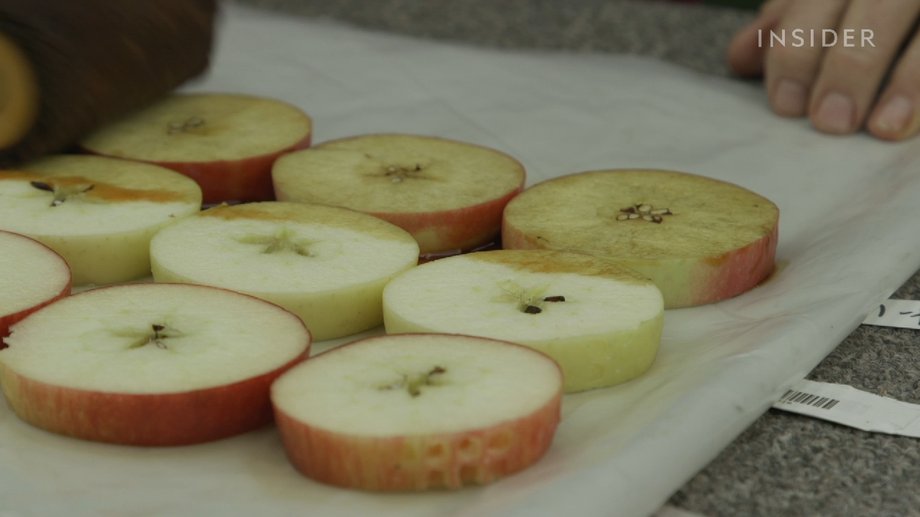
Creating a new apple variety is a long-term process
|
Business Insider
We want people to enjoy apples, and we felt that to make that happen, we had to give them better apples. We had to outperform Golden Delicious, Red Delicious, McIntosh. We had to create an apple that provided a much better taste experience
– says.
More than two decades later, it happened. In September 2020 Cosmic Crisp won the Good Housekeeping Institute's award for best healthy snack of the year.