Putin has set himself the goal of turning Ukrainians into “real Russians” in ten years. The Kremlin's plan for Donbass


Even in the middle of the negotiation process with Kiev with a view to an armistice, Vladimir Putin persists in his strategy of “Russification” of the occupied territories.
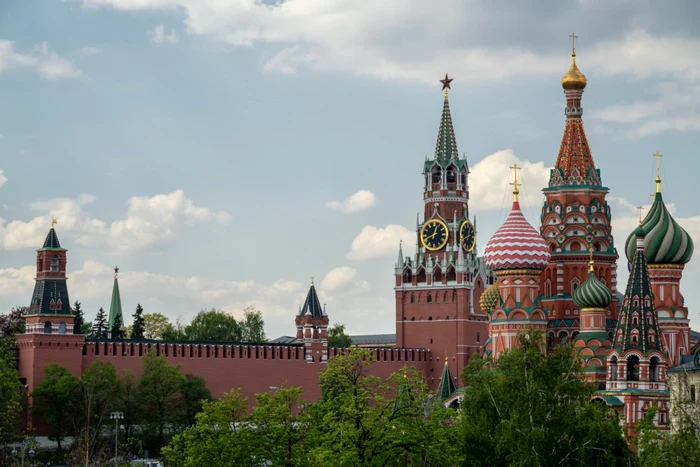
Kremlin PHOTO: Shutterstock
With the announcement of the capture of Pokrovsk, Putin, dressed in military uniform, set out to turn Ukrainians in Donbass into “real Russians” within the next ten years.
The term appears in the nine “State National Political Strategy”writes Avvenire, document signed by Putin entrusting the occupied administrations to loyalists, spies and criminals, disguising them as promoters of an identity “homogeneous” and territorial integration.
At the heart of the plan is the idea of Russia as “civilized state”. The Kremlin aims to make it so that by 2036, 95% of the country's entire population will identify as Russian, including the three million Ukrainians in the occupied territories and those who will join them if the territorial conquests are prolonged. The deadline is not chosen by chance.
With constitutional reform in 2020, Vladimir Putin will be able to stay in office until 2036. The news came as a verdict for Ukrainians who have been living in the occupied regions for four years, even if in the end negotiations and the battlefield will decide what happens.
The capture of Pokrovsk, which Putin calls by its Russian name, Krasnoarmeisk, “will help ensure steady progress toward all key objectives of the special military operation,” a declared the Russian president while waiting for the arrival of the American emissaries.
The offensive focused on the city, now reduced to ruins, considered a crucial junction for the attempt to expand westward, complete the occupation of Donetsk and threaten the advance on Kiev.
What awaits those who resist
“Either we will be Russians, or for them we will no longer be human beings,” sums up a message picked up by the clandestine network that transmits information outside the militarily conquered areas, showing what awaits those who resist in the conflict zones if they fall into Moscow's hands.
Arrests, torture, disappearances. And denunciations among Ukrainians. Countless trials of civilians accused of “collaboration with the Kiev regime”.
Russian authorities broadcast them live on television. The convict in a cage, accused of treason, and the verdict delivered in a tone of warning to those who listen. Clandestine groups that monitor activities in the occupied zones agree in describing the occupation regime as a “police state”.
Information leaks through Telegram and other secure channels. Methods change almost daily to avoid interception. In Ukraine, dissident leaders are creating fake social media groups apparently based in Donbas.
They use fake usernames and identities, subterfuges that allow them to track and reveal the occupiers' court decisions.
This year, in Donetsk, Luhansk, Zaporozhye and Kherson provinces, at least 190 civilians were sentenced for “high treason,” “espionage,” or “collaboration with a foreign state“.
Ukraine is a treasure that must be managed as the tsars did, who offered economic privileges and titles in exchange for absolute loyalty.
In Snigurivka, in the subsequently liberated south, Ukrainian drug dealer Yuriy Barbashov, who had defected to the Russians, had been appointed head of the occupation administration. No one has forgotten him.
Villagers, targeted day and night by drones, say that many of the dead from 2024 were buried in the cemetery with “the name of the traitor of his own Ukrainian brothers” – still engraved on the faces.
Through his smuggling network, the unforgettable Iuri had, before the 2022 invasion, provided the invasion forces with the logistics needed to transfer military equipment. Instead, he was given free rein to trade. In the municipal offices of Hornostaivka, halfway north on the road between Kherson and Nikopol, a face familiar to Russian espionage reappeared.
It is about Artur Talanov, who a few days ago was appointed head of “municipal control department”. According to some clandestine sources, he would be responsible for registering the homes that the occupation authorities define as “fno owner”.
These are buildings illegally expropriated from “pro-Ukrainian” residents“or belonging to displaced persons and now handed over to Russian families relocated to eastern Ukraine, where Moscow is implementing a displacement plan to unbalance demographically through the Russian presence.
Artur Talanov's name was linked to the assassination of Russian banker Ivan Kivelidi, killed in 1995, in whose phone a few drops of a paralyzing neurotoxic agent had been placed. It turned out he was “Novichok”a military poison later used during Vladimir Putin's tenure to eliminate all enemies at home and abroad. Later arrested and sentenced to seven years in prison in Estonia for trafficking in favor of Moscow, Talanov served his sentence by keeping silent about his accomplices.
And in his case“loyalty bonus” it is called Ukraine. Oppression doesn't just mean torture chambers, deportations to Russian prisons, and threats of violence. A lot also depends on the official documents.
Starting January 1, 2026, vehicle owners who do not obtain Russian license plates will be fined and their vehicles may be confiscated. In order not to get into trouble with the law, the citizen must have a passport issued by Moscow. Without it, he cannot access healthcare for his family, education for his children, sign contracts or secure a job. Moscow has not yet disclosed how many passports it has issued, as the figures could be used in negotiations to argue that Donbas is home to millions of “Russians“. Whom Moscow cannot abandon.