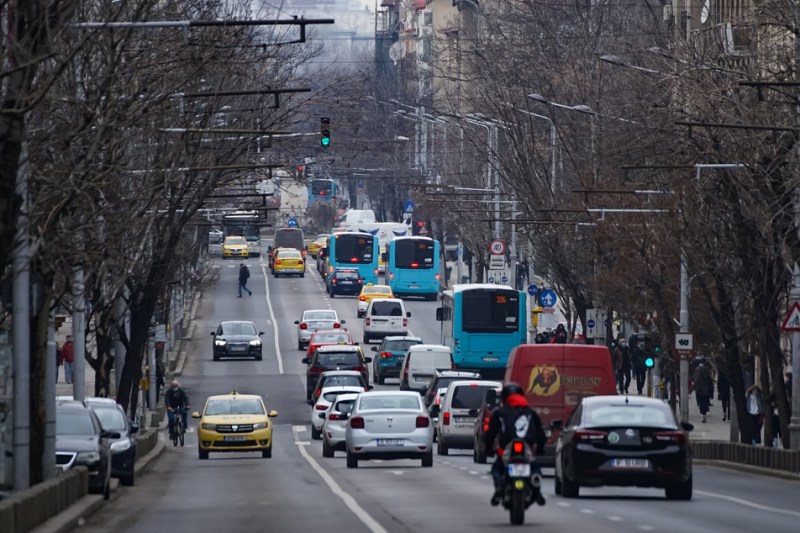
Car traffic in Bucharest. Photo: Shutterstock
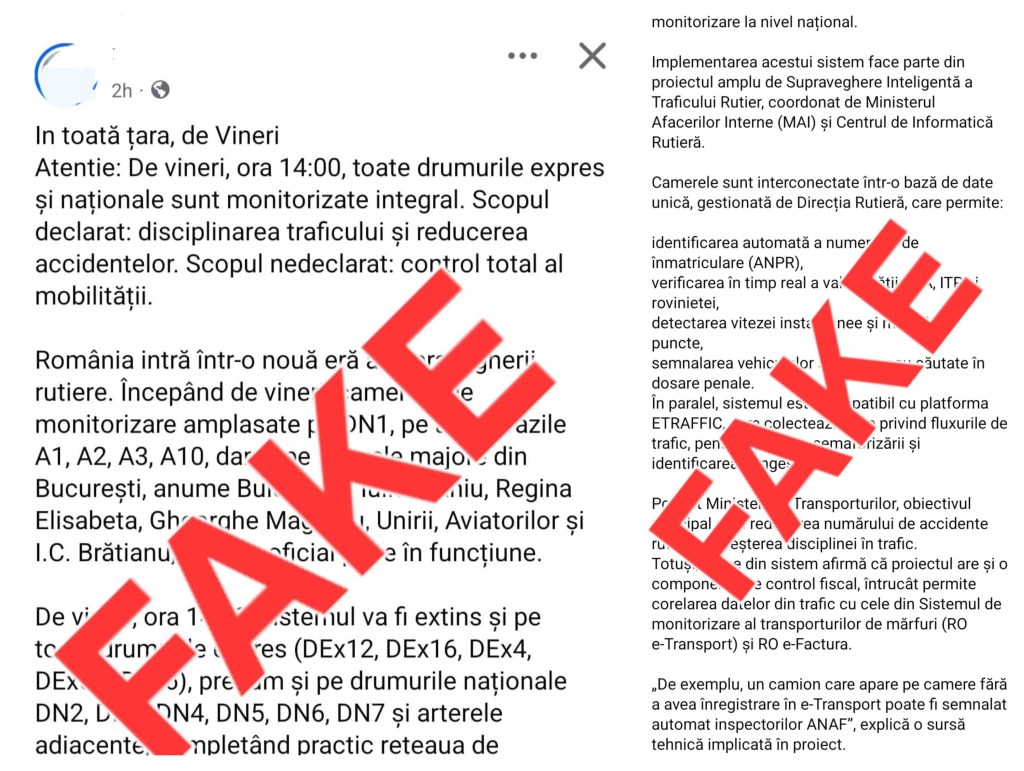
The Ministry of Internal Affairs (MAI) reports, on Thursday, a fake news circulating in the online environment, according to which total control of mobility is being pursued. The message claims that, under the declared goal of improving road safety and reducing the number of accidents, the authorities aim to control traffic.
“We inform you that there are messages circulating on social media and messaging networks that announce the operationalization of an extended system of surveillance of citizens in traffic and in public areas. This information is false, and the topic is one that has been repeated periodically in the last two years,” the MAI said on Thursday, in a message posted on the Facebook page.
The Ministry states that it has denied this information every time. “Please, get informed from official sources. Road safety is a priority, not a joke!”, continued the MAI.
The message referred to by the MAI was shared in several online groups. He claims that, under the declared goal of improving road safety and reducing the number of accidents, the authorities aim at total mobility control.
What does the Minister of the Interior say?
The Minister of the Interior, Cătălin Predoiu, recently announced that the “E – Safe – Integrated Road Monitoring System” will be expanded, and images will be collected from all the cameras installed by local authorities, as well as those sent by drivers in traffic.
“No, it's not about “Big Brother”, but about a digital shield of protection and safety”, the minister said, also specifying that a percentage of the fines paid will be directed to road education and to the maintenance of technical systems.
Later, the MAI made clarifications about the E-Sigur System and the use of traffic monitoring cameras, after Cătălin Drula (USR) accused that the cameras already installed are not being used to prevent traffic tragedies.
The MAI indicated that the GEO subject to public debate clearly establishes the legal framework through which the images transmitted by traffic cameras are used to identify violations and generate digital minutes. Then, there is another stage to allow the connection of the cameras installed by the local authorities. Since they installed each other type of camera and with other characteristics, they must all be approved and tested, before being connected to the national system. Otherwise, errors may occur that can lead to the annulment of the minutes in court.