Poland on the map of mega data centers. Dell and AMD are building energy-efficient AI clusters [WYWIAD]

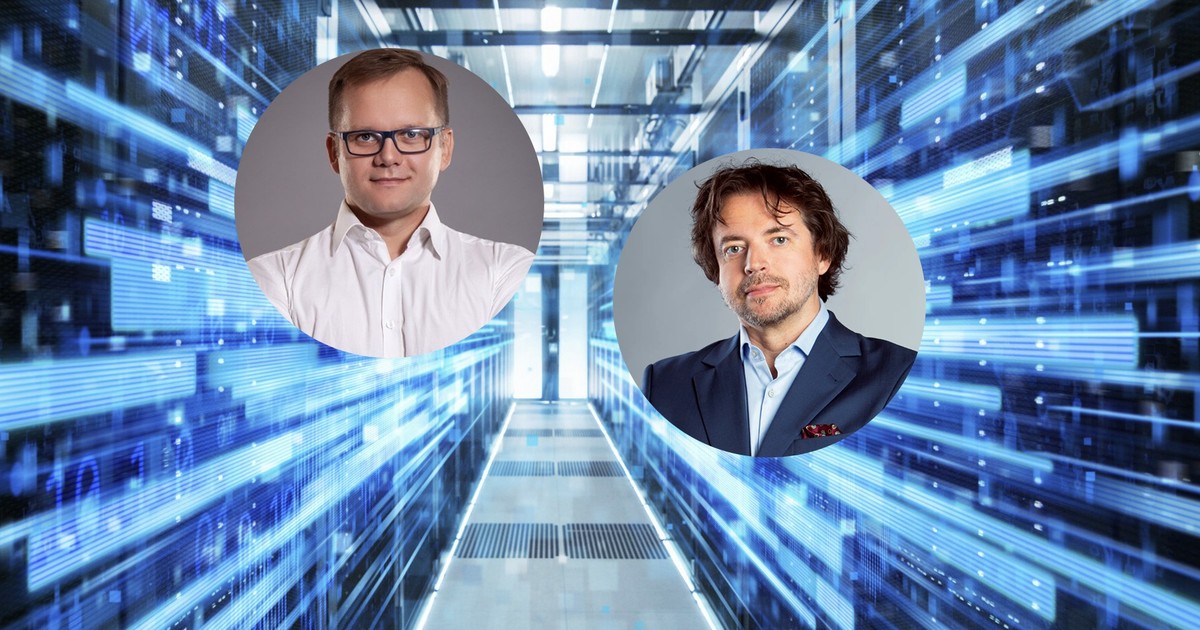
Grzegorz Kubera, Business Insider Polska: AMD announced a 38-fold improvement in energy efficiency at the single node level compared to 2020, exceeding the 30×25 goal. What exactly is behind this? How much of this improvement do customers actually see in production workloads in the context of generative AI?
Adam Tomczak, development manager in the Central and Eastern Europe region at AMD: Energy efficiency has been one of the priorities for a long time, so both the Zen (CPU) and AMD CDNA (GPU) core architectures have a specific development path that determines energy management as absolutely crucial.
This approach to hardware design has resulted in the fact that today we can offer our customers processors with up to 192 cores, although in 2017 the number of 32 seemed extremely high. All this allows you to modernize data centers, achieving dramatically higher power density and efficiency, which translates into savings in space and energy costs. It is worth emphasizing that these are some of the most important factors in IT maintenance and at the same time one of the biggest worries and limitations when increasing computing power.
Modern AI infrastructure is very energy-intensive, and the cost of its operation is increasing exponentially. In the case of AI training and HPC-typical tasks, the platform with four AMD Instinct accelerators and an AMD Epyc processor consumes as much as 97 percent. less energy than the system from 5 years ago, which offered similar performance.
Your goal for 2030 is a 20-fold increase in the efficiency of entire server racks. What technologies will enable this and what requirements does this direction pose for data center operators in Poland?
Adam Tomczak (AMD): This goal reflects what we have direct control over, which is the hardware from the silicon level to the entire system. And this includes improvements in each of the components of the rack, i.e. processors, accelerators, memory, network and storage controllers, as well as software. The starting point is systems with AMD Instinct MI300 series accelerators, and an important part of the plan to achieve this goal will be the infrastructure called Helios in the form of a complete rack system with the next generation of CPU, GPU and DPU.
Importantly, the goal does not take into account what other software developers can achieve, who are developing better and better algorithms with lower precision. If these are taken into account, a 20-fold increase could effectively translate into an increase of up to 100-fold in 2030. Operators should therefore take into account the declared increase in efficiency when designing new data centers or modernizing existing ones.
AMD announces a goal of 20 times the efficiency of server racks by 2030, and how does Dell plan to design racks and entire modules to actually achieve this goal?
Rafał Szczypiorski, Business Development Manager GSS at Dell Technologies: Many elements influence the increase in rack efficiency, both the design of racks and entire IT infrastructure modules. Dell designs racks and modules with next-generation hardware in mind, especially with more efficient processors and components from manufacturers such as AMD.
It is very important to develop cooling solutions – implementing more effective, often hybrid cooling systems, including liquid cooling, which support higher server density and minimize energy losses.
Equipping cabinets and modules with advanced energy and temperature monitoring and management systems allows for appropriate adjustment of environmental parameters and optimization of the operation of the entire infrastructure. In the long term, it is important to design racks and modules in a way that allows for easy expansion and adaptation to changing performance requirements. All elements must form a full ecosystem of solutions. Cooperation with AMD, integration with management software and other technologies – all this increases the efficiency of data center environments as a whole. In practice, Dell combines the above elements within platforms such as PowerEdge, constantly improving designs in terms of energy efficiency, performance and implementation flexibility.
Companies want to reduce energy consumption in Gen AI by adjusting the size of AI models. What practices does AMD recommend to maintain quality with a lower energy and cost footprint?
Adam Tomczak (AMD): There are several possible paths here. First of all, the use of new algorithms with lower precision, such as FP4 and FP6, because they increase the efficiency of calculations and memory use. Additionally, choosing accelerators with more memory allows larger models to run on a single GPU, which can reduce overall power consumption and costs.
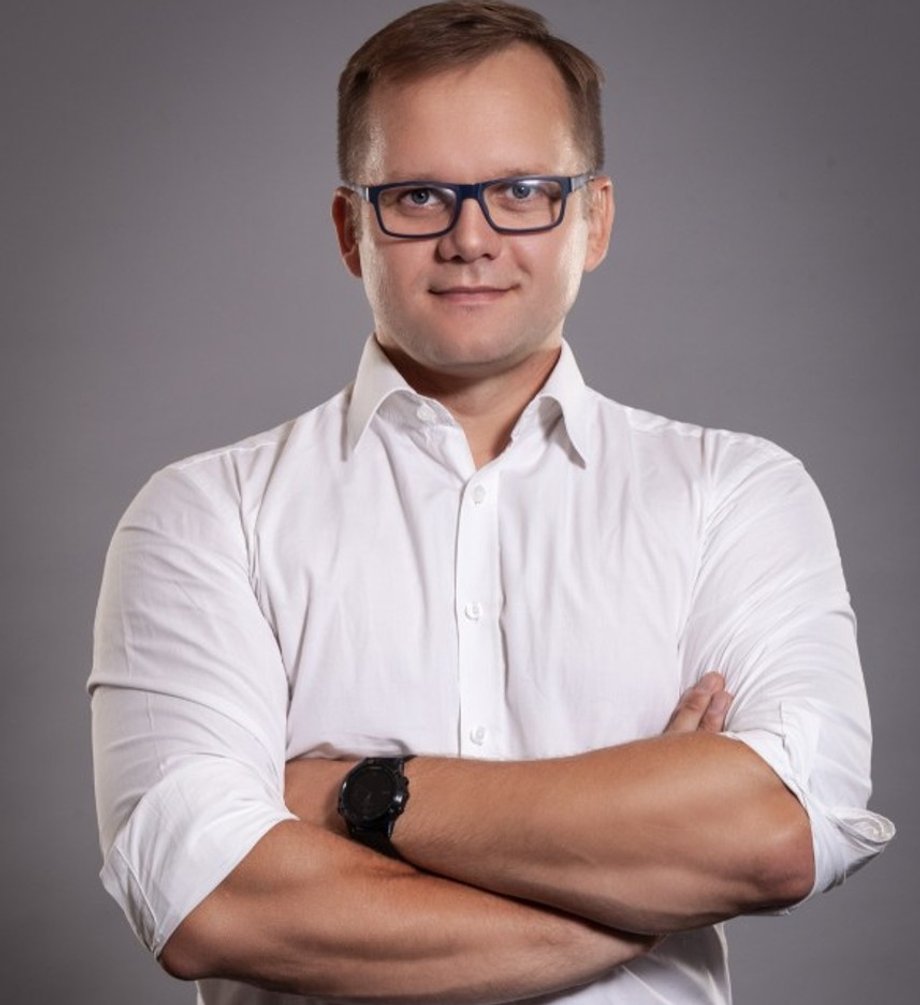
In the photo, Adam Tomczak, development manager for the Central and Eastern Europe region at AMD
|
mat. press releases
In addition, the latest development environments support features such as distributed inference, orchestration engines (vLLM, SGLang), and offer quantization libraries – all this helps to scale workloads even more effectively. This translates into lower energy consumption and the cost of AI training and inference.
See also: An AI factory will be built in Munich. Nvidia and Deutsche Telekom will increase Germany's computing power by half
More and more data centers in our country
The scale of data center plans in Poland is very large. How does AMD look at Poland's role in the CEE region in terms of large AI and HPC clusters?
Adam Tomczak (AMD): We cooperate closely with the largest HPC centers in Poland and the Central and Eastern European region, including universities. The most powerful Polish supercomputer, Helios, uses AMD processors. The same applies to Athena, which is also located in Cyfronet AGH in Krakow.
We also cooperate with companies in the industry, such as Dell, to offer Polish companies the best possible opportunities. AMD equipment also powers the infrastructure of such leaders as Platige Image and LH.pl, so Poland's role is growing every year, and the scale of data center expansion plans only confirms this.
How should companies calculate return on investment and total cost of ownership in the context of generative AI on their own infrastructure – on-premises, not in the cloud?
Adam Tomczak (AMD): GenAI solutions are best assessed based on TCO, or Total Cost of Ownership, and not just power consumption. TCO includes all important factors, i.e. performance per Watt, system cost and density, cooling and overall infrastructure efficiency and many others, including possible licensing costs.
At the hardware level, greater memory capacity and bandwidth allow fewer GPUs to be used to perform the same task, which can reduce acquisition and support costs. For example, the AMD Instinct MI355X accelerator can provide up to 40 percent. more tokens per dollar compared to the competition, which translates into measurable savings. Reducing the amount of hardware needed and overall improving efficiency at the rack or system level can help reduce associated carbon emissions in an era of such high demand for computing power.
With customers' growing energy efficiency expectations, can Dell achieve more with current AMD technology?
Rafał Szczypiorski (Dell Technologies): AMD Epyc processors, available in Dell PowerEdge servers, set new standards in energy efficiency. They use advanced lithographic processes, Zen architecture and internal energy management mechanisms. By integrating these processors, Dell gains the opportunity to implement broader optimization mechanisms at both the hardware and software levels, improving monitoring and automatic response to changing application needs.
Thanks to AMD technology and Dell's advanced automation and energy management systems, such as OpenManage Enterprise Power Manager, iDRAC, Smart Cooling and AI-driven Dell AIOps, organizations can not only meet growing energy efficiency requirements, but even set standards in sustainable, scalable and secure IT infrastructure management.
These solutions enable automation of energy bills, real-time carbon footprint reporting, dynamic adjustment of power consumption to current loads, minimization of costs and emissions, as well as compliance with ESG regulations.
Check also: They are already making money from artificial intelligence. How many? The wage premium exists and is growing
Factory in Łódź and on-site service
What factors or metrics make Dell & AMD's infrastructure seem to be well suited to the needs of companies operating in Poland?
Rafał Szczypiorski (Dell Technologies): More and more companies on the market, from universities to the financial and retail sectors, indicate in research and case studies that the main additional measures are the availability of support services, local service and a fast path to update equipment to meet national compliance requirements, GDPR, or specific industry needs (e.g. medicine, science, manufacturing).
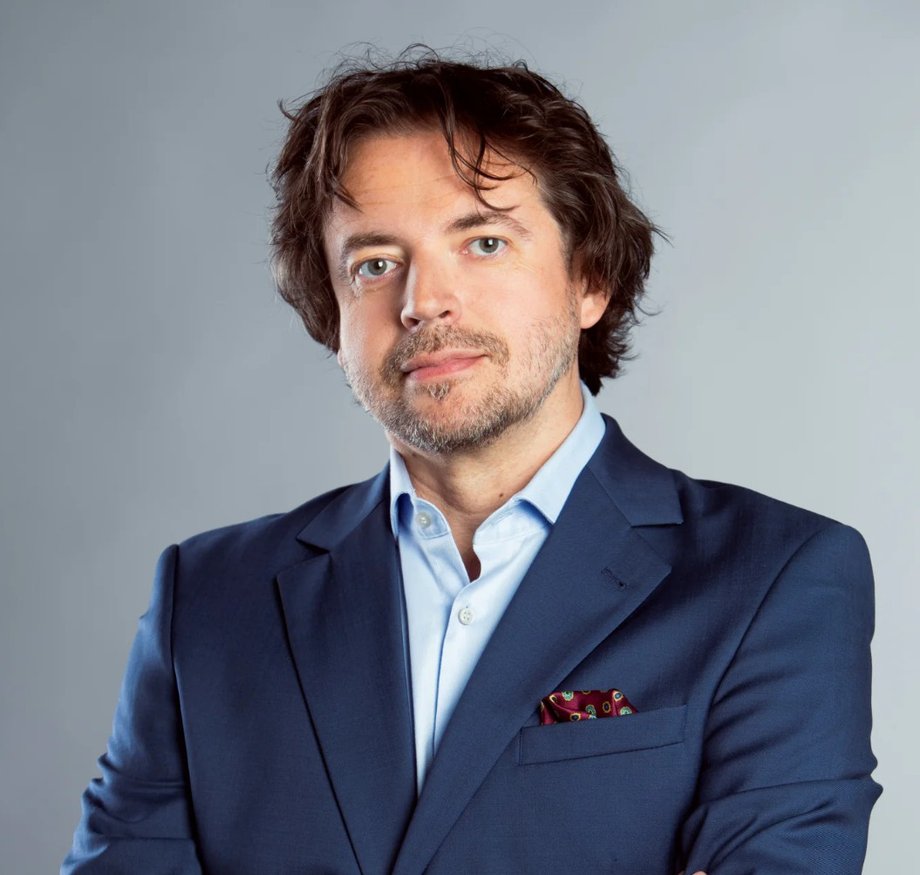
In the photo, Rafał Szczypiorski, Business Development Manager GSS at Dell Technologies
|
mat. press releases
Dell Technologies has a clear advantage thanks to its local manufacturing capacity – the factory in Łódź, which has produced over 60 million systems since 2007. In Polish implementations, the flexibility of orders (adaptation to hybrid, edge and distributed IT environments) as well as the ability to easily select hardware configurations – from desktops through 1U/2U servers to dense GPU systems for AI in data centers or supercomputing – are highly appreciated.
Companies around the world pay attention to consolidation benchmarks, e.g. new PowerEdge servers from AMD allow you to reduce the number of existing machines by up to 7:1 (e.g. 7 older servers replace 1 new one), which translates into a drop in energy costs by up to 65-80 percent and a drop in software license costs (SQL/Windows/VMware) by up to 34-80 percent. and a measurable reduction in space in rack cabinets. This can be especially appreciated in Polish enterprises with high energy prices and pressure on ESG.
Systems with AMD Epyc and Dell platforms are characterized by high energy efficiency, which in Polish conditions, with rising energy prices and growing environmental requirements, is becoming one of the main investment criteria.
An important factor is also the use of built-in security solutions (Hardware Root of Trust, Secured Component Verification, Secure Boot, BIOS verification, etc.), which Polish customers use to meet GDPR, UODO, DORA and industry standards, e.g. KNF, CSIRT or NIS2.
— Interviewed by Grzegorz Kubera