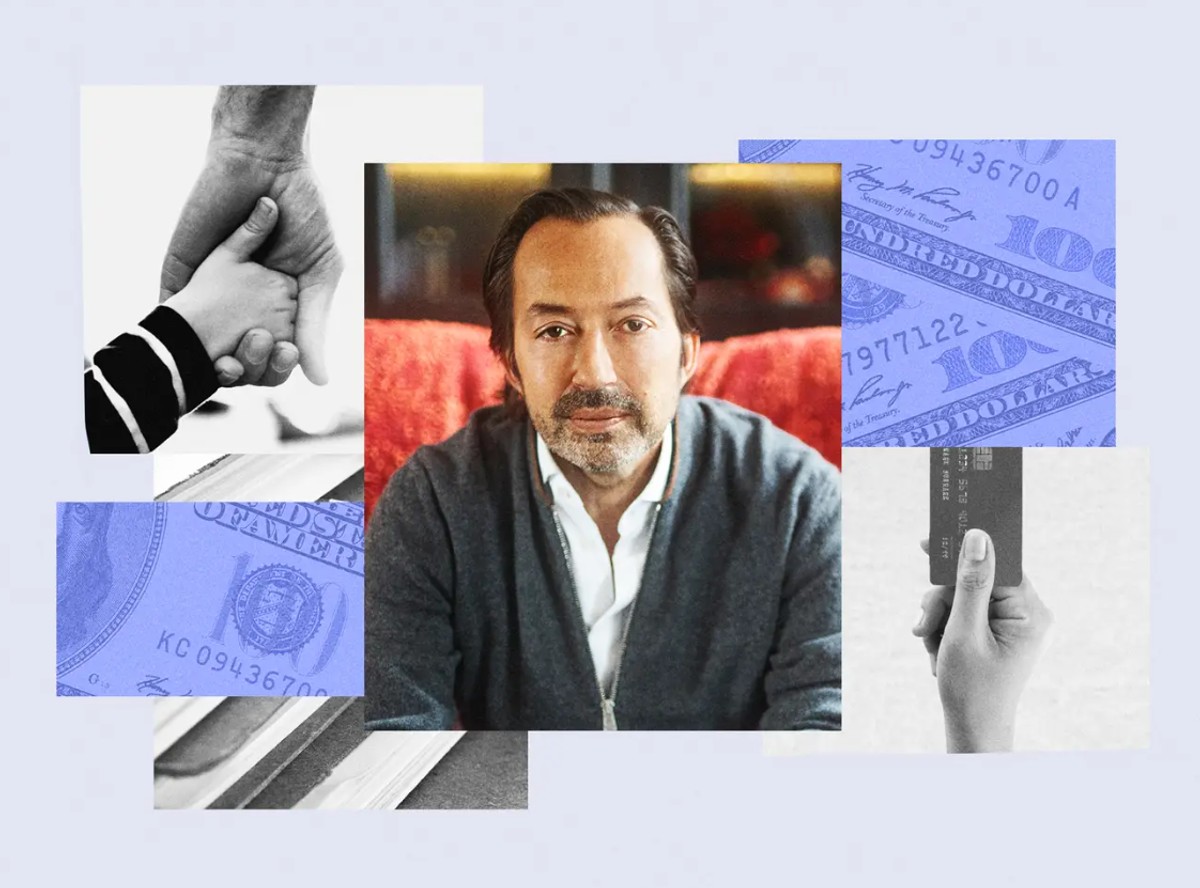
This first-person article is based on an interview with Jean-Baptiste Wautier, who lives in the UK and is the founder of the Wautier Family Office. The text has been edited for brevity and clarity.
I started a family partly to create what I never had: a home full of love. My parents weren't good people – let's leave it at that. We were middle class, and although they had money to support me, they did not do so, financially or otherwise.
This is where my determination comes from. I was bullied at school and penniless in college. I had to make my own way.
Today I have four wonderful children, two grandchildren and a loving wife. They are my greatest success. I have also achieved financial success in the UK and USA, running companies and investing.
Although I live in the UK, I regularly visit the US to be with my daughter and grandchildren. We often spend the entire vacation there to gather the family together.
I have always been shy when it comes to disclosing my net worth publicly, but I will say this: I am an ultra-high net worth person — as defined by banks (Editor's Note: Financial institutions define such a person as someone with at least $30 million in investment assets).
I want my wealth to emphasize impact, not ego. This is how I do it – in family and philanthropy.
Read also in BUSINESS INSIDER
1. I protect my children from knowing about my assets
Today I am 56 years old and my children are 21, 24, 26 and 33. They still don't know how big my fortune is.
I wanted them to feel normal and not experience the negative effects of excessive wealth. I didn't travel with them in business class, live in a huge house, or send them to exclusive summer camps.
However, my wife and I realized that it was impossible to completely shield our children from the knowledge of their wealth – that's how the world works. However, we still decided not to reveal the extent of our wealth until they are all grown up and working.
My youngest is now finishing his master's degree and will start working full-time in the fall, so that moment is fast approaching. It worries me a little because I don't know how they will take it.
We always told children not to count on inheritance. They work in professions that provide solid earnings – two of my children earn around PLN 60,000. pounds per year (nearly PLN 290,000). I am glad that they have created a good, successful life for themselves.
See also: This is a man who sells islands professionally. “Basically anyone who can afford a car can buy an island.”
2. I write down our values
When the children were little, I taught them three family values: honesty, courage and empathy. As I grew older, I added two more rules: humility and integrity.
When our oldest was a teenager, we created a family charter describing these values. Both parents and four children signed it – we each still have a copy.
Whether you run children, a business or a charity, writing down your values is crucial. This creates a guiding document for future generations, helping to preserve the original meaning of heritage and avoid its dilution.
3. I focus on one area of influence
To really make a difference, you need to focus. My philanthropy focuses on access to education.
It's quite a narrow area, but I still have to make many decisions – should I invest in access to education in France, where I was educated? In the UK, where did my children go to school? Or maybe in the USA, where my grandchildren grow up?
I evaluate where my contributions will have the greatest, lasting impact by looking at the sustainability of the organization.
I want to be sure that my money will make a difference for a long time. Otherwise, it's like throwing money into a fire: it gets warm for a while, but nothing remains.
4. I give anonymously
Too often I see ego-driven philanthropy: people want their name on a building or a mention in the press. Ego will always be a part of giving, because giving simply makes you feel good. However, I try to actively oppose this by donating anonymously.
I created a scholarship at the private high school my children attended. The school wanted to name it after me, but I said no – I said I preferred it just be called the school's scholarship fund.
It was then suggested that they at least reveal my identity to the beneficiaries so that they would know who was financing their education. I didn't want this – these students deserve to be there, and they shouldn't feel indebted to me.
5. I accept how complicated estate planning is
My family is incredibly close-knit – that is my greatest legacy. Still, there are real generational differences.
What is a goal for me, my children may see differently. I don't know yet how we will solve this – I imagine it will require many conversations in the years and decades to come.
Even in a family full of love and trust, estate planning will be one of our greatest challenges.
The above text is a translation from American edition of Business Insider