The decline of the famous Unirea store in Bucharest and what happened to the dream of state stores in Eastern Europe “giving cheap food”

From Bucharest to Sofia and Madrid, state-owned stores reappear as the magic solution whenever prices rise and populist pressure intensifies. They promise fairness, sovereignty and protection of local farmers. But almost nowhere do they pass the market test.
- Near the end of November 2025, a former Romanian finance minister, Eugen Teodorovici, now a member of a party that promises “food sovereignty,” said that “it's time to build four peasant malls,” owned by Bucharest City Hall. But what happened to the big state stores that dominated the cities of Eastern Europe 40 years ago?
- The article is part of the Pulse project, an international journalistic consortium of which HotNews is a part, which provides the public with documented and diverse perspectives, with information from several countries, on issues of great public interest. The article was written by Dan Popa (HotNews – Romania), together with Lola García-Ajofrín (El Confidencial – Spain), Dragomir Nikolov (Mediapol – Bulgaria), Michał Kokot (Gazeta Wyborcza – Poland).
- Join readers across Europe who help us shape more connected cross-border reporting on European issues. Complete the survey at the end of the article.
Placed near the “zero kilometer” of Bucharest, the Unirea store represented during communism one of the few places in the capital of Romania where you could find clothing or food, if at all, but never according to demand. In the first years after the fall of communism, in December 1989, its ground floor received a McDonald's store. Then came rival KFC, as a battle of competing symbols of the desirable capitalist ideal.
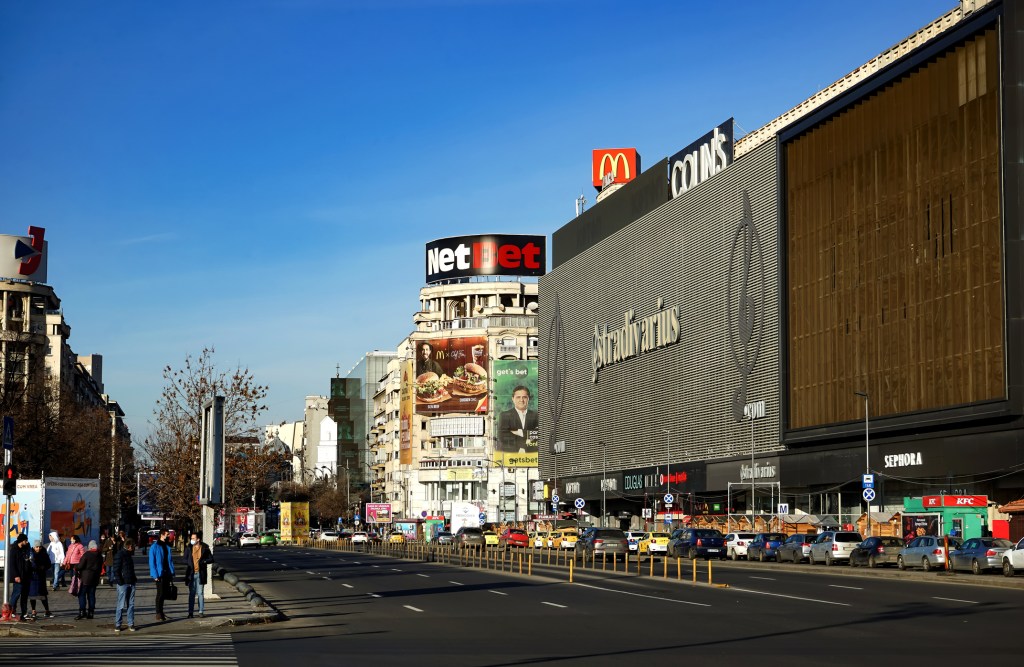
Unirea received the pompous name of Unirea Shopping Center. It has been transformed into a “mall” divided into rather modest sectors, a mixture of oriental goods and authentic brands.
Although placed on a plot of 16,000 square meters, “probably the most expensive real estate space in Bucharest”, and having almost 45,000 useful for shopping, Unirea has fallen into disrepair.
Rebirth of a legend
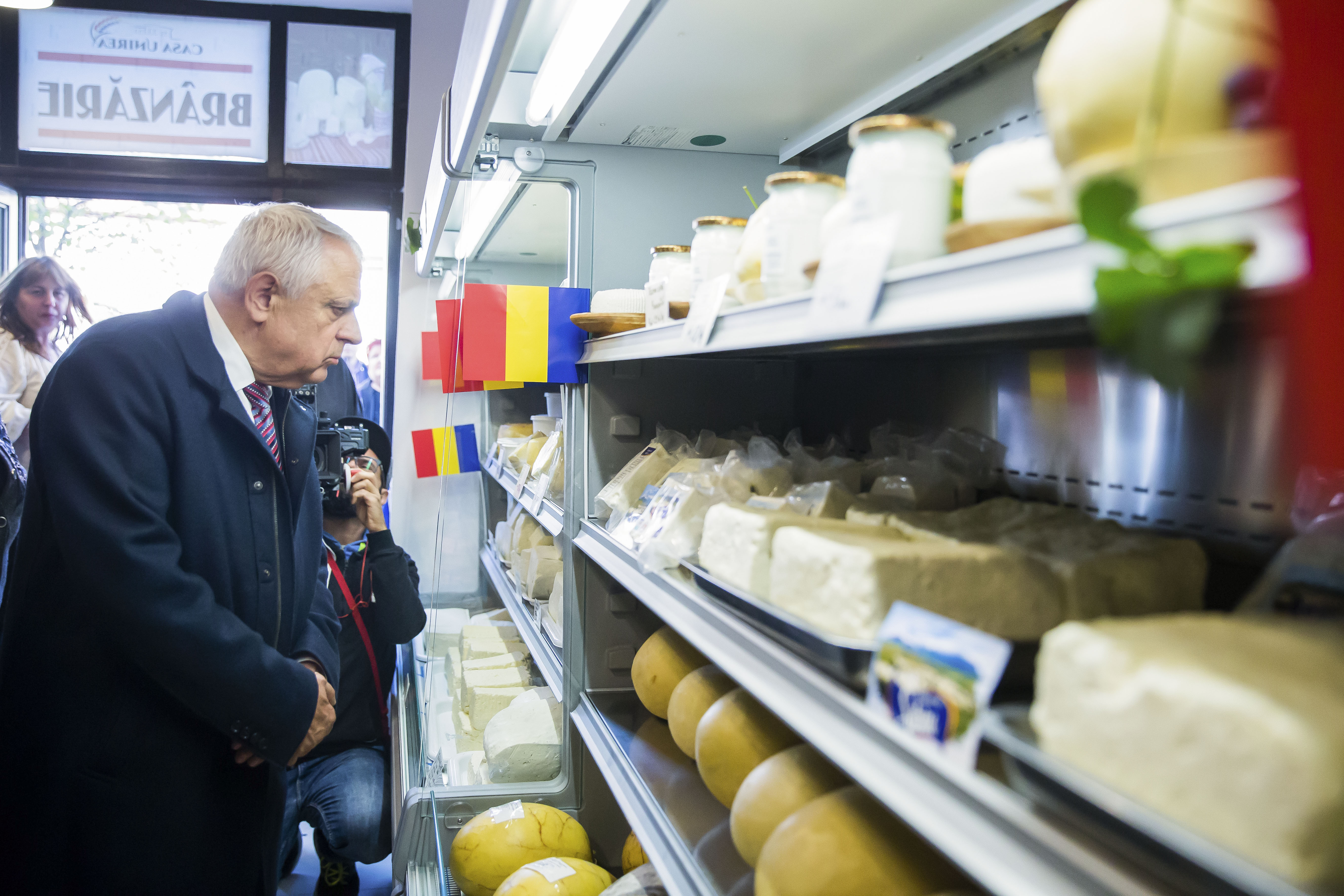
The name Unirea seduced so much that when, in December 2018, Romania launched the state “Casa de Comerț Agroalimentar”, the initiative took over the generic Unirea brand. The project was called “Casa de Comerț Agrialimentar Unirea”.
With no physical connection to the downtown store, the plan itself seemed ambitious: a state-backed chain of stores that would connect small farmers directly with consumers, cutting out middlemen and offering food at fair prices.
It was an idea with a double stake — social and economic. In a country where 70% of processed products are imported, the Union had to become an instrument to restore the trade balance and provide real support for local producers.
From hope to institutional ruins
Today, the company only has two employees. The shops closed. The board of directors has 3 vacant positions.
And in October 2024, DNA anti-corruption prosecutors searched 60 addresses in 12 counties, in a case involving fraud of almost 8 million euros.
The original concept was logical: building a network of collection and processing centers that would give farmers bargaining power and access to large markets. Own stores were to sell Romanian products under a common brand, and farmers were to receive a larger share of the final price.
But the execution failed completely. Fictitious contracts, undelivered goods, unpaid receivables of over 50 million lei. shop The cheese shop! from Sibiu closed, and the partnership with Doraly was terminated.
The former general director, Mariana Cotoi, was arrested for abuse of office, being accused of favoring certain companies and misappropriation of funds.
A company only on paper
The budget for 2025 foresees revenues of 6.8 million lei and expenses of 5.1 million lei — figures that reflect administrative survival rather than a relaunch strategy.
The Minister of Agriculture, Florin Barbu, states that he will not abolish it Union Housebut will “reprofile” it by developing fruit and vegetable centers financed through the Investalim program.
Bulgaria: “The People's Store”
In Sofia, the government has promised to launch 50 state-owned grocery stores by Christmas 2025, operated by the newly established company Store for the People (Grocery store).
The initiative — associated with politician Delyan Peevski, sanctioned by the US under The Magnitsky Act — provides for the sale of local products with a fixed addition of 10%.
“No EU country has managed to lower prices through state-owned stores. It's political theater, not market reform,” economist Martin Dimitrov told Mediapool.bg.
Checks by the Bulgarian media show that no acquisition procedure has been initiated so far, although the official promise is that the first stores will be opened “before New Year's Eve”, bordering on the new year 2026.
Spain: “Precios Justos” – the dream of the state supermarket
In 2023, the leaders of the left-wing Podemos party proposed the creation of a state supermarket chain called Precios Justos (“Fair Prices”), aimed at combating what they called the “food oligopoly”.
The plan provided for 1,000 shops and 50,000 jobs, as stated by Minister Ione Belarra, quoted by Europa Press.
But the project was quickly rejected. The General Director of the Association of Manufacturers and Distributors (AECOC), José María Bonmatí, told Agencia EFE that “profit margins are only 2%” and 95% of the cost increase is caused by global factors such as energy and drought.
The Spanish government did not take the initiative further.
Poland: between ideology and pragmatism
In Poland, the idea of a state food chain keeps reappearing. In 2020, Deputy Minister Artur Soboń proposed ca Krajowa Grupa Spożywcza (KGS), a state-controlled agri-food conglomerate, to develop a network of local stores.
In 2024, KGS had a turnover of 5.4 billion zlotys (1.25 billion euros) and a profit of 318 million zlotys (74 million euros).
In October 2025, former minister Marek Sawicki even suggested that the state buy the Carrefour chain, which is pulling out of Poland — a transaction estimated at 1.86 billion euros.
But the government has never confirmed interest in the subject
“Without additional capital from the Treasury, this is just a fantasy,” Sawicki admitted to Gazeta Wyborcza.
Join readers across Europe helping us shape more connected cross-border reporting on European issues by completing the survey below.

The PULSE project is a European initiative to promote cross-border journalistic partnerships, co-financed by the European Commission (DG CONNECT) within the Multimedia Actions through grant agreement LC-02772862. HotNews.ro collaborates within the project with other prestigious publications from Europe: Delfi (Lithuania), Deník Referendum (Czech Republic), the largest Austrian newspaper Der Standard (Austria), some of the largest publications in Greece – EFSYN, El Confidencial – Spain, the largest Polish newspaper Gazeta Wyborcza, the oldest Bulgarian analytical and information site Mediapool, one of the largest independent Hungarian publications HVG and Italian economic profile newspaper Il Sole 24 Ore, one of the oldest and most powerful publications in the Peninsula.
Three renowned transnational media organizations – OBCT (Italy), N-ost (Germany) and Voxeurop (France) will coordinate the project activities.