Putin's game in the face of US pressure. The Kremlin leader no longer feigns engagement in peace negotiations


While US President Donald Trump is accelerating his efforts to resolve the conflict, analysts cannot help but notice Russia's ambiguous position on engaging in negotiations, Kyiv Independent reports.
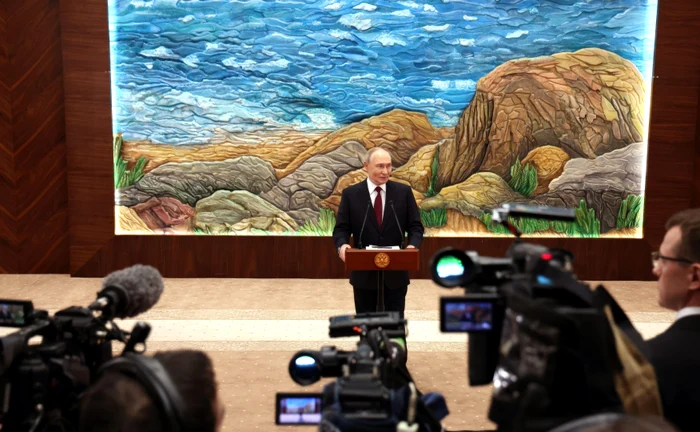
PHOTO profimedia
The peace plan in its original form, unveiled last week, leaned in favor of Russia – even so it is not certain that Moscow would have accepted it, as it still did not tick off all of Russia's demands. In addition, observers note that Moscow has never signaled in clear terms its willingness to accept the points.
“They were very reticent about negotiations and what they would accept as a form of agreement,” Emily Harding, vice president of the defense and security department of the Center for Strategic and International Studies, told the Kyiv Independent.
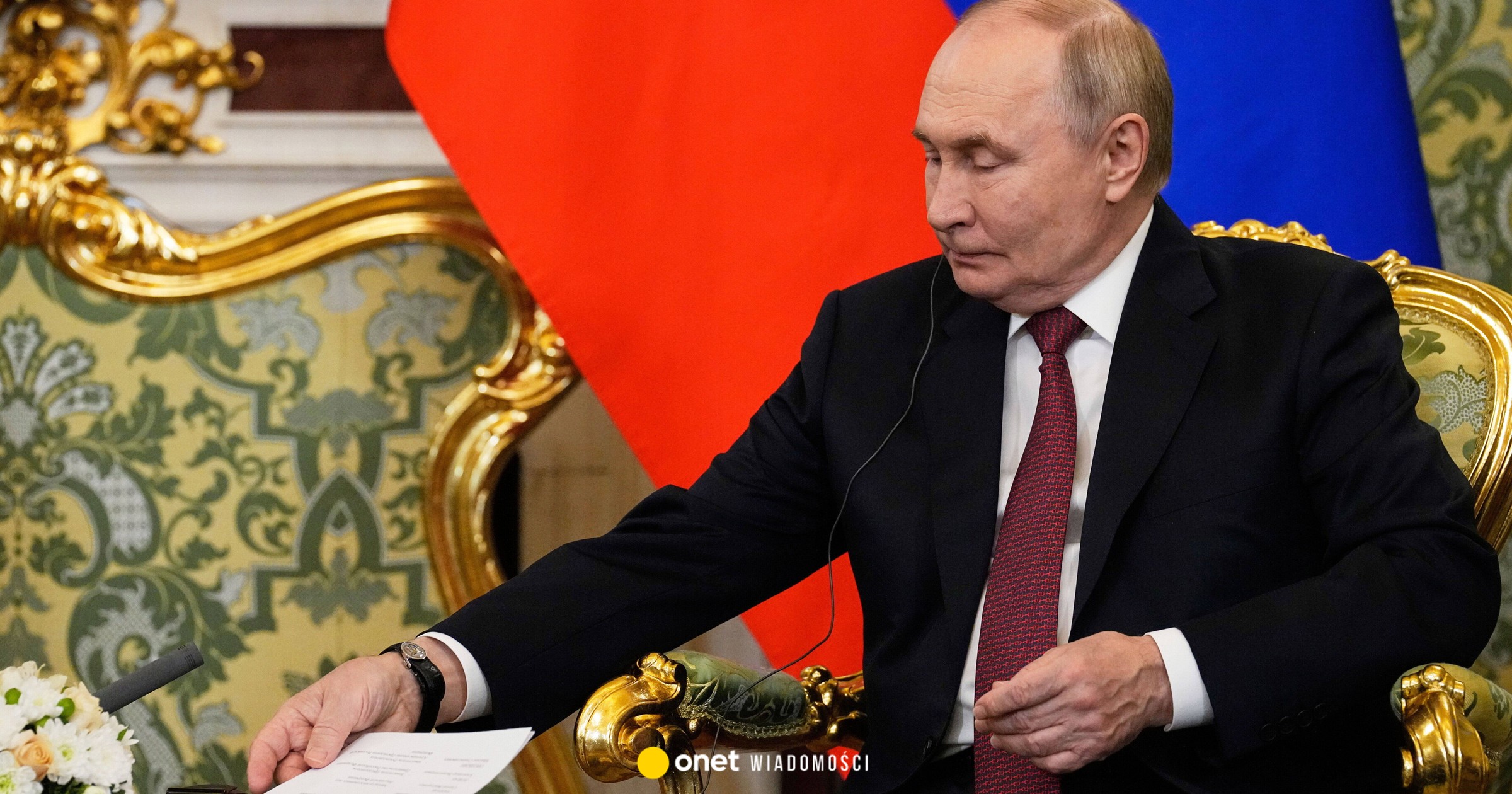
In fact, the Kremlin shows no sign of any interest in a US-brokered peace deal, with Russian President Vladimir Putin and other senior officials merely repeating maximalist demands and refusing to accept any kind of compromise.
This attitude shows that instead the Kremlin is trying to buy time and undermine Ukraine's allies, analysts say. There is also another objective: to throw the blame on Kiev, accusing the Ukrainian side of rejecting Russian conditions, which are practically tantamount to capitulation.
New evidence suggests that the initial version of the peace framework – the 28-point plan – came directly from Moscow, despite Washington's assurances that it was drawn up independently.
In one of the conversations revealed by Bloomberg on November 25, two Kremlin advisers discuss how US special envoy Steve Witkoff should present a Russian peace proposal as an American initiative.
“And let them do their version (of the peace plan),” said Russian envoy Kirill Dmitriev. “But I don't think they'll accept our version as it is, but at least it will be a very similar version.”
The peace framework required Ukraine to cede territory, limit alliances and drastically reduce its military — tougher demands than previously discussed, raising concerns that Washington could pressure Kiev to accept a deal tailored to Moscow's interests.
For Ukraine, the initial framework was tantamount to capitulation.
“The 28-point plan was dangerous because most of its provisions were aimed at weakening and isolating Ukraine, which risked facilitating or even encouraging new aggressions,” Pierre Haroche, an expert on European security, told the Kyiv Independent.
Analysts say the Kremlin's aim was to test how far Ukraine could be pushed
“As for the 28-point peace plan, it can best be understood as a fumble to see what Ukraine might give up when putting pressure on Kiev,” said Oleksa Drachewici, an assistant professor of history at Western University.
In all this atmosphere marked by uncertainty, Moscow's public messages were somewhat contradictory.
On November 21, Putin explained that the original maximalist proposal was discussed during the Alaska summit, claiming that Washington had asked Moscow to “show flexibility” – and that Russia had agreed.
He described the 28-point plan released as the US framework as a “modernized” version of those talks and suggested it could serve as a basis for negotiations.
But as the revisions began to take shape, the Kremlin's tone changed.
US Army Secretary Dan Driscoll traveled to Abu Dhabi on November 24 for talks with Kirilo Budanov, the head of Ukraine's military intelligence, as well as a Russian delegation. Washington was to present the revised peace plan to Moscow.
After consultations in Geneva on November 23 between Ukrainian and American negotiators, the proposal was reportedly reduced from 28 points to 19. Ukrainian President Volodymyr Zelensky said the plan was now more aligned with Ukraine's needs.
On the other hand, Russian Foreign Minister Sergei Lavrov hinted on November 25 that the Kremlin will push back with the revised US peace plan if it reflects Russia's demands to a lesser extent than the original version.
“If the spirit and the letter of the Anchorage agreement were diluted — especially with regard to those key agreements that were established there — then, of course, we will face a fundamentally different situation,” Lavrov said, referring to the Aug. 15 meeting between Trump and Putin in Alaska.
Meanwhile, Putin reiterated Russia's maximalist demands on November 27, indicating that he is not interested in direct negotiations with Ukraine.
He argued that “signing documents with the Ukrainian leadership is useless.”
“Of course, eventually we want to reach an agreement with Ukraine. But right now, it's practically impossible — legally impossible,” he said. “…I think that the Ukrainian leadership made a fundamental, strategic mistake when they were afraid to hold presidential elections, after which the president lost his legitimate status.”
Russia has called for elections in Ukraine in hopes of getting rid of Zelensky, destabilizing the political situation and installing Russian puppets in power, experts say. Under the martial law adopted by Ukraine after Russia launched its full-scale invasion in 2022, presidential, parliamentary and local elections are banned during wartime.
Putin also called for Ukraine's Crimea and Donbass to be recognized internationally as de jure Russian.
The Russian leader stated that hostilities will cease only to the extent that Ukrainian troops withdraw from Donbas. Otherwise, Russia will occupy that territory anyway, he added.
Experts warn that revisions to the original peace plan could trigger a new round of obstruction from Moscow.
“Russia is likely to argue that the amended proposals represent an attempt by Ukraine and its European partners to sabotage progress allegedly achieved through cooperation with the United States,” pointed out Natia Seskuria, research associate at the Royal United Services Institute, for the Kyiv Independent.
What Moscow wants to achieve
Analysts say Moscow's goal is not to end the war, but to reshape the narrative, undermine Ukraine's allies and buy time.
Seskuria explained that the Kremlin is trying to portray Kiev as the party blocking peace, while advancing unacceptable proposals for Ukraine.
By doing so, Moscow is trying to strain relations between the US and Ukraine.
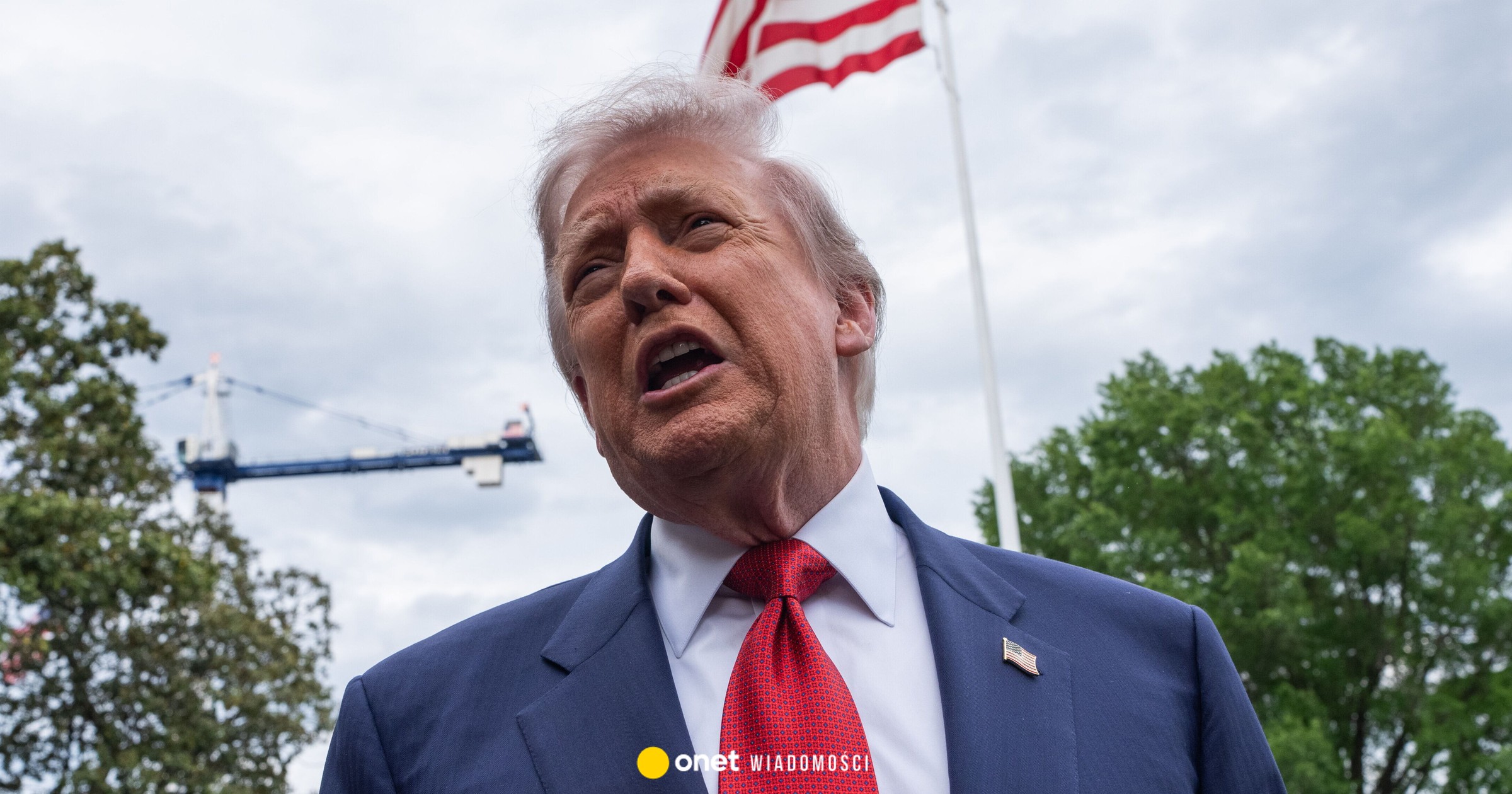
Trump appeared to pick up on that dynamic on Nov. 23, criticizing Ukraine for alleged ingratitude toward U.S. peace efforts.
Drachewoci notes that Moscow has occasionally persuaded Trump to accept its terms, leading to pressure on Zelensky to negotiate on the Kremlin's terms.
“Moscow knows it is being listened to by Trump,” he said, adding that Russia is using that leverage to get the US to put more pressure on Ukraine.
According to Drachewici, Russia's strategy allows it to simultaneously pursue several goals: weakening US support for Ukraine, dividing the US and Europe, and promoting a security order shaped by Washington and Moscow.
There is another aspect to Moscow's strategy. Orysia Lutsevych, deputy director of the Russia and Eurasia Program at Chatham House, advanced the theory that the Kremlin would like to delay the new US sanctions.
“I think Moscow is biding its time to delay the sanctions … and adapt in ways to avoid damaging consequences for its economy and the stability of the system,” she said.
The timing supports this theory. The renewed peace efforts came shortly after the first US sanctions under the Trump administration targeted Russian oil companies Rosneft and Lukoil in October.
Experts doubt that Moscow will accept the revised version of the Geneva plan, which seems more acceptable to Ukraine – and that could be the problem.
“It is very unlikely that they will accept (such a decision),” Lucevici said. “We see them pushing a maximalist agenda because Putin thinks he can win this war.”
Russia has already offered a foreshadowing of its response.
On November 24, Moscow rejected a European-made peace proposal more favorable to Ukraine as “unconstructive”.
Kiev's European partners designed their special plan to counter the original 28-point plan, which faced harsh criticism for heavily favoring Russia.
Yasir Atalan, a data researcher at the Center for Strategic and International Studies, noted that if talks continue, the U.S. plan could eventually deviate from Russia's preferred outcome.
That possibility, he said, explains Putin's cautious tone.
Witkoff, who has been advising the Kremlin on how to talk with Trump, is due to meet with the Russian president next week to finalize the peace deal.
On the other hand, the plan negotiated in Switzerland by Ukraine and the US seems unlikely to satisfy Moscow.
“The Geneva negotiations seem to have removed several points (that favored Russia),” Drachewych said.
“These changes, given that they remove elements repeatedly included in Russia's demands … I suspect will lead to Russia rejecting everything that was negotiated.”
The cycle seems destined to repeat itself: Moscow launches maximalist demands, the West fights back, Russia rejects any compromise, and so on, as the war rages on.