“It's the Germans' problem that they conquered so many countries.” Strong words in the debate about the Berlin monument

2025-11-29 19:02
publication
2025-11-29 19:02
There is an ongoing debate in the “Tagesspiegel” daily about the planned Memorial Site for Poles, victims of war and German occupation in Berlin. Polish historian Robert Traba, in a text published on Tuesday, expresses the opinion that Poles have a right to a monument that Germans also need.
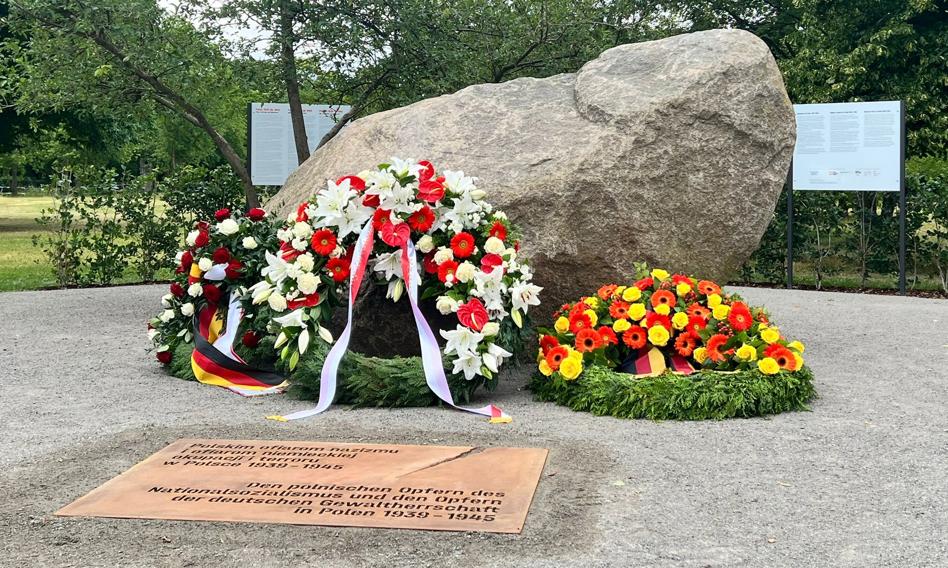
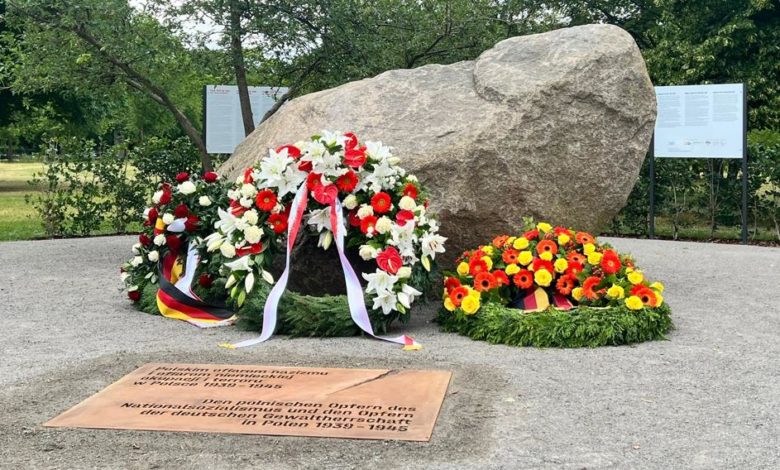
Traba, co-chairman of the Council of the Foundation for Polish-German Cooperation, is arguing with SPD politician Markus Meckel, who previously presented arguments against a monument dedicated exclusively to Poles. According to the politician, a place should be created in Berlin dedicated to all victims of German crimes. Otherwise, there may be “competition between victims.” Meckel believes that the Memorial Stone unveiled in June in Tiergarten Park, intended as a temporary solution, is a “worthy” and completely sufficient accent.
Traba draws attention to the lack of knowledge in Germany about German crimes committed against Poles. It recalls the results of an analysis of German history textbooks conducted in 2018, which showed that nowhere was there even a mention of the General Government – “the largest laboratory of mass crimes in the history of humanity.” Information about the uprisings in Warsaw in 1943 and 1944 was available in only two textbooks.
“I suppose that the average German citizen knows more about Polish anti-Semitism than, for example, the murder of Polish elites, the destruction of hundreds of Polish villages, the expulsion of hundreds of thousands of Polish citizens (…), the Germanization of Polish children or three million Polish forced laborers,” writes Traba.
“Poles have the right to demand commemoration of Polish victims – they were sent to prisons and concentration camps as Poles, Warsaw insurgents, members of the Home Army,” the historian emphasized. He admitted that Germany had a problem because, as someone said in the discussion, there were too many occupied countries. “But this is the Germans' problem – they should not have conquered so many (countries)” – we read in “Tagesspiegel”.
Germany's task is to provide the average citizen with the necessary knowledge about the occupation – emphasized the historian, drawing attention to the fundamental differences in the meaning of the concept of “occupation” in Poland and in Germany occupied by the Allies after 1945. The German occupation of Poland from 1939 to 1945 was a fight for “biological survival because Poles were threatened with extermination.”
Monuments commemorate events or personalities and their purpose is to save them from oblivion, although they do not always fulfill this purpose. The content of the message and the contemporary aesthetic form are important, but this is not enough if the monument is not systematically “enlivened” with social and political rituals. Without rituals, the monument becomes a “dead element of the landscape,” Traba writes, and concludes with an appeal to German politicians and intellectuals: “Create such a ritual. Let's learn to remember through empathy, not an ideologically colored competition of victims.”
Robert Traba is a professor at the Institute of Political Studies of the Polish Academy of Sciences. In the years 2006-2018 he headed the Center for Historical Research of the Polish Academy of Sciences in Berlin. (PAP)
lep/ kar/ mhr/