Emergency order for the case of Lukoil, a company affected by US sanctions. The government introduces a new “extended surveillance” mechanism


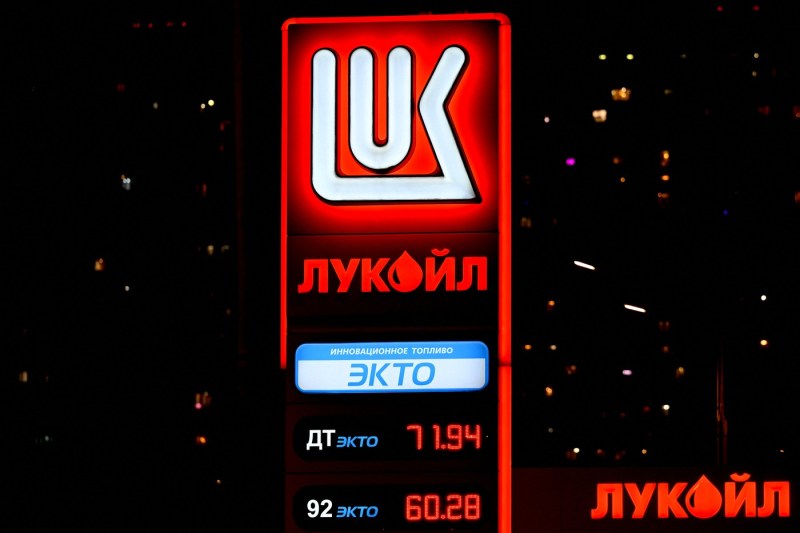
Lukoil company. PHOTO: AA/ABACA / Abaca Press / Profimedia
The Ministry of Foreign Affairs (MAE) launched, on Wednesday, in public debate, a draft law designed to provide the Government with the necessary tools to manage the US sanctions on Lukoil assets. The project introduces an “extended supervision” mechanism, which allows the Government to intervene directly in the activity of companies in Romania that are affected by sanctions.
The mechanism applies in two situations:
- Mandatory sanctions: When a Romanian company is targeted by sanctions imposed by the European Union (EU) or the United Nations (UN), which are binding on Romania.
- Collateral effects: When a Romanian company is affected by unilateral sanctions imposed by other states (such as the USA), which are not directly binding for Romania, but which block or hinder the activity of the economic operator.
The government can decide to institute extended supervision, either ex officio (with the approval of CSAT), or at the request of the affected company.
Government intervention is only justified if the effects of the sanctions have a significant economic impact, such as:
- Distortion of an entire economic sector.
- Affecting an important economic operator, leading to a significant increase in prices.
- Endangering Romania's energy security.
The state may appoint a supervisor
If the Government institutes this measure through a decision, it will appoint a representative, with the role of supervisor, who will have the right to participate as an observer in all management meetings (AGM, Board of Directors) and have access to all locations and to all company documents.
The aim is to ensure that the company complies with international sanctions and, at the same time, that its essential activity for the Romanian economy is not unjustifiably blocked. The measure can be revoked by the Government if the situation returns to normal.
The Lukoil refinery is under US sanctions
The US sanctions entered into force on Friday, starting at 19.00, regarding the Petrotel – Lukoil refinery. In the case of gas stations, the sanctions apply starting from December 13.
Asked about the situation of the refinery, the president Nicușor Dan declared, on Friday, that “nothing dramatic will happen” in the coming weeks.
For several weeks, the Petrotel refinery has been under maintenance, which means that it is not working during this period anyway. From November 21, when the sanctions take effect, payments related to the refinery will be blocked. There is no information about what is happening to the approximately 500 Petrotel employees.
What assets does Lukoil have in Romania?
In Romania, Lukoil's most important assets are the Petrotel-Lukoil refinery and the Lukoil Romania network, with approximately 320 distribution stations, both of which are owned by Litasco, based in Switzerland.
It also owns the company Litasco SA Geneva Sucursala Bucharest, which deals with the wholesale trade of fuels.
It also has an 87% stake in the Trident perimeter in the Black Sea, for gas exploration, together with the Romgaz company.
The fate of these assets is uncertain due to US sanctions. A week ago, Energy Minister Bogdan Ivan and President Nicușor Dan were talking about the possibility of the state temporarily taking over Lukoil's assets. But, now, the problem is that the state should stop trying such a takeover, because the costs would be too high for the operation of the refinery, hundreds of millions of euros, money that the Government does not have, according to some government sources.