Nicolas Sarkozy will be incarcerated at the Santé penitentiary on Tuesday. He will stay in a 9 square meter cell


At the Santé prison, located in the heart of Paris, Sarkozy will be placed alone in one of the 15 cells of 9 square meters in the isolation unit, write La Croix and Le Monde. This is the only way to avoid any interaction with other inmates and ensure their safety. His lawyers will immediately file an application for his release. The Court of Appeal will have two months to rule.
If he appeals, Nicolas Sarkozy will again be presumed innocent. As such, he will only be able to be detained if it is “the only way” to prevent pressure on witnesses or victims, an escape or recidivism, interactions with accomplices or to ensure their safety. If this is not the case, he must be released under judicial supervision, possibly by placing him under house arrest.
The former president of the Republic is to be imprisoned on Tuesday, October 21, in the pre-trial detention center located in the heart of Paris. He could be placed in solitary confinement or in the section for vulnerable persons (QPV), where important figures are held. Although he will have a private cell with a shower, he will have to follow the same rules as other inmates.
No doubt every effort will be made to make his arrival as discreet as possible, away from cameras and video cameras. At the moment, no one knows what time Nicolas Sarkozy will appear at La Santé prison in Paris on Tuesday, October 21. Nor does anyone know in which section of the pre-trial detention center he will be assigned.
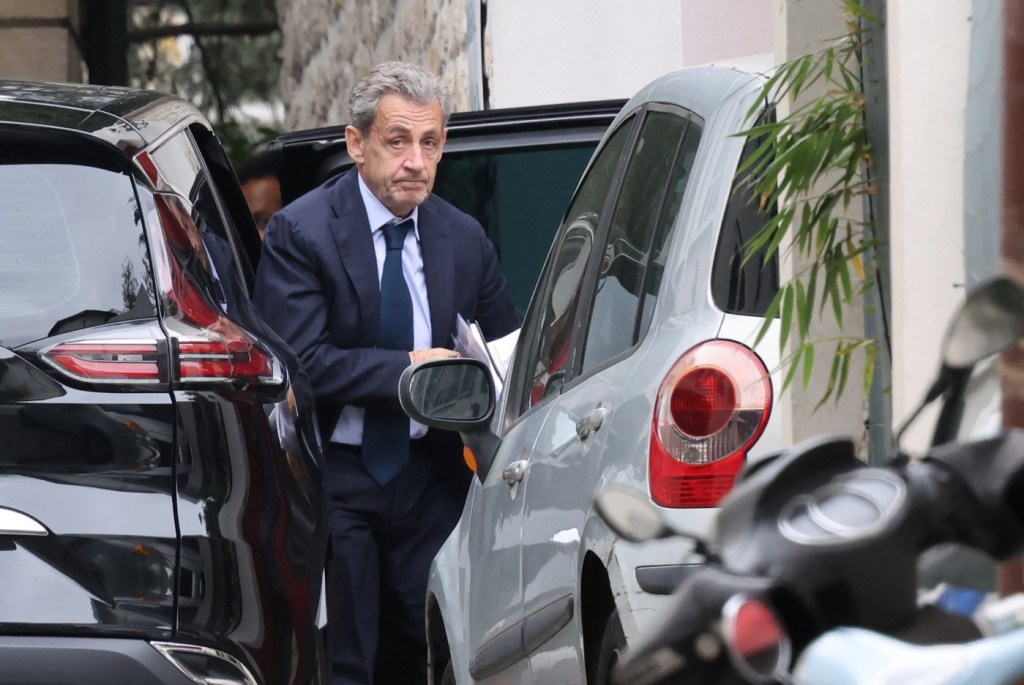
“We don't have any information on this,” confesses a prison guard who, like his colleagues, does not want to comment too much on what is an unprecedented event: for the first time under the Fifth Republic, a former president of the Republic will sleep in prison.
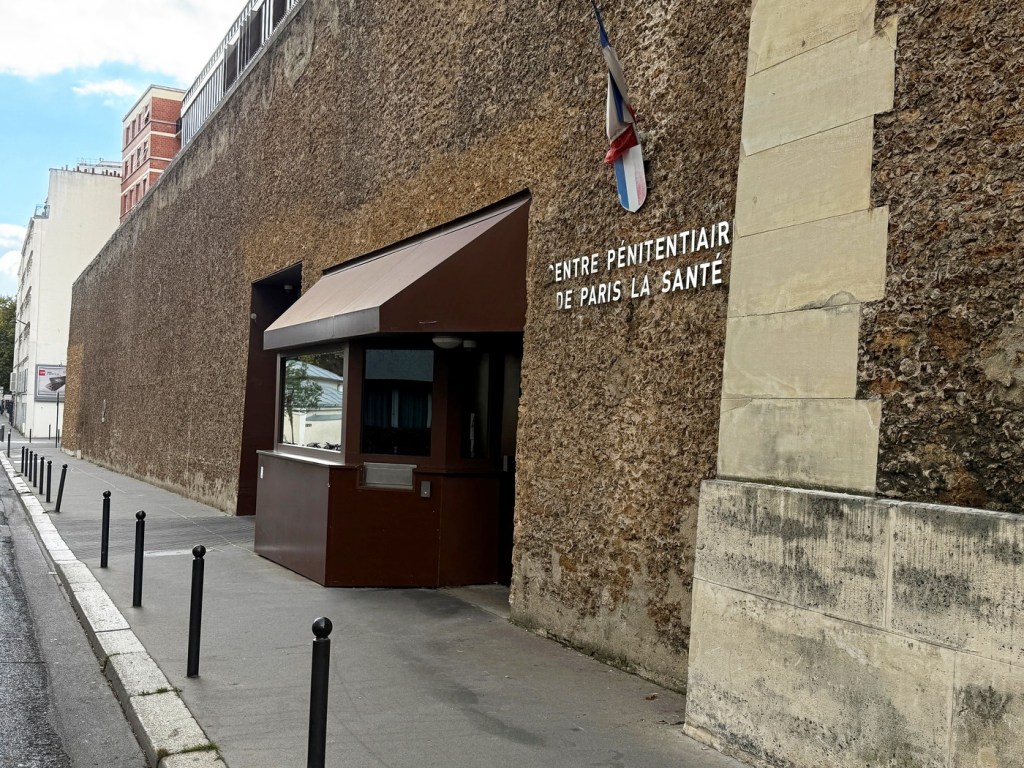
Nicolas Sarkozy will be incarcerated in a facility described as being in “decent condition”. In the heart of Paris, the “Santé” prison was built during the Second Empire and opened its doors in 1867. In 2014, a five-year renovation work began. Completely renovated, the pre-trial detention center has 657 beds and, according to prison administration figures, housed 1,237 inmates last month. This represents an overcrowding rate of 188%.
The “privilege” of being alone in the cell
A very large number of cells intended for two people therefore actually have at least one third occupant forced to sleep on a mattress on the floor. One of Nicolas Sarkozy's only “privileges” will be to have a private cell, but the size and equipment will be identical to all the others in the unit. This will include a bed, a table, a stove, a fridge, a TV, a landline and a toilet.
He will also have a shower in his cell, accessible without restrictions, like the other inmates at La Santé. Only the newest detention centers have showers in the cells. In many places, they are common and sometimes only accessible three times a week, which is difficult to manage in the summer.
“Body searches, always a difficult experience”
On his arrival at La Santé, Nicolas Sarkozy is expected to appear before the court registry. “Then they make you empty your pockets and take your valuables and your mobile phone, if you have one,” describes former businessman Pierre Botton, who was jailed twice at La Santé prison for financial crimes, in the mid-1990s and again from 2020 to 2022. “After registration, they take your fingerprints. The old-fashioned way, with your finger on a pad. Then they take a photo of you with the number to be held. Then it comes the body search, which is always a difficult moment,” he points out.
This search is imposed for security reasons to ensure that no dangerous objects enter the detention centre. “In the past, each guard did more or less what he wanted. But today, we have highly formalized techniques. It's done quickly and efficiently,” assures one guard. According to him, even prominent personalities must be subject to this search, although no one knows for sure what the situation will be for Nicolas Sarkozy.
Before being taken to the cell, the former head of state will be able to deposit money into his “canteen” account. In the penitentiary environment, this term refers to the system that allows the purchase of a certain number of items (pasta, rice, ready meals, hygiene products, newspapers, etc.) or services that improve the daily routine.
Through this service you can pay the rent of your own refrigerator for €7.50 per month. TVs, on the other hand, cost €14.15 per month. “This amount includes the rental price (€6.42) and the subscription to the pay TV package (€7.73),” states the 2025 edition of the Prisoner's Guide (La Découverte) published by the International Prison Observatory (IPO).
Nicolas Sarkozy will also be able to make calls from his mobile phone using a landline. This will not be a favor: today, almost all prisons have landlines in their cells, allowing them to call numbers authorized by the courts or the prison warden. These devices were installed so that the inmates could regularly contact their loved ones. But in practice, many do not use them because of the high cost of communications. “Up to 110 euros per month for 20 minutes of daily calls to mobile phones,” states the IPO.
The Count of Monte -Cristo and a biography of Jesus in the bag
According to the newspaper La Tribune Dimanche, the former head of state intends above all to dedicate himself to writing a book, inspired by two highly symbolic references: the letters of Captain Dreyfus from the Devil's Island and the Count of Monte Cristo, the novel by Alexandre Dumas, a copy of which, according to the newspaper Le Figaro, he carried in his bag, in addition to a biography of Jesus written by the historian Jean-Christian Petitfils.
The exact place where Nicolas Sarkozy will be imprisoned remains unknown. The first option would be to place him in solitary confinement to be completely separated from other inmates. The other would be to send him to the vulnerable persons ward (QPV), an 18-cell space that houses celebrities, inmates whose cases have received widespread media attention, or those who need protection from other inmates, such as former police officers.
“The first time I went to this area, the cell doors were open part of the day. We had an activity room where we could play belote,” recalls Pierre Botton. “When I came back in 2020, it was much tougher. We were locked up 22 hours a day. We only went out for walks.” According to a prison guard, every time he leaves his cell, Nicolas Sarkozy will be accompanied by one or more guards.