publication
2025-11-26 11:12
The UK government has decided to give another generous increase to the official minimum wage. All this is happening in a country with the highest inflation among the world's largest economies and one of the highest wages in Europe.
From April 2026, the minimum wage in Great Britain will be £12.71 per hour, announced Chancellor Rachel Reeves on Tuesday. This is an increase of 4.1% compared to the current situation. The minimum wage for employees aged 18-20 will increase by 8.5% and will amount to £10.85 per hour.
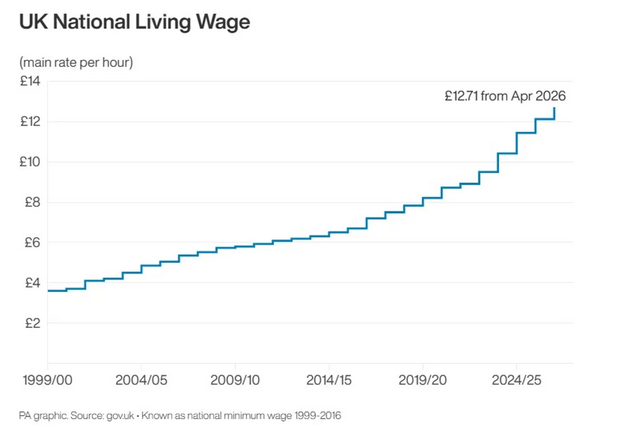
This is another in a series of relatively high increases in the minimum wage in the UK. This year it went up by 6.7%, only over the last 6 years it has increased by about 50%. Over the previous 25 years, the minimum wage in the UK has tripled in nominal terms. As a result, the British minimum wage in relation to the average salary is one of the highest in Europe.
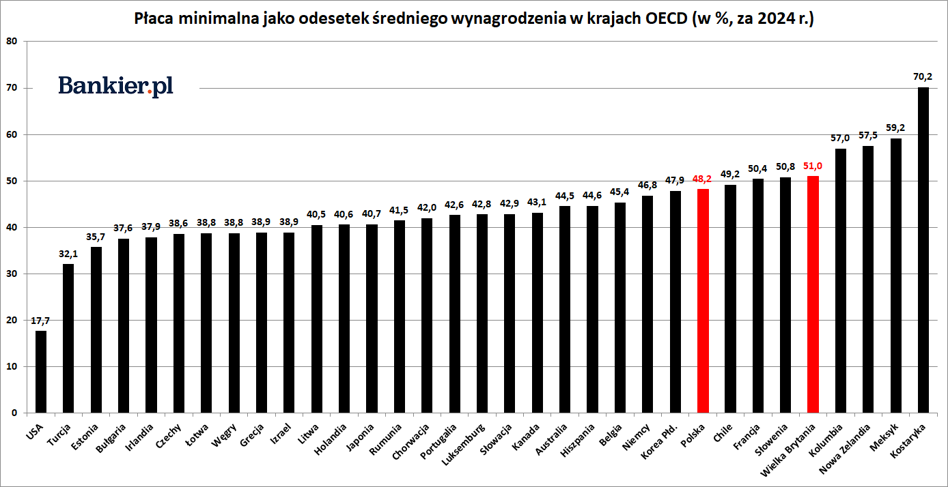
According to OECD data, the ratio of the minimum wage to the average wage in Great Britain was almost 51% (as of 2024). Similar results were achieved by Slovenia (50.8%), France (50.4%) and Poland (48.2%). Our minimum wage in 2026 will be PLN 4,806 gross or PLN 31.40 gross per hour. Calculating at the current pound-to-zloty exchange rate (approx. PLN 4.82), this would give approximately £6.51 per hour. Therefore the Polish minimum wage would be more than half of the British minimum wage,
which, considering the still high differences in the cost of living and the general level of wages, can be considered a relatively high ratio.
There are already voices in the UK that the increase in the minimum wage will be fully passed on to the prices paid by customers. This applies especially to industries employing the lowest paid employees and with a high share of labor costs in total costs. Owners of hotels, restaurants and the broadly understood entertainment business are especially complaining.
In this context, the increase in the minimum wage will contribute doubly to the increase in price inflation. Once due to increases in price lists in pubs and hotels. And two, thanks to more money in the possession of the lowest-earning employees, who will therefore be able to accept higher prices in stores and service outlets. In October 2025, British CPI inflation was 3.6% and was the highest among the 9 largest economies in the world. The Bank of England's 2% target has remained unachieved for over 4 years.
The minimum wage is a variation of the price floor imposed by the government on the labor market. It sets the rate below which the regulations prohibit legal employment. Raising the minimum wage above the equilibrium level risks creating unemployment, pushing people with the lowest qualifications out of the labor market. Moreover, an arbitrarily set minimum wage “flattens” the wage structure, which may demotivate employees earning slightly above the government minimum.
It is also worth remembering that the greatest beneficiary of increasing the minimum wage is the state. By forcing higher rates, the government can collect more money from “contributions” and taxes paid directly (PIT) and indirectly (VAT) from employees. Therefore, those in power have an interest in ensuring that the minimum wage is as high as possible. It is simply an indirect increase in tax revenues at the expense of employers and consumers.
K.K