Why did Trump abandon his 28-point plan for Ukraine? Expert: “Here is the main obstacle to peace”


The future of European security has avoided a pessimistic scenario, and the current context is significantly more favorable than the one at the end of the week, says security expert Iulia Joja.
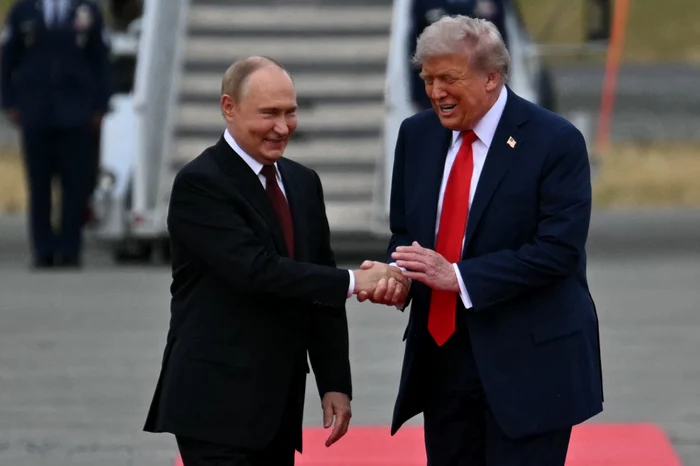
A new episode of Alaska took place the other day. PHOTO: AFP
A tense diplomatic episode has disturbed transatlantic relations in recent days, after the appearance in the public space of an alleged American-Russian “peace plan” regarding Ukraine, consisting of 28 points. The document — in its various versions — generated concern in Kiev and harsh reactions in Europe.
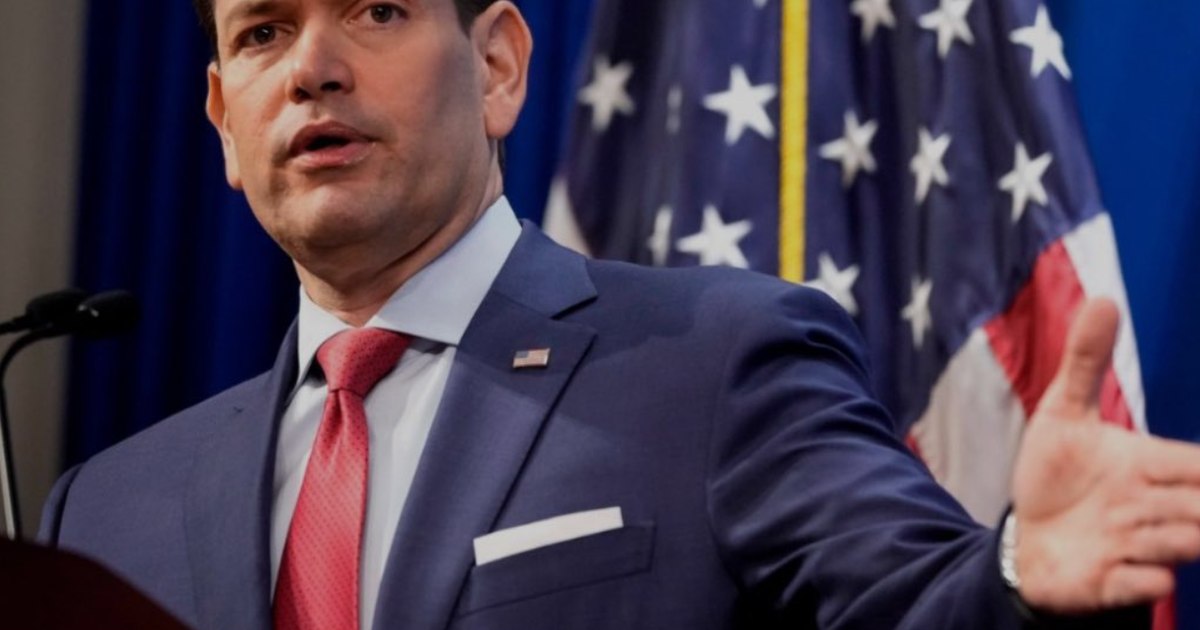
US Secretary of State Marco Rubio says the plan is being developed by the US, not just a “wish list of the Russians”. He says the document is based on both elements provided by the Russian side and Ukraine's “past and current contributions.”
The plan includes significant concessions from Ukraine: for example, limiting the Ukrainian army to 600,000 troops, writing into the Constitution that it will not join NATO, and for NATO to insert a clause that Ukraine can never be admitted. In exchange for concessions, Ukraine would receive “reliable” security guarantees (including from the US). The plan proposes a US-Russian investment vehicle for the reconstruction of Ukraine, using frozen Russian assets. The gradual reintegration of Russia into the international economy is proposed (the lifting of sanctions in stages, economic cooperation, etc.).
US President Donald Trump said last Friday that the United States will limit its support for Ukraine if the authorities in Kiev do not accept the US “peace plan”, made up of 28 points. According to the American leader, the Ukrainian president, Volodymyr Zelensky, “will have to approve” this plan.
President Zelenskiy would have been summoned to accept the plan by a given deadline. He sent a message to the Ukrainian people that it is a very difficult time for Ukraine: “to lose its dignity” or “to lose a vital ally” (referring to American support). Zelenski also said that negotiations and discussions will follow, including with Trump.
For his part, Vladimir Putin said that Russia supports this plan and believes that it can form the basis of a “definitive” peace agreement. He claims that parts of the plan were already previously discussed at the Trump-Putin Summit (Anchorage, Alaska) and that the new version has some changes but is “modernized”.
The European counter-proposal
Great Britain, Germany and France drew up, on Sunday, a European counterproposal, also with 28 points, which responds point by point to the US-Russia plan. According to this counter-proposal: the military limit proposed for Ukraine is different (the European plan mentions 800,000 soldiers, not 600,000); Ukraine to receive “solid guarantees” of security, similar to those in Article 5 of the NATO Treaty; Europeans demand a clear reconfirmation of Ukraine's sovereignty; a “total and complete” non-aggression agreement between Russia, Ukraine and NATO is proposed to definitively clarify old security ambiguities; territorial exchanges should not start from broad “Russian” pre-definitions (as the original plan suggested), but negotiations should start from the front line (or contact line); the Europeans propose that Russian sovereign assets (frozen ones) remain frozen until Russia pays reparations for the damage caused in Ukraine; the counter-proposal includes the idea of a gradual reintegration of Russia into the global economy (including a return to the G8), but under conditions and only after reparations are paid.
Trump's change of heart
Iulia Joja, foreign policy analyst from Washington, teaching staff in the USA at Georgetown University and researcher at the Middle East Institute, explains in an interview for “Adevărul” the behind the scenes of this dizzying sequence of international diplomatic events.
Joja claimed that the lack of an initial official commitment and conflicting statements threw the talks on this peace plan into chaos. US President Donald Trump himself issued two successive statements which “they contradict each other and mark a 180 degree change”she points out.
On Friday, the US president said in an interview that next week, when the United States celebrates Thanksgiving, is a reasonable deadline for Ukraine to accept his proposed peace plan to end the war with Russia. “I think you know that if he doesn't accept the plan, then the US will limit its support for Ukraine” – said the American president.
He also said there have been several deadlines, but he believes next Thursday, Thanksgiving “is an appropriate deadline.” American media reported that the United States gave Zelenski an ultimatum by November 27, Thanksgiving Day, to accept the plan or risk losing US support.
Iulia explains: “It is part of the American president's traditional style of pressing through deadlines to conclude negotiations.“
On Saturday, in front of the White House, the US president was asked by journalists if the 28-point plan was the “final offer” for Ukraine. “No, not by a long shot,” he replied.
“We would like to achieve peace, which should have been established a long time ago. The war between Ukraine and Russia should never have happened. If I had been president, this would never have happened. We are trying to end the conflict. One way or another, we have to end the conflict.”Trump added.
“Europe pays its bill for its own security”
Asked why President Donald Trump changed his mind, the analyst stated:
“I think there should have been a reaction to the fact that the president of France calls this plan a capitulation. However, France is one of the leading countries in Europe. I have seen similar positions, not so radical, but similar: no plan should be made, no negotiation without Ukraine and without Europe. We are talking about the president of the European Commission, the Chancellor of Germany, the President of Finland, the British prime minister and so on. This is the reaction formula of Europeans every time when the Americans try to negotiate bilaterally with Russia.“
Financially, which is a priority for both sides of the Atlantic, Europe, which is the world's second market in terms of purchasing power, one of the world's largest economies and has the largest bilateral economic relationship with the US, pays the entire bill for its own security, says Joja. “Sure, the United States still has troops in Europe, it still contributes to NATO, but with regard to Ukraine and the rearmament of Europe, the increase of the defense budget to 3%, 4%, 5%, all these elements are now, unlike in the last 70 years, taken over by Europe. We can say that it is a success of the American administration. And then it is very difficult to make plans regarding European security signed by Moscow and Washington, without Brussels, Paris, London, Berlin and so on,” claimed the expert.
We can say that “Europe has passed the test so far, but Europe always passes the test in moments of crisis, in the last minutes, and passes it to the limit”. Why? “Because we should not be in a situation where such threats and rhetorical turns are a danger to European security.”
There are still significant dependencies on America, despite efforts to make Europe stand on its own two feet. “Intelligence is a very important aspect. Then we look at Europe buying weapons from the United States for Ukraine and for its own needs, because technologically we are not as advanced as the United States, because we have not invested in the last decades. Despite the fact that Europe is in a problematic security situation, it has not increased its production enough to cope with Ukraine and its own purchases. So these two plans show us that it has passed the limit test on the last hundred meters”.
Joja also claimed that, in fact, the US no longer helps Ukraine militarily, only the intelligence part remains.
Beyond the smokescreens
If we were to remove all the smokescreens, all the misinformation, all the speculations, Iulia Joja claims about this diplomatic episode:
“I think we are in a situation where the positions in relation to this option are subordinated to the position of the French president, who said it is a capitulation. The situation was so badly received by the European and Ukrainian side that they were not involved in a discussion about European security”she explained.
In addition, this position, she says, forced the American administration to take a defensive position and deny that a Russian plan is being promoted from Washington and is being put on the table of Kiev and Europe. “It was not a very successful episode in transatlantic relations,” she concludes.
At this point, says Joja, “we're in a better place than we were on Friday, given the talks in Switzerland because Trump withdrew his ultimatum. Sure, he can change his mind at any time, but right now we're in a better situation than we were three days ago. That's all I can say. And one more thing. It's not the first episode of this kind. There have been different variations of these attempts, the potential Budapest meeting, the Alaska talks, threats and deadlines, meetings problems from the White House. It is not the first episode of this kind..
Thus, Joja argues that more than a new failed episode of transatlantic relations, we must be concerned about the fact that the Americans have been telling us for a year, since Trump was elected, that the Europeans must assume their own security.
The main obstacle to peace
Joja noted that President Volodymyr Zelenskiy's message raised important alarm bells about what was going on behind official statements: “Zelensky's position shows us that a variant of the plan reached the table of Ukraine raised serious reasons for concern, both in Kiev and at the European level”.
Joja says that the 28-point agreement is not entirely unsustainable, some points could be a basis for negotiations for a new peace plan.
Joja believes that one of the central aspects of any peace plan will be the roughly $300 billion in Russian funds frozen in Europe.
“If Europe decides to use these funds for a loan to Ukraine, then we could see, for the first time, a real change in Russia's position.”says Iulia. This would be, from Moscow's perspective, the most painful loss, the expert believes.
Regardless of the plan variants, Russia categorically rejects the idea of demilitarized zones or withdrawal from the vicinity of Ukraine. “In addition, Russia does not recognize Ukraine's sovereignty and independence, not to mention its territorial integrity“, emphasizes the specialist. This rigid position remains the main obstacle to any real negotiation, she concludes.