Why capsule hotels are spreading in the world's major cities. A concept originated in Japan to accommodate overworked officials

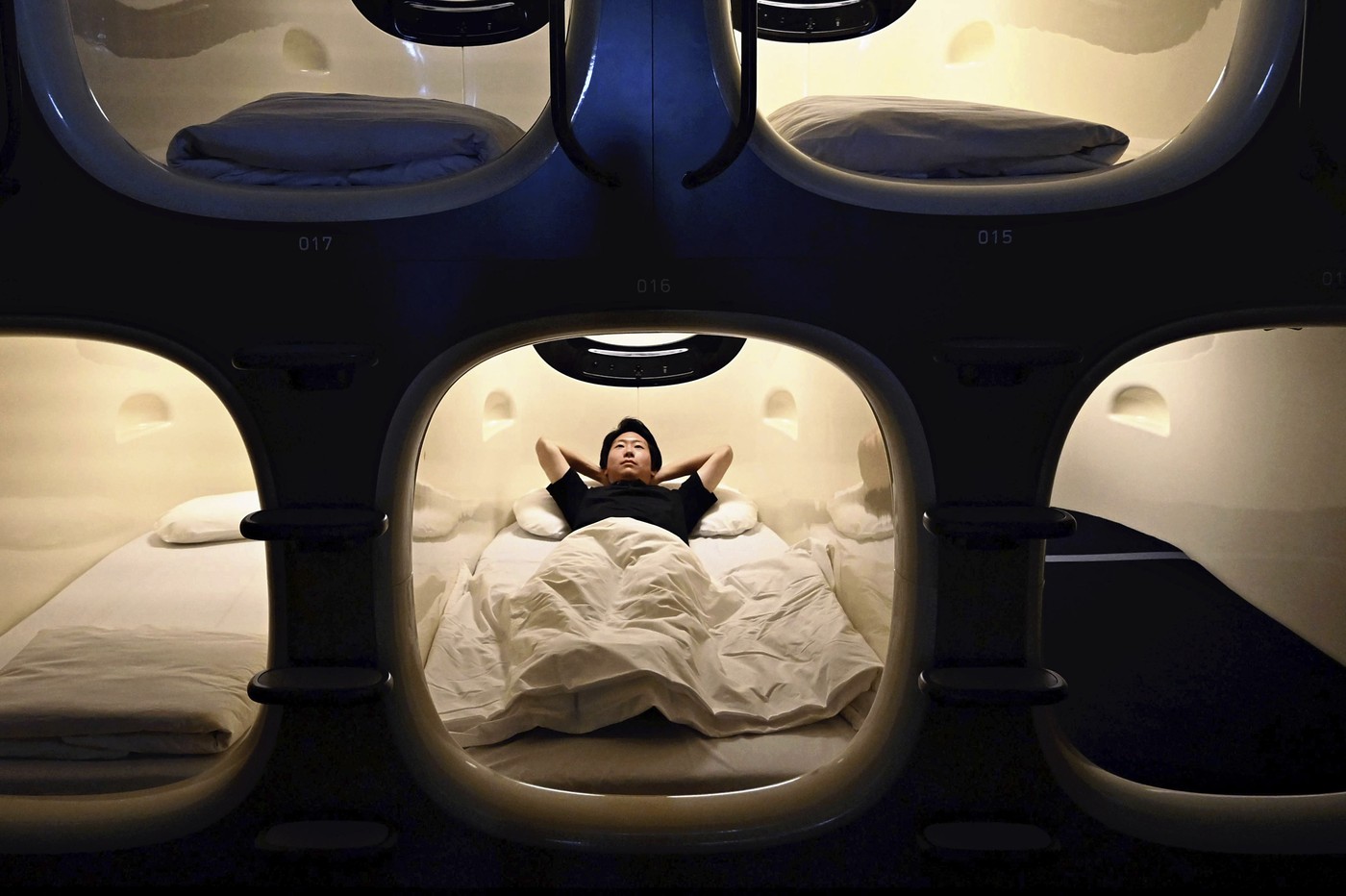
Capsule hotel in Japan Photo: Hiromi Uechi / AP / Profimedia
What started as a minimalist sleeping place for salarymen in Japan has turned into an urban hospitality trend, with London leading the way. Although it sounds like an oxymoron, the world's largest capsule hotel, Zedwell, has opened in Piccadilly Circus, with 1,000 soundproof and windowless sleeping capsules, priced from £30 a night, writes National Georgraphic.
In the coming years, other hotels will open in London with reduced space and low prices. The appeal of this type of hotel turned out to be surprisingly high, less so for claustrophobes.
A strict definition of a capsule hotel is a place where all the facilities are shared, except for a capsule slightly larger than the single mattress inside it. The capsules are overlapping and can be locked both from the inside and from the outside. The occupant of such a capsule also has access to a socket for charging the phone, access to wi-fi and the ability to control the light and ventilation. Some also have more “elitist” touches, Hypnos mattresses, Egyptian cotton sheets or built-in ambient lighting.
The fad began with the Capsule Inn in Osaka, Japan, which opened in 1979 and catered to office workers coming to rest either after long work hours or after-hours excesses. The concept quickly spread to Japanese metropolises and then to Asia. But in the last decade, the fashion has also reached Australia and Europe.
Changing the mindset of tourists
The targeted clientele segment is that of young people between 18 and 35 years old, more careful about costs, but who want to be near the entertainment areas, but without being bothered to stay in small spaces. But there are changes in this regard as well. “Our market segment is more 25 to 40-year-olds,” says Andrew Landsburgh, founder of CoDe Concepts, which is set to open a 568-bed capsule hotel in London in 2027.
The level of comfort is higher than the prices would indicate, and the restaurants and bars in their premises are crowded. Safety is a priority, with separate areas for each gender and separate showers, each with their own changing area. Accommodation is possible around the clock.
“Capsule hotels have the ability to use buildings that other hotel chains cannot. Former gyms, basements, halls… This means that customers can stay right in the heart of the city,” believes Sem Schuurkes, co-founder of CityHub, a Dutch company that already has four hotels in Europe and will open two more in London.
The newly opened Zedwell capitalizes on the fact that many believe that accommodation prices in London have been too high for too long. “We're democratizing access to one of the world's most enchanting cities,” says Halima Aziz of Criterion Hospitality, the company that owns Zedwell. Aziz believes that in the next 5-10 years all major European cities will have a capsule hotel.
Fashion is also taking advantage of the post-pandemic changes, with an increasing share of solo travelers. Also, the mentality of those who go on a city break has changed: it matters less where you stay than what you do. “It's a question of budget allocation. People want to spend their money on the best experience, not on a hotel where you only stay while you sleep,” believes Sem Schuurkes.