The publication recalled that for several months the Europeans have been looking for a way to use €140 billion of immobilized Russian sovereign money, mainly deposited in the Euroclear depository in Belgium, to support Ukraine. The latter is hesitant and demands guarantees that it will not have to independently reimburse the Russian Federation’s funds if Moscow decides to sue regarding this initiative.
Now diplomats and EU officials do not rule out that convincing Belgium to agree to a reparations loan will be even more difficult. After all, the new 28-point US “peace plan” proposes a competitive idea of using the same resources. Namely, an investment of $100 billion from Russia's frozen assets into American efforts to restart and invest in Ukraine. The US will receive 50% of the revenue from this project. Europe will add $100 billion under this plan to increase the amount of investment available to rebuild Ukraine. Frozen European products will defrost. The remaining frozen funds of the Russian Federation will be invested in a separate US-Russian investment fund for the implementation of joint projects in specific industries.
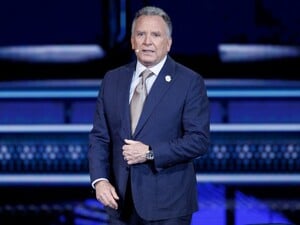
Europe fears proposals from US President Donald Trump's special envoy Steve Witkoff, who worked on the plan, will ruin their chances of getting a reparations loan proposal for Ukraine agreed upon by the 27 EU governments, when European leaders had hoped to reach an agreement at a summit next month.
A former French official called Trump's special envoy's ideas “scandalous.” “Witkoff needs to see a psychiatrist,” a senior EU politician commented on the US plan. Another European official ridiculed the document, noting that Trump does not have the authority to unfreeze assets held in Europe. One diplomat stressed that the intention to make a profit from assets located in Europe “sounds like a classic Trump example.”
Until now, negotiations on a reparation loan for Ukraine using Russian funds are “at an extremely sensitive stage,” but it is urgently needed, since Ukraine risks being left without money at the beginning of next year, the article says.
Context
Media reported on November 19 that Trump approved a 28-point plan to “achieve peace” between Russia and Ukraine. Vitkoff, US Vice President J.D. Vance, US Secretary of State Marco Rubio and the president's son-in-law Jared Kushner participated in its preparation. The document was developed in consultation with the Russian envoy Kirill Dmitriev; Ukraine did not take part in this process, media reported.
Western media published some details of the proposal. Among them is granting the status of the state language to the Russian language; media sources also claim that, according to the plan, the United States may recognize the occupied Donbass and Crimea as Russian, Ukraine will be required to reduce the size of its army by half, sanctions will be lifted from Russia and the investigation of its war crimes in Ukraine will be stopped. FT wrote that this means the capitulation of Ukraine and that the agreement is very convenient for the illegitimate Russian President Vladimir Putin. We are also talking about Ukraine’s refusal to join NATO “for at least several years” and a ban on the deployment of peacekeeping forces on the country’s territory.
On November 20, the US delegation officially handed over to Zelensky a draft “peace plan”, which, according to the American side, can intensify diplomacy. Teams from Ukraine and the United States will work on the points of the “peace plan” to end the war, Zelensky noted after a meeting with the American delegation. The media wrote that at the meeting they agreed on “strict deadlines” for signing the “peace plan.”
The United States expects Ukraine to sign a “peace agreement” by November 27.