A cheap drone killer that has been proven in the skies over Ukraine and has recorded almost 2,000 interceptions of Russian machines is now in the hands of Western troops.
Poland and Romania have purchased and are deploying the Merops system to better protect Eastern European airspace after a series of Russian drone incursions in recent months — warning signs that sent NATO allies frantically searching for low-cost air defense systems.
This week, Business Insider observed U.S., Polish and Romanian soldiers training on a U.S. anti-drone system that fires an interceptor drone called Surveyor, which is used to destroy enemy threats by ramming into or exploding near them.
At a training ground in southeastern Poland, U.S. military officials said Merops was designed to intercept both reconnaissance and strike drones — including newer and faster jet-powered variants.
— This system is very reliable Sgt. told Business Insider. Riley Hiner of the US Army, an interceptor drone pilot who helped train NATO soldiers.
However, although the Merops system has had combat successes, is not without limitations.
Read also in BUSINESS INSIDER
What is Merops?
Interceptor drones have become one of the most important tools of Ukrainian air defense in recent months, enabling the destruction of large numbers of cheap Russian Shahed drones at a relatively low cost per shot.
Merops, developed by the US initiative Project Eagle, is one of many anti-drone systems used by Ukraine.
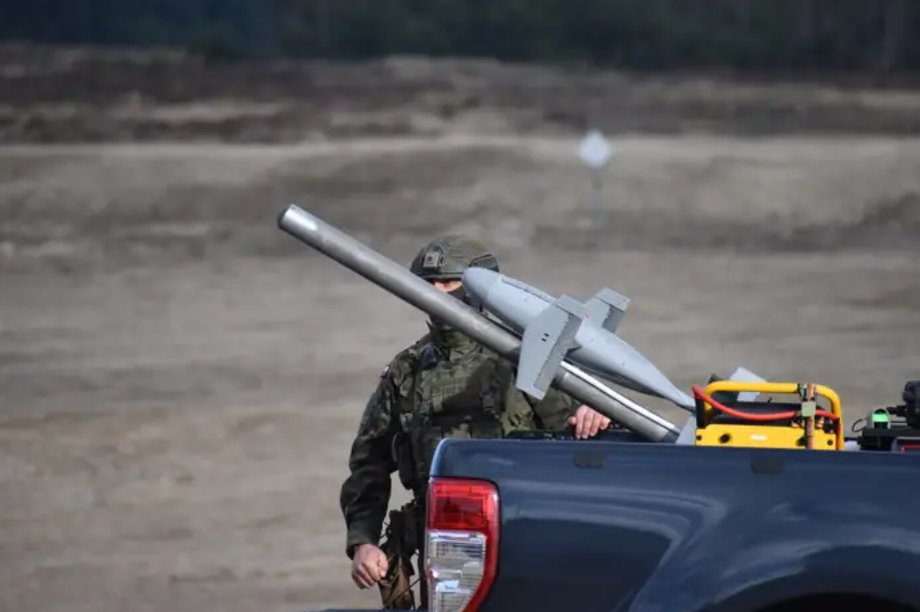
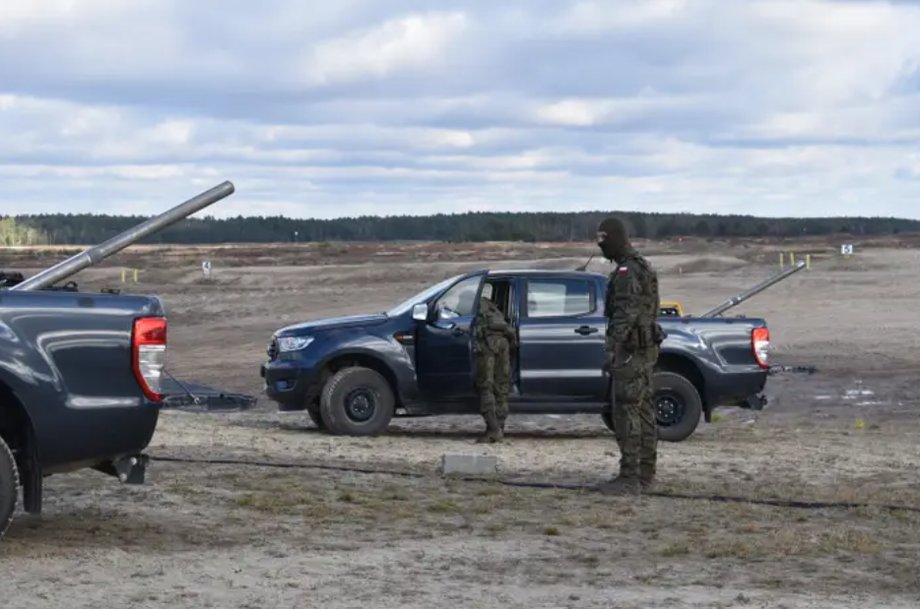
A Polish soldier prepares to launch a Surveryor interceptor drone from the bed of a pickup truck
| Jake Epstein (Business Insider)
Ukraine's defense industry produces hundreds of interceptor drones a month, and Western military commanders looking for cheaper air defense systems capable of meeting the growing drone threat in Europe are taking note of their success.
In September, interest turned into an urgent need after Russian drones violated Polish airspace. NATO fighters had to fire expensive air-to-air missiles to shoot down weapons worth a fraction of the cost.
Poland and Romania – the latter of which also experienced a Russian drone incident just days later – decided to acquire and deploy Merops as part of a new NATO initiative to defend the alliance's eastern flank against potential future attacks.
See also: An unusual German brigade on the edge of NATO brings with it its state-of-the-art heavy armored vehicle
Brigadier General Curtis King of the US Army, commander of the 10th Air and Missile Defense Command, described the anti-drone system as “very lethal”, “very effective” and also “cost-effective”.
Merops consists of a ground control station, a Surveyor interceptor drone, and launch pads. Operated by a crew of four – a commander, a pilot and two technicians – it can be deployed in both a fixed position and in motion, making it a flexible tool.
On Tuesday, Business Insider observed Polish, Romanian and American soldiers working with the Merops system as their two-week training course neared the end. King, speaking to reporters, said the system is user-friendly, so soldiers quickly learn to use it.
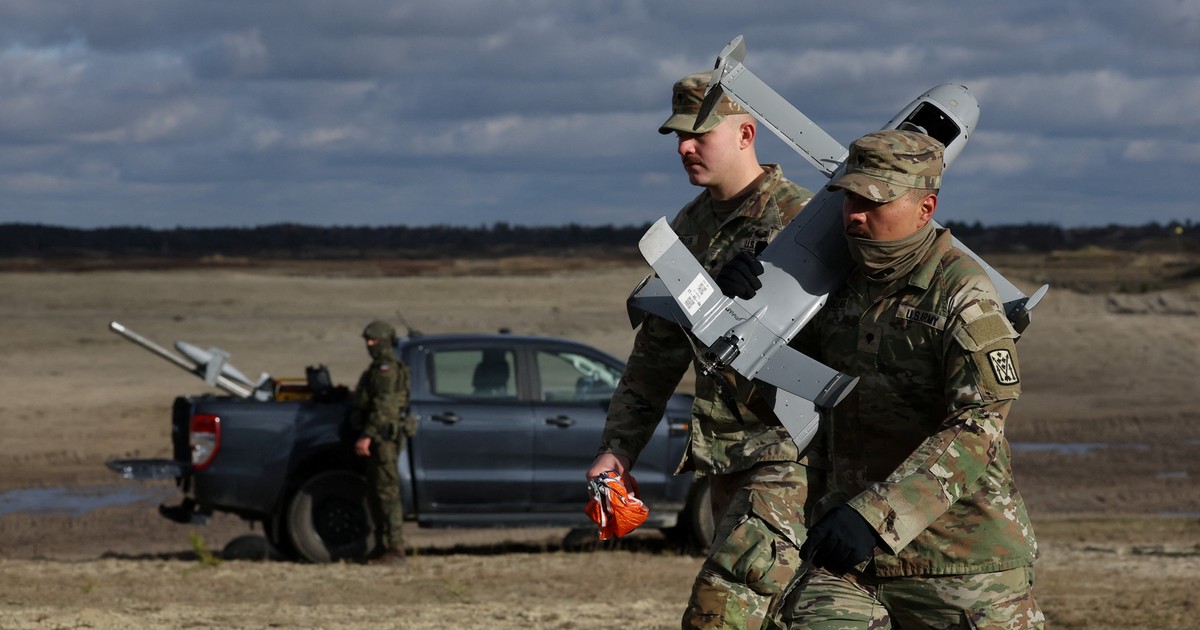
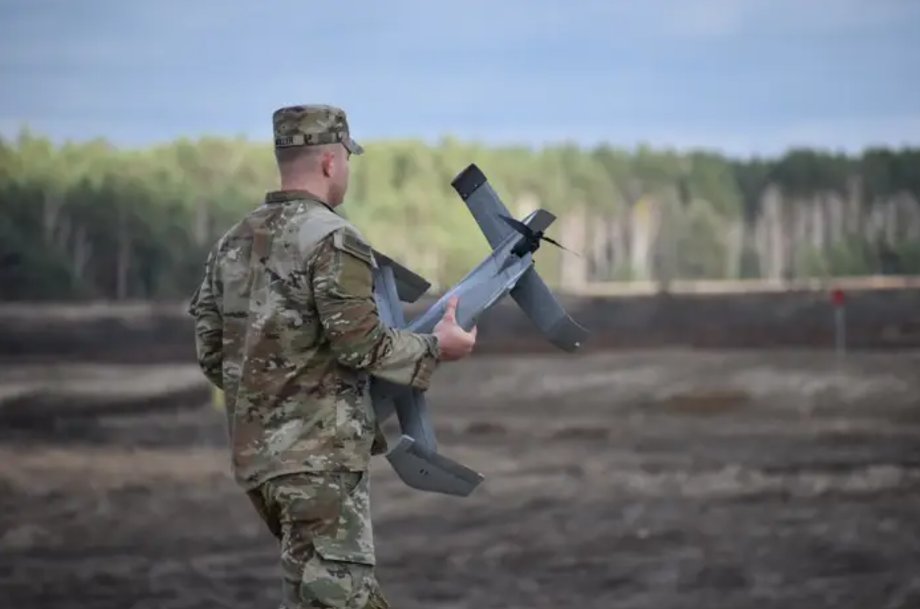
A US soldier holding a Surveyor interceptor
| Jake Epstein (Business Insider)
The U.S. Army said the Merops training reflects efforts by Poland and Romania to quickly deploy battlefield-proven systems and strengthen NATO's new Eastern Flank Deterrence Line, designed to protect the alliance with a mix of low-cost drones and layered defenses.
What threats can it combat?
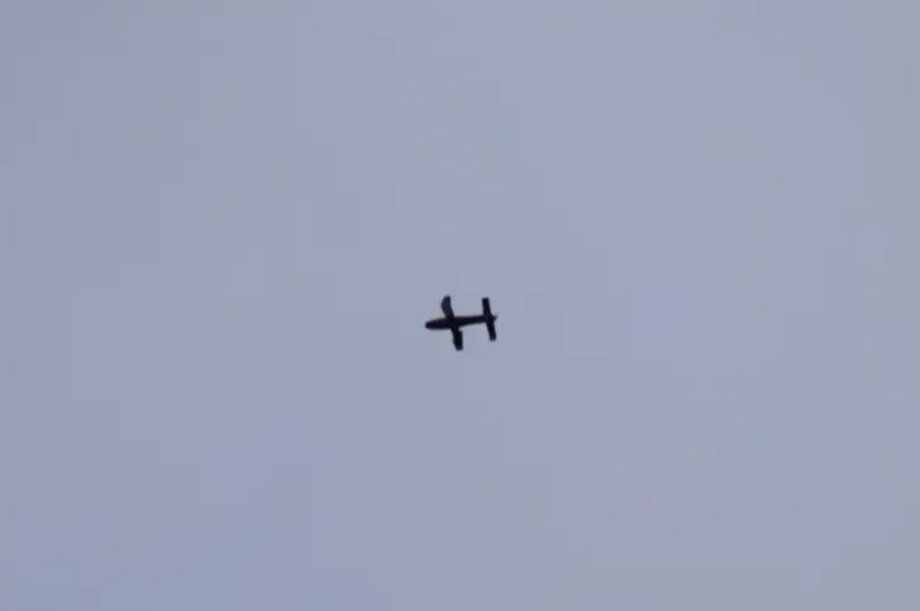
During the demonstration, Polish soldiers launched a Surveyor drone from the bed of a pickup truck. The interceptor drone attempted a direct hit on the target – a Shahed imitation drone – but after several attempts and near misses, it deployed its parachute and descended to the ground.
The parachute allows Surveyor to be reused, ultimately reducing costs in the training cycle.
The Surveyor interceptor drone costs PLN 15,000. hole. per piece
| Jake Epstein (Business Insider)
US military officials reported that during Tuesday's demonstrations, the Surveyor was unarmed, but in combat conditions it would carry a small warhead that could destroy an enemy droneexploding next to him, without requiring a direct hit.
The propeller-driven Surveyor interceptor drone can be piloted remotely or operate autonomously, using radio frequencies, thermal signatures or radar sensors to track the target. It can reach speeds of over 280 km per hour and is resistant to electronic warfare, which has become a pervasive threat to drone operations in Ukraine.
Military officials said the Surveyor was designed to combat high-flying kamikaze drones such as Iran's famous Shahed, as well as reconnaissance drones. Ukraine has already used it for over 1,900 successful combat interceptions.
They also emphasized that the interceptors Surveyor can shoot down jet drones that move faster than propeller-driven machines. Russia began putting these advanced variants into combat earlier this year.
Hiner, the American pilot, said Merops is about 95 percent effective, especially when intercepting Shahed drones. “I think it's very easy to use because of its portability and versatility,” he added.
Surveyor can be launched from trucks or ground stations, making it a flexible solution.
| Jake Epstein (Business Insider)
What are the limitations?
Merops is not a universal anti-drone defense. It is built for a specific threat, not all types of drones. For example, as Hiner said, would likely have difficulty with very low-flying FPV drones due to their size and profile.
Most FPV drones are small quadcopters connected to pilots by a radio signal or fiber optics. They often carry small explosives and can perform precision strikes for just a few hundred dollars. They dominate the battlefield in Ukraine.
Merops is designed to counter larger kamikaze and reconnaissance drones. Thanks to the PLN 15,000 hole. the Surveyor interceptor is designed to be much cheaper than the targets it hunts. Older variants of the Shahed, for example, are valued at approximately PLN 35,000. hole. per piece. Its introduction into NATO gives the alliance a new capability it previously lacked.
See also: The West still believes in the so-called golden hour at the front. “You tell that to a Ukrainian and he will just laugh at you”
Military officials hope that Merops will also provide NATO with a cheaper alternative to the need to use fighters and advanced air-to-air missiles, which can cost hundreds of thousands of dollars, to air defense against drones in Eastern Europe.
“That's our main goal,” King said. – We need to find cheaper solutions – both sensors and effectors – he added.
The above text is a translation from American edition of Business Insider
I’m Ashley Davis as an editor, I’m committed to upholding the highest standards of integrity and accuracy in every piece we publish. My work is driven by curiosity, a passion for truth, and a belief that journalism plays a crucial role in shaping public discourse. I strive to tell stories that not only inform but also inspire action and conversation.