The prime minister sees the light at the end of the tunnel, economists have reservations: “Let's not fall into a rather counterproductive populism”

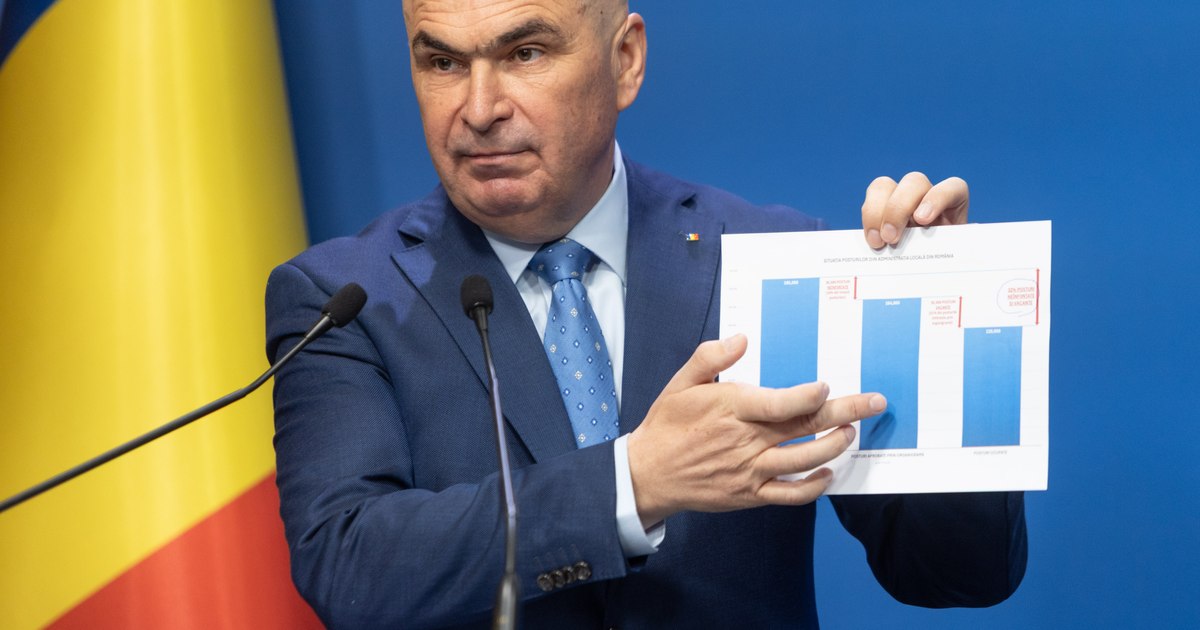
Prime Minister Ilie Bolojan boasts in a post on Facebook that the austerity measures are beginning to yield results. Professor at the Bucharest Academy of Economic Sciences, Cristian Păun analyzes the situation for “Adevărul” and has a completely different opinion. Paun warns that the lack of reform, combined with further tax increases, is a recipe for economic disaster.
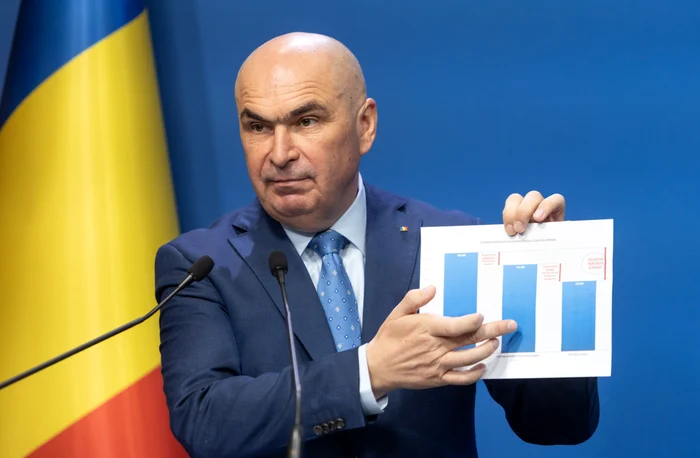
Ilie Bolojan boasts, but experts contradict him. PHOTO: Mediafax
Prime Minister Ilie Bolojan made a post on Facebook announcing that the recovery measures he has taken so far are working, and budget revenues are increasing and expenses are decreasing. Romania recorded, Bolojan claims, an increase in budget revenues by 12.5% compared to the same period last year, which in absolute terms means approximately 10 billion lei.
University professor at ASE Bucharest, Cristian Păun explains, for “Adevărul”, to what extent and where the prime minister is right, respectively where he is wrong.
In his opinion, the prime minister's optimism is unsupported by reality, but there are indeed some achievements. The biggest one is that Romania avoided bankruptcy or entry into junk. On the other hand, there are still many economic failures under discussion, which the Romanian Prime Minister avoided making any reference to in the post.
“Of course, if we look at the fact that following the increase in taxes we kept our credibility as much as possible and the rating agencies did not put us in the junk category, which would have led to the massive withdrawal of private capital from Romania. Yes, from this point of view we can say that the measures to increase taxation have mainly achieved their goal. That is, we were not de-pointed by the rating agencies, we were not trashed, with strict quotation marks”, says Professor Paun.
The measures of the Bolojan Government do more harm than good
Instead, the new fiscal measures further affected the economy and hit industry and beyond. Romania's economy is still seriously ill, and the treatment prevented its death, but it did not cure it at all. The increased fees and taxes have hit this already sick economy hard and are burdening the already anemic Romanian companies. Not coincidentally, the European Commission has revised down Romania's GDP growth forecast, estimating a modest advance of 0.7% in 2025 and 1.1% in 2026, but there is a real risk of going into recession.
“On the other hand, if we look at the dynamics of the product in gross terms, especially of industrial production, we see that in fact the exact opposite is happening. That is, with the increase in taxes, the hope was to collect more revenue to the state budget, in order to fix the problem of the budget deficit. Or, we see that the economy is contracting even more, especially the private economy, and that in fact this measure was only a pro-cyclical measure, which at least had to be accompanied almost simultaneously, if not better before, for reforms that generate the adjustments on the expenditure side that everyone is waiting for. And here, these cuts must not be made, as I say, in the eyes of the world, in the mouth of Europe. They must be done very, very scientifically, so to speak, with reforms behind them.” emphasizes Cristian Păun.
The government continues to mimic the reform
Professor Păun also says that the fact that the government's measures are apparently chaotic and the reform is non-existent is also worrying. Instead, there are endless tax increases, coupled with threats of staff cuts that have generally not been carried out anyway. Moreover, Romania's budget expenditures increased, and the huge deficit decreased far too little, without reaching the target set at the beginning of the year. The administrative-territorial reform of Romania, which would have reduced expenses, remains a far too distant objective.
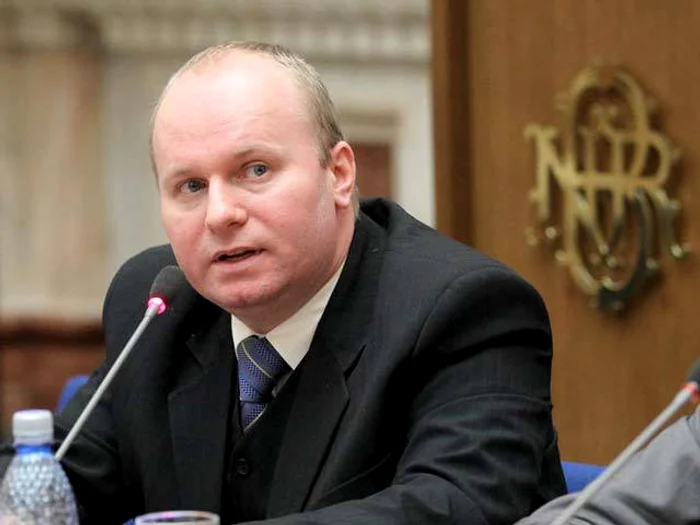
Professor Cristian Păun
“I, for example, am worried about the idea of taking a dart from that dart and throwing it like that into a board that we throw out. The idea would be to make these adjustments in correlation with some reforms that you make. And here I have always given the example of UATs that are today very underpopulated. They wouldn't even have to be called municipalities or cities if we applied the existing law to the letter. And with all this we continue to have mayor, we continue to have councilors who have 150-200 souls. We don't even have the problem of giving up this job. I mean, let's fire 1-2 of them, maybe we don't fire them, but we reduce the salaries of all 11 councilors together with the mayor it does not mean reform at all“, points out Paun.
In his opinion, Romania can no longer play with reforms, and the lack of administrative-territorial reform is like a condemnation for the economy.
“I mean, I agree that such dismissals should happen as a result of an administrative-territorial reform of Romania. That is, the transition to fewer counties or provinces or as God would call them, merging of counties, further merging of communes, cities with communes to form metropolitan areas and so on”he adds.
what to do
But the reform should be done head on, and the laid-off people should be offered viable alternatives and not abandoned, as is usually the case. The solution, normally, should be for these people to be absorbed into the private economy. It's just that, under the conditions in which Romanian companies are killed with taxes, employment is placed between brackets for an unlimited period, and the state would end up having other social protection expenses with those laid off.
“At the same time, after you release these people from office, you also have to think a little about them. I mean, what do you do with them? And then you have to think that part of them might be absorbed by the private economy, which you also have to grow somehow. That is, take care of it, let it flourish, not contract. Either here these fiscal aberrations, like tax on the pole, or the minimum additional tax per figure of businesses and so on, this confuses rather than untangles. That is, instead of doing something to make Romania's private economy flourish and absorb these people who would be set free, we give it to private companies. So we won't have an economic boom anytime soon. Logically, the economy will not recover if you do not eliminate the fiscal aberrations that exist today in Romania“, says Paun.
“The situation is dire”
His conclusion is that Ilie Bolojan's claims have too little coverage in reality and that, in fact, the prime minister's optimism is rather unfounded. And Cristian Păun identified some of the serious problems facing Romania's economy, to which the prime minister did not refer at all.
“It depends on which figures we look at. Because we still do not have significantly higher exports than imports, we still have the problem of the enormous deficit, we still borrow a lot of money for that deficit. Much of the money we borrow does not and will never go to investments, but goes to salaries, pensions, social assistance. Not to mention the fact that the story of 300 parliamentarians is buried, the story of let's look a little at the institutions of the state, at the state companies. Let's take a look at these bankrupt state companies, because we have CFR Călători, we have a bunch of debtors that are rather insolvent and that you keep the money from the state budget. These companies mean huge holes for the budget. Optimism is very important, but let's not repeat the foolish optimism of the previous governments. they said that we were marching in fanfare, but when we were there, we should not go to the other side, of a populist that is rather counterproductive. The situation is nasty, the prime minister knows it, and the necessary measures should be taken”.
Paun also affirms.
In the absence of a real reform, Romania will be doomed, and the economic crisis will degenerate even more. Cristian Păun warns that new taxes, which are already being talked about, will only complicate things even more and drive away investors.
“You don't really have room to turn around, that is, raising any more taxes is out of the question now. And if you do, it will be very nasty, it will backfire on you. The government, Ilie Bolojan, everyone should know this. Now we have to move on to reforms, not just tax cuts and increases. We have no other option, whatever anyone says.”concludes Cristian Păun.
What did Bolojan brag about?
In his post on Facebook, Prime Minister Ilie Bolojan boasted that the measures taken so far, i.e. the increases in taxes, VAT and some other taxes are starting to take effect and revive the economy.
Prime Minister Bolojan announced on Wednesday evening that Romania recorded a 12.5% increase in budget revenues compared to the same period last year, which in absolute terms means approximately 10 billion lei.
“The recovery measures we have taken so far are working. Budget revenues are increasing, expenses are decreasing. Romania is on the right track. In the 3rd quarter, compared to the same period last year: State budget revenues increased by 12.5%. From 79.2 billion lei we reached 89.1 billion lei. An increase of 9.9 billion lei”the prime minister wrote on the Facebook page.
Next, the Prime Minister's message was equally triumphalist. The Prime Minister specified that the revenues come mainly from the income tax – increase by 16.5%, VAT receipts – increase by 14.8%, excise revenues – increase by 11%. Also, Bolojan claims, the social contributions collected in the third quarter increased by 8.5%, i.e. 4 billion lei more. At the same time, personnel expenses decreased by 630 million lei between July and September.
“In October, personnel expenses decreased by 562 million lei compared to the same month in 2024, from 14.231 billion lei to 13.6 billion lei. Comparatively, in the first semester, personnel expenses increased by approximately 10% compared to the same semester in 2024. Despite all the difficulties, we unblocked and renegotiated the European funds through the PNRR program, accelerating payments in the second half of the year. Thus, in the January-June period, payments of 2.62 billion euros were made, and in the July-September period, 1.45 billion euros were paid”, announces the prime minister.
Ilie Bolojan also listed other measures that, in his opinion, helped the economy.
“Compared to when the government was installed, the one-month ROBOR has decreased from 6.82% (June 23) to 5.81% today. Compared to July 1, Romania is borrowing cheaper across all maturities and in all currencies, which reflects the markets' increased confidence in the measures taken and in the stability of the economy. Lei bonds – down about 53 basis points for the 5-year maturity and 51 basis points for 10-year bonds – down 78 basis points per 10 years. Interest rates are being used for investments, and are becoming the main driver of the economy, according to the latest European Commission report. Investments will accelerate in 2026-2027 budget will decrease to 6.2% in 2026. Thank you to all colleagues who worked for these results. Thank you to the Romanians who understood that these efforts are necessary to overcome a difficult time! I have every confidence that, if we maintain this course, Romania will succeed in reaching its potential, and the life of Romanians will be predictable and prosperous.” Prime Minister Bolojan concluded his post.