A robot the size of a grain of sand can deliver drugs exactly where they are needed in the human body


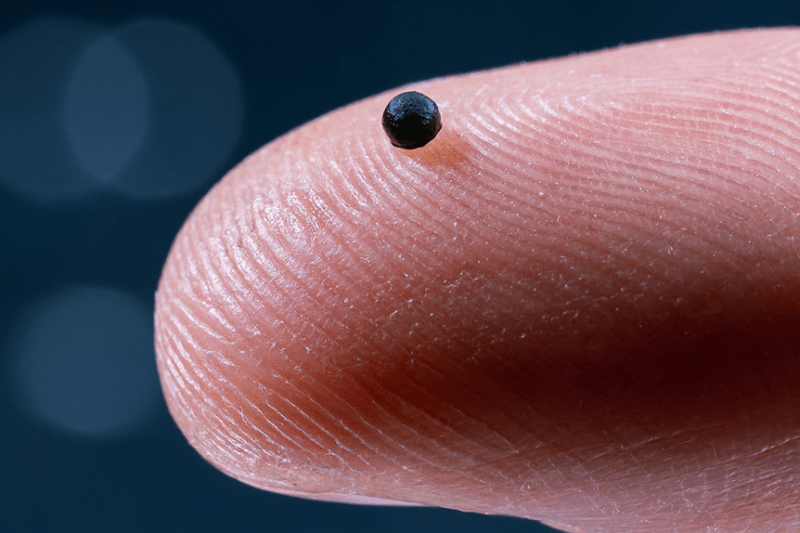
Micro-robot that can carry medicine (source ETH Zurich)
A team of researchers in Switzerland has created a robot the size of a grain of sand that is controlled with the help of magnets. This micro-robot in the form of a capsule is able to deliver drugs to a precise point in the human body.
The problem with many drugs is that they spread throughout the body, instead of getting to the area that needs treatment. One cause of side effects is that drugs end up in areas of the body that don't need them.
Microscopic capsules that must reach a fixed point in the body have been successfully tested on pigs, animals that have a network of blood vessels similar to that of humans. Tests were also done on silicone models of human blood vessels, models used in medical training, the Washington Post writes. You can also read about the research on the ETH Zurich page, but also on BBC Science Focus., .
The Swiss-developed capsules can be precisely manipulated by a surgeon using a PlayStation controller-style tool. The capsule can circulate through the blood vessels, but also through the cerebrospinal fluid. The “navigation” system uses six electromagnetic coils positioned around the patient, each approximately 20–25 cm in diameter.
The coils create a magnetic field that can push the capsule in one direction or pull it in the opposite direction.
It is estimated that drug-carrying micro-robots could be tested in clinical trials within three to five years.
ETH Zurich (Swiss Federal Institute of Technology Zurich) is one of the most prestigious technical universities in the world.
The work was published in the journal Science and has the title: “Clinically ready magnetic microrobots for targeted therapies”