A 19 billion plan lost in red tape. 1 in 4 children is exposed to poverty or social exclusion


In the European Union, one child in four lives today at risk of poverty or social exclusion. According to the most recent Eurostat data, from 2024, 24.2% of children under 18 years of age – i.e. more than 19.5 million – face material deprivation, precarious access to education or unsafe housing. Although the percentage is slightly lower than in 2023, the figures remain alarming for a Union that claims its role as a guarantor of equal opportunities.
Source: The Truth Archive
Childhood in deficit: the moral test of social Europe
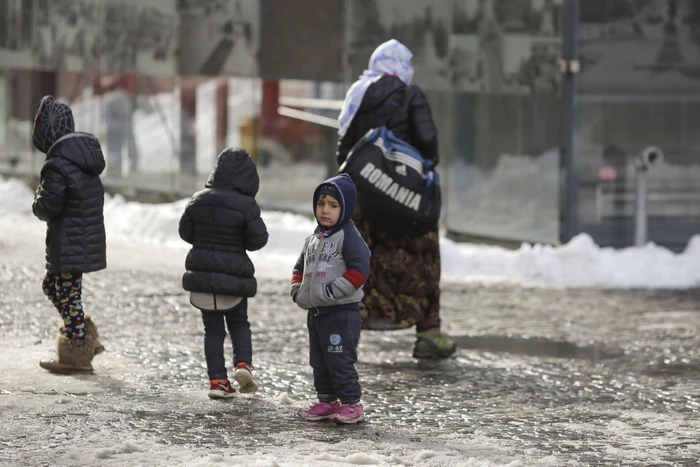
The disparities between Member States are huge. Countries such as Slovenia, Finland and the Czech Republic have the lowest child poverty risk rates, below 15%, while Romania, Bulgaria and Greece exceed 30%. In Romania, 33.8% of children under 18 were, in 2024, at risk of poverty or social exclusion – one of the highest proportions in Europe. In rural areas, the proportion exceeds 50%, according to UNICEF, reflecting a deep gap between urban and rural areas, but also between children from Roma or disabled families and the rest of the population.
Severe material deprivation – lack of access to basic goods and services – affects 31.8% of Romanian children under 16, while the European average is only 13.6%. In contrast, in the northern states the indicator falls below 7%, which shows a painful polarization between the East and the North of the Union. Children whose parents have low education are seven times more likely to live in poverty. In a country where almost a third of parents are in this category, the intergenerational transmission of precarity becomes a structural reality.
Almost half of Romania's children live in rural areas, where social, educational and medical services are limited. Even European funded programs hardly reach these children. This landscape depicts not just statistics, but destinies: children who grow up without heat, with insufficient meals, who drop out of school or never see a doctor. In a Union investing in artificial intelligence and green transition, child poverty remains Europe's unhealed wound. In this context, the European Child Guarantee was created – a political commitment aimed at breaking the cycle of poverty and ensuring that every child has access to essential services: education, health, nutrition, housing and early care.
What is the European Child Guarantee
Adopted by the Council of the European Union on 14 June 2021, the European Child Guarantee is a statement of principle: no child in Europe should be deprived of essential services. The document is not legally binding, but it establishes a moral and political obligation for member states – to develop national plans to ensure access to basic services for children “in need”. These children “in need” are all those under the age of 18 at risk of poverty or social exclusion.
The guarantee proposes an integrated, preventive approach that goes beyond the traditional logic of social assistance. At its core are five areas considered vital: early education and early childhood care, schooling, access to a healthy diet, health services and decent housing. European funds, especially the European Social Fund Plus, finance the implementation. Countries with high rates of child poverty – including Romania – are obliged to allocate at least 5% of the ESF+ funds for measures dedicated to children.
Areas of intervention: education, health, food, housing
Educateearly aunt it is the first step towards equality. In the European Union, only a quarter of vulnerable children attend early childhood education services; in Romania, the proportion drops to one child out of five. The lack of kindergartens, school transport and qualified staff makes preschool education a privilege. The guarantee requires states to ensure gratuity, parental support and combat segregation.
Educateaunt etcschoolUm another battle front remains. Early school leaving exceeds 15% in Romania, compared to the European average of 9.5%. Children from rural areas, from Roma communities or from poor families are the most affected. The guarantee advocates for inclusive schools, mentoring and counseling programs, as well as for the elimination of school segregation – still present in many Romanian localities. Another crucial dimension is NUTRITIONSTAND.
For thousands of children, school lunch is the only full meal of the day. The guarantee provides access to at least one healthy meal a day, but in Romania the “Mass warmă in șsheets“remains limited. Food is not a comfort detail: a balanced diet increases school performance, reduces absenteeism and strengthens the sense of belonging. In the field healthRomania continues to face an unacceptable reality: one child out of three from rural areas is not registered with a family doctor.
School dental offices have all but disappeared and access to mental health services is low. The guarantee proposes integrated networks of services – a real cooperation between school, doctor and social assistance. The last pillar looks residence. Almost half of households with children cannot heat their home in winter, and almost a third do not have an indoor toilet. Poor housing affects children's health, education and dignity. The guarantee requires states to invest in social housing and community infrastructure as a basis for any other social policy.
“Officially, we're doing great!”
Each member state undertook to develop a national action plan until 2030. Romania submitted its plan to the European Commission in 2022, coordinated by the Ministry of Labor and supported by UNICEF. The document includes 59 measures and total investments estimated at 19 billion euros, aimed at modernizing nurseries, expanding the “hot meal” program, developing integrated community centers and improving access to medical services.
The plan is coherent on paper, but implementation is slow. Bureaucracy, lack of qualified staff and administrative fragmentation slow progress. In many localities, the town halls do not have the technical capacity to access funds, and the programs are not adapted to the real needs of the community. Coordination is provided by a designated national coordinator, but success depends on local authorities – those who can effectively identify and support vulnerable children. The pilot models developed by UNICEF in Bacau and Brașov demonstrate that integrated local solutions work when there is cooperation between the school, the doctor and the social worker.
Funding remains a challenge. ESF+ funds can cover costs for services, infrastructure and training, but their effective absorption is low.
In addition, many European projects are temporary and stop with the end of funding, without continuity mechanisms. For the first time, the European Union created a common monitoring framework for the Guarantee, launched in 2024. Eurostat annually collects data on children's access to education, health and housing, but the lack of disaggregated data remains a problem – especially in countries like Romania, where Roma children or those without documents are not included in official statistics. In 2025, the European Commission found progress, but also gaps: only part of the member states have effective monitoring mechanisms, and the impact of the measures on children remains difficult to assess. Romania was praised for its cooperation with international organizations, but criticized for its slow pace and poor communication with the public.
Romania, between ambition and reality
Romania is an example of a country that has, at the same time, the greatest potential and the greatest challenges. On the one hand, the partnership with UNICEF and the involvement of civic organizations have created viable models of local intervention. On the other hand, lack of political continuity and insufficient resources risk turning these initiatives into isolated islands of success.
Territorial disparities remain huge: there are modern schools in urban centers and schools without toilets in villages; state-of-the-art medical practices in cities and municipalities without a doctor. The lack of qualified staff affects all levels – from early childhood education to social services. Romania also suffers from the lack of a solid data base. Without an integrated IT system to identify children in need, policies remain reactive.
Undocumented, migrant, disabled or Roma children often remain invisible. And yet, Romania has the resources to change course. It has access to European funds, international know-how, a strong network of NGOs and an increasingly active civil society. What is missing is the political will to transform the child from a “beneficiary” into a rights holder.
A guarantee is not an administrative act. It is an ethical promise. And for Romania, this promise could be the beginning of a new social pact: that of not leaving any child out of the future. Because, in the end, this politics is not about Brussels or budgets, but about what it means to be European in a world of contrasts: not to look away from the child who has nothing to eat.
A Europe that starts with children is a Europe that no longer postpones its future.