Japan warns its citizens in China to take safety precautions after relations between the two countries hit a 'knife edge'

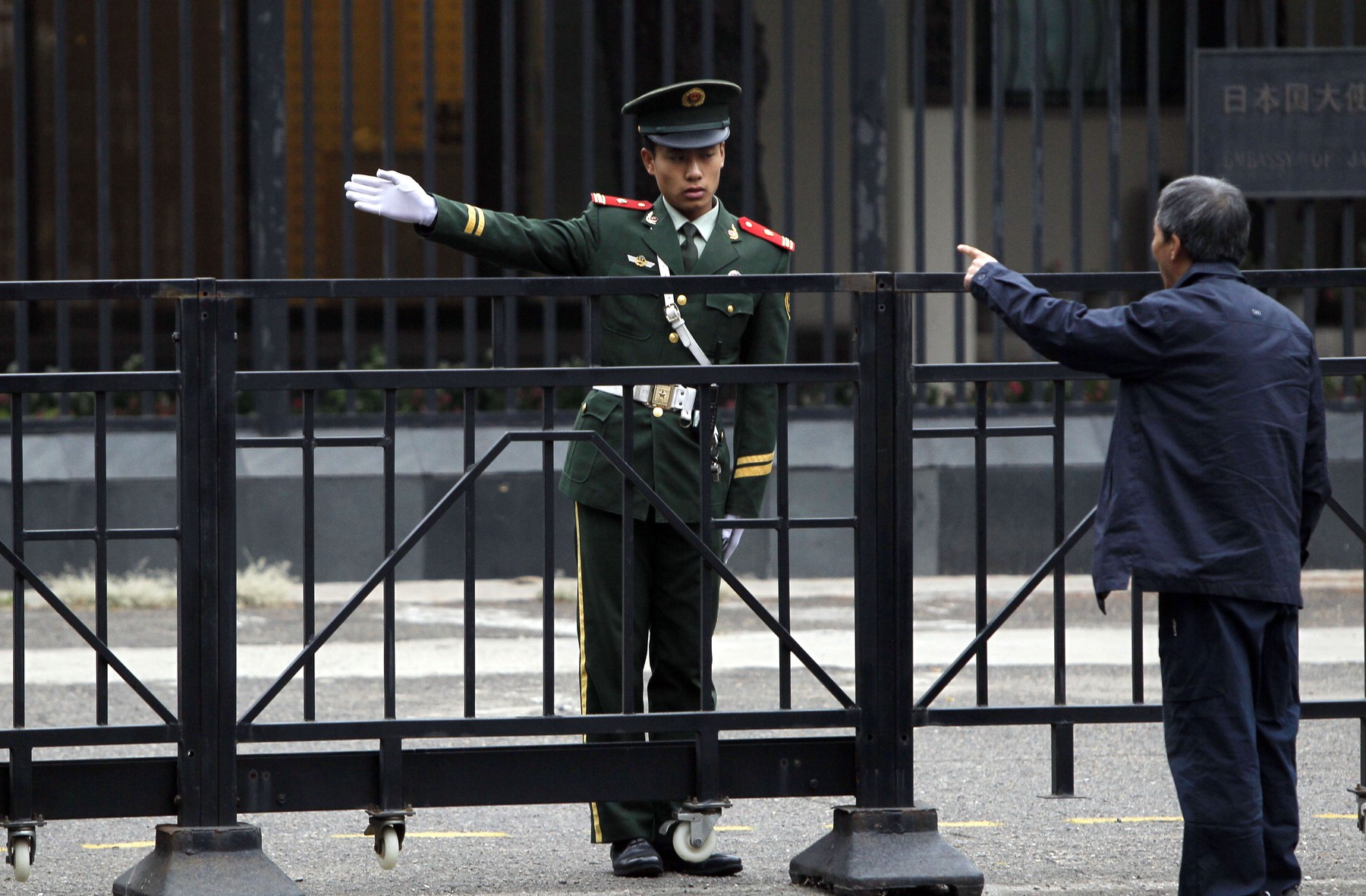
Japan has warned its citizens in China to step up security measures and avoid crowded places, amid a diplomatic spat between Asia's two biggest economies that has degenerated into the fiercest war of words in years.
The warning issued by Japan's embassy in China came on the same day that a senior Japanese Foreign Ministry official traveled to Beijing, where he held talks with his Chinese counterpart on Tuesday in an attempt to ease tensions.
China has in turn urged its citizens not to travel to Japan, which could cause a serious impact on the Japanese economy. According to official data, Chinese tourists now account for nearly a quarter of all visitors to the island nation. Shares in Japanese tourism-related companies tumbled amid the tensions.
New Japanese Prime Minister Sanae Takaichi sparked the most serious diplomatic row in years when she told Japanese lawmakers this month that a Chinese attack on Taiwan could threaten Japan's survival, triggering a military response from her country.
The most serious diplomatic conflict between China and Japan in recent years
In response to Takaichi's claims, the Chinese Consul in Osaka posted a harsh threatening comment on the Japanese Prime Minister on social media. Tokyo strongly condemned his gesture, but appealed for calm and Takaichi said he would refrain from making similar comments in the future.
But these did not manage to end the wave of virulent comments about her in the Chinese state media.
China's Foreign Ministry said on Tuesday that, in a meeting with the Japanese diplomat who arrived in Beijing, it insisted that Takaichi withdraw his claims. But Japan's top government spokesman suggested it had no intention of doing so, as the statements were consistent with its long-standing position.
Regarding the warning issued to Japanese citizens in China regarding their safety, spokesman Minoru Kihara said the decision was made “based on a comprehensive analysis of the security situation in the country or region, as well as political and social conditions.”
A day earlier, Japan's embassy in China on Monday reminded citizens to respect local customs and be cautious when interacting with the Chinese. It advised citizens to be aware of their surroundings when outside, advising them not to travel alone and to be especially cautious when accompanied by children.
“If you see a person or group that looks even slightly suspicious, do not approach and leave the area immediately,” the embassy notice said.
Chinese state broadcaster CCTV reported late Monday that film distributors had suspended the screening of at least two Japanese films in China, amid the intensifying dispute between the two countries. The broadcaster described the move as a “prudent decision” and said it took into account the “domestic deterioration of public sentiment” towards Japan.
CCTV also reported that some Japanese films, including animation, scheduled for release in the coming weeks will no longer enter mainland Chinese cinemas as scheduled.
Taiwan, at the center of disagreements between China and Japan
Beijing considers democratically governed Taiwan to be part of China and has not ruled out using force to take over the island. The Taiwanese government rejects Beijing's claims and says only the Taiwanese people can decide the island's future.
Taiwan is just over 110 km from Japanese territory, and the waters around the island form a vital sea route for trade on which Tokyo depends. Japan is also home to the largest US military contingent outside the US.
On Sunday, Chinese coast guard vessels navigated the waters around a group of islands in the East China Sea controlled by Japan. Japan's coast guard said it had driven Chinese vessels out of these waters claimed by Beijing.
The United States does not officially recognize the islands – called “Senkaku” by Japan and “Diaoyu” by China – as sovereign Japanese territory, but since 2014 has said it would be obliged to defend them if attacked under the Japan-US security treaty.
“For those in doubt: The United States is fully committed to the defense of Japan, which includes the Senkaku Islands. And the formations of Chinese coast guard ships will not change that,” George Glass, the US ambassador to Japan, said in a message published on the “X” network.
This week's G20 summit in South Africa could have provided a platform to ease tensions, but China has announced that its prime minister has no plans to meet Takaichi during the meeting.
Kihara said nothing has been decided on bilateral meetings during the G20, but that Japan remains open to holding dialogues with China on various topics.
“On a knife's edge”
In addition to tourism, Japan is heavily dependent on China for supplies of critical minerals needed in fields ranging from electronics to the automotive industry.
“If we depend too much on a country that resorts to economic coercion as soon as something displeases it, that creates risks not only for supply chains, but also for tourism,” Kimi Onoda, Japan's Economic Security Minister, told a press conference on Tuesday.
“We have to recognize that it is dangerous to be economically dependent on a place that poses such risks,” she added, responding to a question about China's calls for its citizens to avoid travel to Japan.
Ryosei Akazawa, Japan's trade minister, said on Tuesday that so far there have been no significant changes in China's export control measures for rare earths and other materials.
The heads of Japan's three major business federations met with Takaichi late Monday and called for dialogue to resolve diplomatic tensions.
“Political stability is a precondition for economic exchanges,” said Yoshinobu Tsutsui, chairman of Keidanren, Japan's largest business lobby group.
Allen Carlson, an expert on China's foreign policy at the prestigious Cornell University in the US, told Reuters that Japan's refusal to retract its statements meant that its efforts to reduce tensions had failed to appease Beijing.
“As a result, the two countries are now on a knife's edge.”