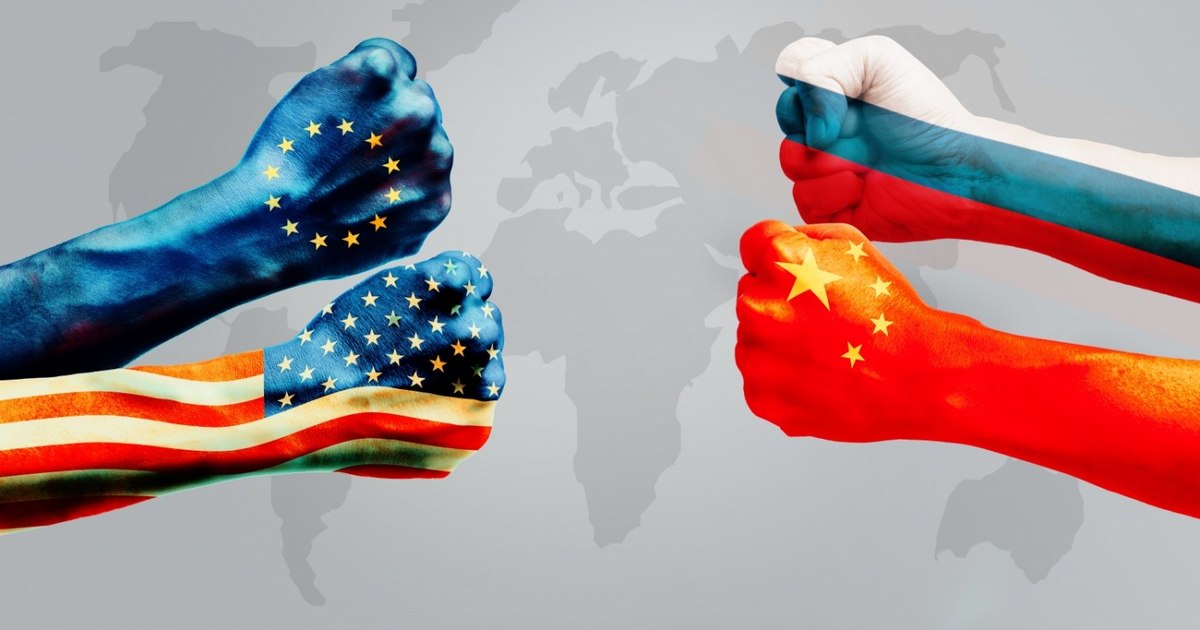
The most consequential event that has led to the erosion of the post-war order over the last 11 years was and still is Russia's behavior — which, like China and the US, is a member of the UN Security Council and a nuclear state under the 1968 Treaty on the Non-Proliferation of Nuclear Weapons.
Politicians and strategists from other revanchist powers are not the only ones observing the course of the Russian invasion and the reactions of other countries and international organizations. However, policymakers and opinion leaders in many countries around the world may be less concerned about the consequences of the war for Russia and the Putin regime. Instead, they observe the fate of Ukraine and the behavior of its friends and enemies.
Relatively weaker countries learn from Ukraine's experience that you cannot rely on international law, organizations and solidarity. Kyiv should not make the mistake of trusting in “security assurances” or “guarantees”, “friendship treaties”, “strategic partnerships”, etc. Such arrangements are of little importance, as evidenced by Ukraine's irrelevant agreements with Russia (1994, 1997), China (2013) and the United States (1994, 2008).
NATO showed Ukraine a figment. Other countries have drawn conclusions
The standard solution to the security dilemma for smaller powers is to join defense alliances, preferably those that include at least one nuclear-armed state. However, as they experienced first-hand, among others, Tbilisi and Kyiv, gaining full membership in a powerful defense alliance is neither easy nor risk-free. In response to Georgia and Ukraine's applications for NATO membership in April 2008, the alliance told them they would “become members”.
However, neither accession to NATO nor the commencement of the process of admission to the North Atlantic Alliance took place, i.e. the implementation of the so-called Membership Action Plan (MAP). Instead Georgia has been dismembered by Russia since 2008.and Ukraine since 2014
The only consolation for these two countries can be the fact that Moldova, also a former Soviet republic but a constitutionally neutral state with no ambition to join NATO, has also been dismembered by Russia for over 30 years. The fate of Finland, which has a long border with Russia, is a counterexample. Unlike Georgia and Ukraine Finland successfully started the NATO accession process in 2022, which led to its joining the Alliance in 2023
The examples of Finland and Moldova show that the intention of a former Russian colony to join NATO is neither a sufficient nor a necessary condition for a Russian invasion. Moreover, Georgia and Ukraine would likely become targets of Russian expansionism, as would Moldova, even without aspirations to join NATO. They could avoid losing territorial integrity to Russia only by submitting to the Kremlinfor example by joining the Moscow-dominated Eurasian Economic Union and the Collective Security Treaty Organization.
Ukraine would likely be forced to sign the 1999 EU Treaty between Russia and Belarus, which was concluded exactly eight years after the collapse of the USSR agreed by Kiev, Minsk and Moscow on December 8, 1991.
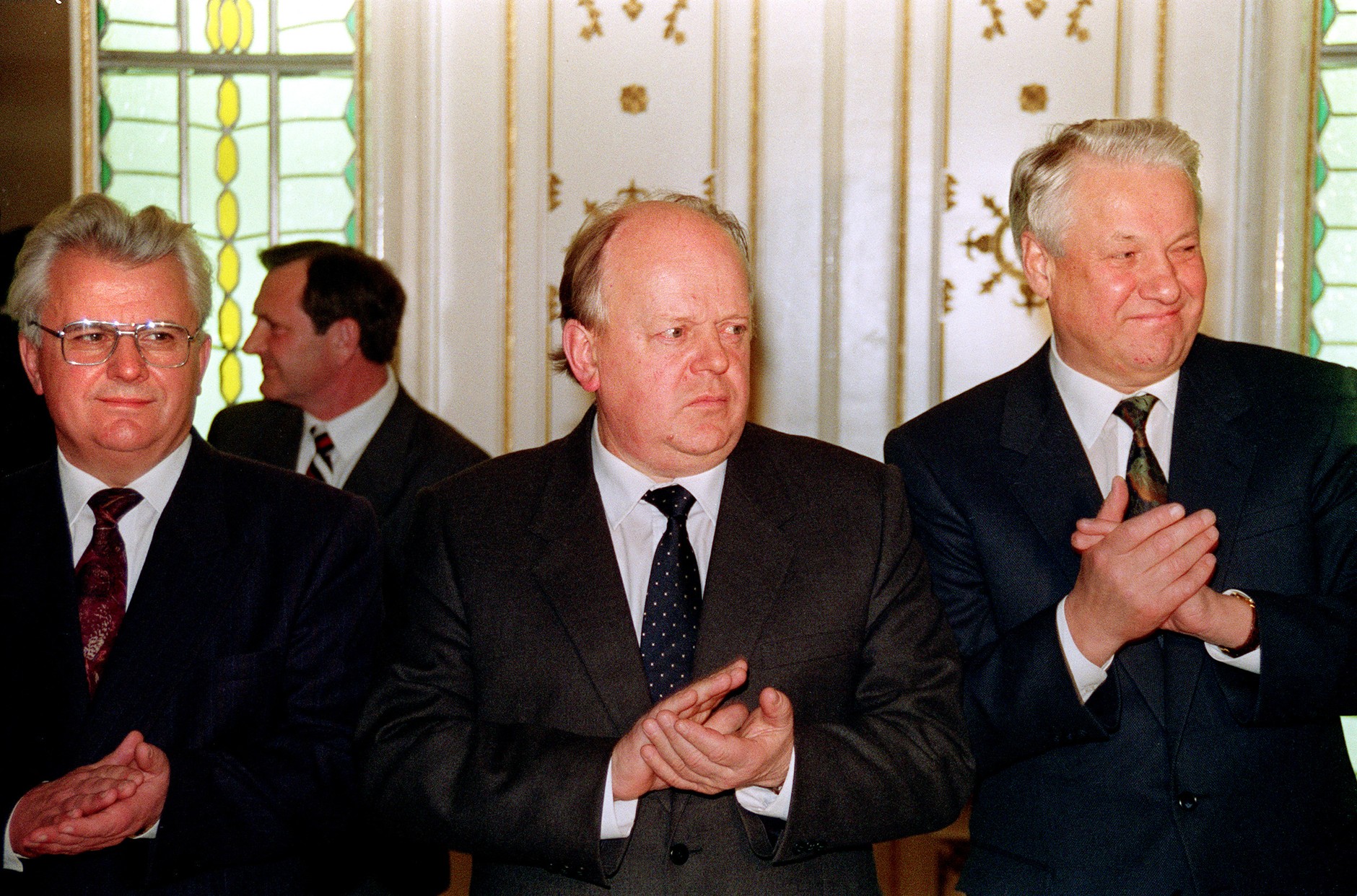
President of Ukraine Leonid Kravchuk, Chairman of the Verkhovna Rada of Belarus Stanislav Shushkevich and President of Russia Boris Yeltsin. Wiskule, December 8, 1991AFP PHOTO NOVOSTI / AFP
The experience of Ukraine and Georgia with NATO on the one hand and Russia's reaction on the other illustrate the risks of trying to join a powerful international coalition. In the case of countries such as Georgia and Ukraine, which are less rooted than Finland and have a greedy neighbor, balancing external policy is complicated.
Joining the right defense alliance can be an uncertain and risky venture. This is especially true in the case of those countries that are most interested in strong and best-armed allies with nuclear weapons and are most in need of security guarantees.
Brave new world? A reaction is to be expected
The current geopolitical upheaval appears to have been orchestrated by Moscow, Beijing and Washington. They are conducted in parallel by the three most powerful countries in the worldpermanent members of the UN Security Council and states officially possessing nuclear weapons under the 1968 Treaty.
This accumulation of factors undermines confidence both in the future international behavior of relatively stronger states and in the importance of international law and international organizations in the field of protecting relatively weaker countries from land grabs and genocide from the greatest powers.
From the perspective of Beijing, Washington and Moscow, today's transformation of the world order may not seem problematic. However, it is likely to cause concern among non-nuclear weapon stateswhich have little international integration. Countries that have potentially expansionist neighbors and operate outside NATO or other significant defense alliances must now rethink their national security strategies.
The leaders of China, the United States, and Russia may choose to ignore, reject, or take seriously third-party responses to their expansionist ambitions. As long as they do not counteract the nervousness caused by their statements and actions, sooner or later a reaction from smaller powers is to be expected.
One of the reactions of relatively weaker states to the possible end of the post-war order may be to acquire weapons of mass destruction for deterrence and defense purposes. Such decisions by some countries may, in turn, trigger similar actions by their neighbors, who do not believe in purely defensive motives behind the accumulation of weapons of mass destruction on their borders. This could trigger regional arms races and the proliferation of weapons of mass destruction in a domino fashion. The influx of nuclear, chemical and biological weapons into state arsenals, in turn, increases the likelihood that these weapons will also fall into the hands of non-state actors.
Russia, China, USA. The rhetoric is getting tougher
The seriousness of such an undermining to future international security should not lead us to dismiss it as an unlikely doomsday scenario. Russia's expansionism since 2014 and the recent escalation of foreign rhetoric from China and the United States constitute a turning point in world politics.
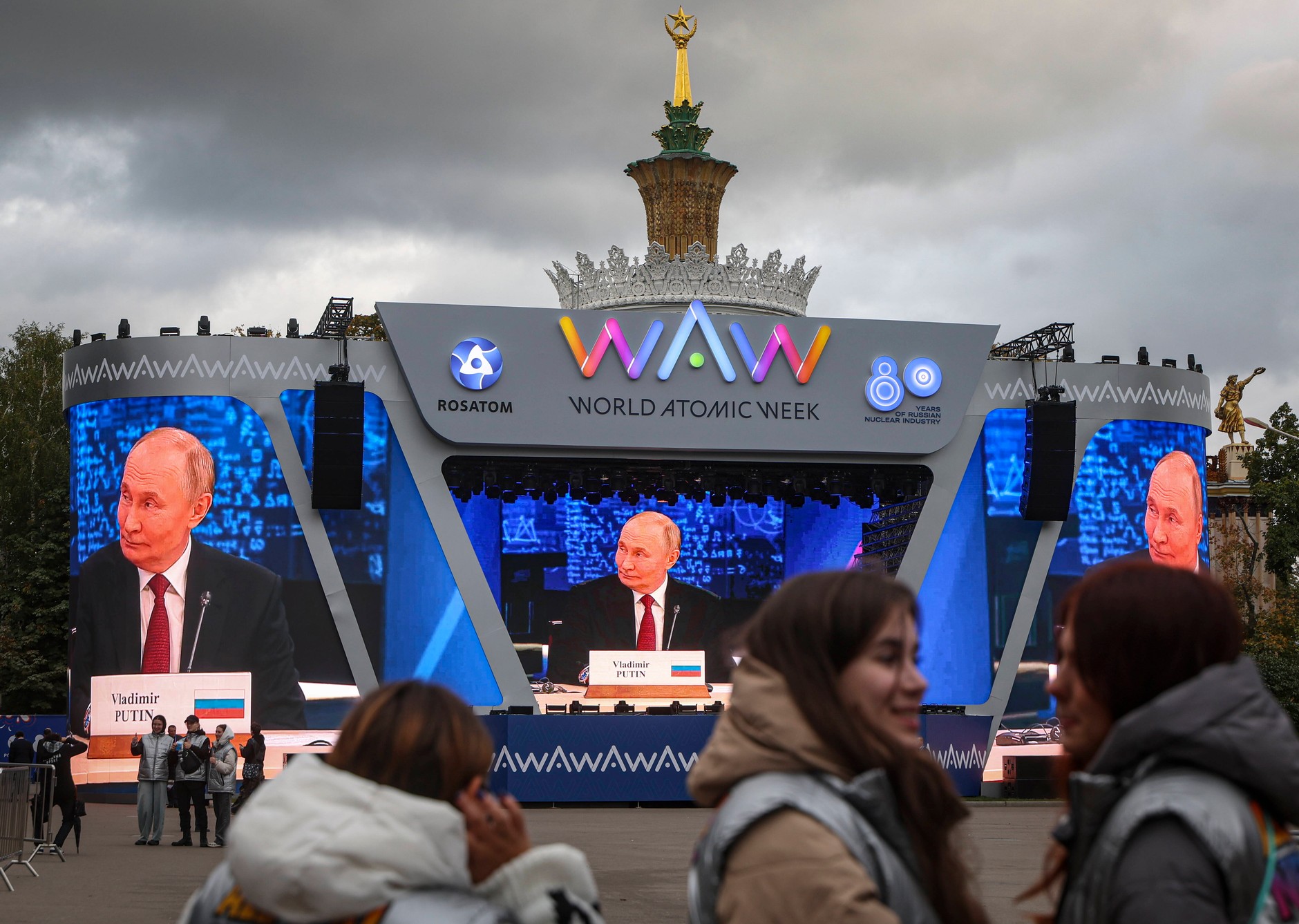
Putin's speech during the International Forum of World Atomic Week shown on a large screen. Moscow, September 25, 2025EPA/MAXIM SHIPENKOV / PAP
For observers from countries that possess weapons of mass destruction or are full members of alliances that possess such weapons, these may be regrettable but secondary phenomena. For states that do not have it, Russia's expansion and genocide on the territory of Ukraine, which is neither a NATO member nor a nuclear weapons state, and the ambivalent response of other major powers to Moscow's escalation, they cannot simply be ignored.
Changes in global security policy caused by Russia's territorial expansion and numerous war crimes in recent years are emerging existential questions for smaller powers. This effect increases with each day of the war. It would increase dramatically if Russia achieved a military victory or were able to impose an unjust peace on Ukraine. Relatively weaker countries bordering potentially expansionist states may then begin to discuss the development or acquisition of weapons of mass destruction.