This is life on the West Bank. “Leave the camp. We're going to blow it up.”

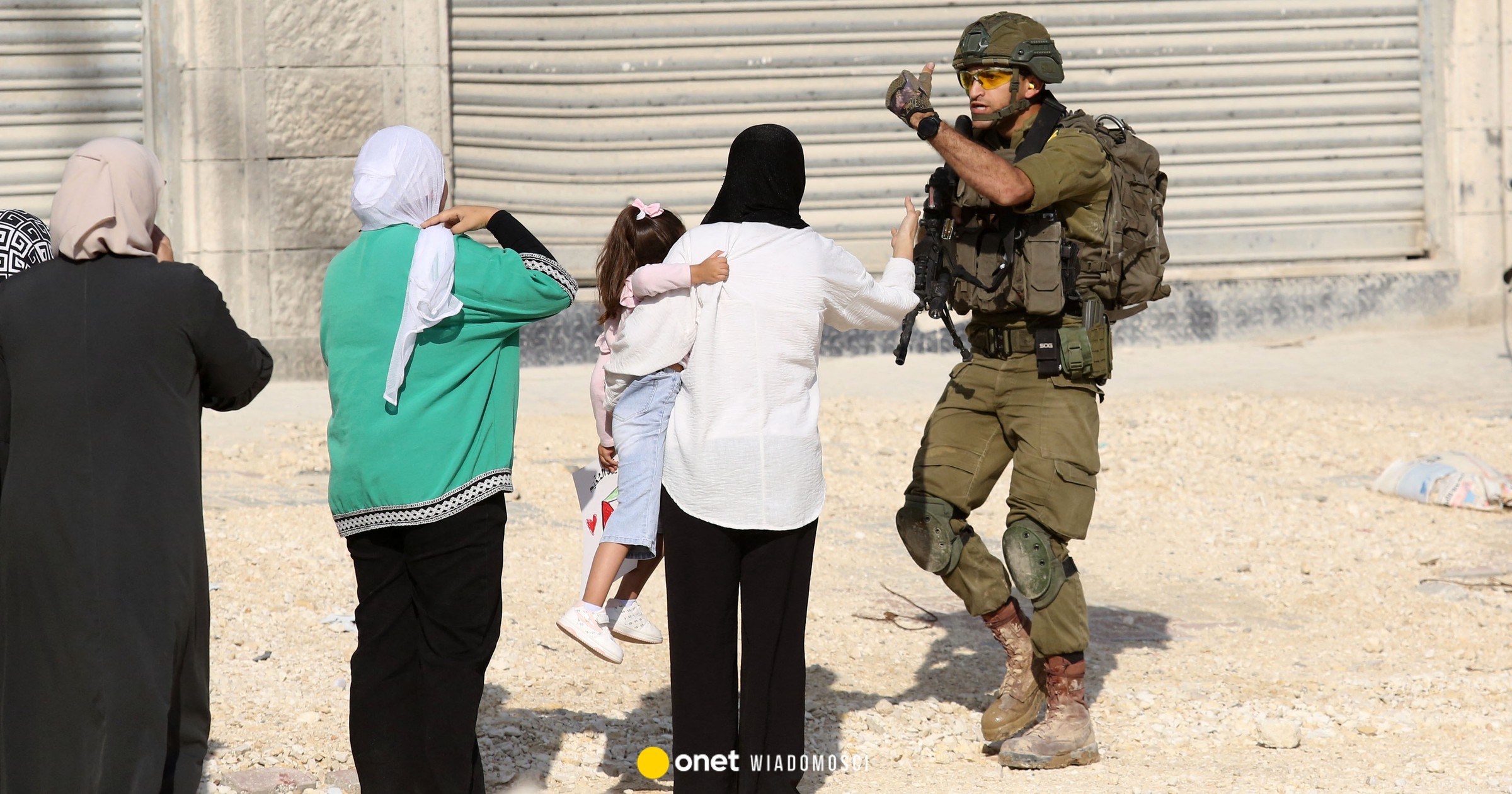
The United Nations Office for the Coordination of Humanitarian Affairs reported in November that more were reported in the West Bank in October settler attacks on Palestinians than in any other month since tracking began in 2006.
The Israeli Civil Administration announced its intention expropriation of large swaths of Sebastiaan important archaeological site in the West Bank, Associated Press journalists learned on Thursday. Peace Now, an anti-settlement organization, said the area covers approximately 4.5 hectares – the largest confiscation of archaeological sites of its kind. Additionally, the decision was made at a time when Israeli settlers were celebrating the establishment of a new, illegal settlement near Bethlehem.
At the same time, Human Rights Watch said that top Israeli officials, including Prime Minister Binyamin Netanyahu and Defense Minister Yisra'el Katz, should be investigated war crimes. In a report released Thursday, the group said Israel's military has forcibly expelled 32,000 people this year. Palestinians from three refugee camps in the West Bank.
Human Rights Watch reported that Israeli military raids on refugee camps in the northern West Bank in January and February were responsible for the largest resettlements since Israel occupied the territory in 1967.
“Leave the camp. We're going to blow it up.”
The day after Donald Trump was inaugurated as president of the United States in January, the Israeli Defense Forces began a new campaign against the Palestiniansthis time targeting the West Bank.
Men, women, children, young and old, some in wheelchairs, others using walkers, were forced to leave the Jenin refugee camp on foot because the Israeli troops that surrounded the camp had established only one evacuation route – a route that had previously been destroyed by military bulldozers.
Israeli officials claimed that the January attacks on the city of Jenin and its adjacent refugee camp, dubbed Operation Iron Wall, were an attempt to “defeat terrorism in the region.” The surgery was obvious escalation both in scale and intensity. Israeli fighter jets carried out airstrikes that killed at least 25 people and led to soldiers blowing up an entire neighborhood. Roads inside and near the camp were destroyed, including those leading to the government hospital in Jenin – the only public health facility in the area, resulting in damage to water, sewage and telecommunications networks.
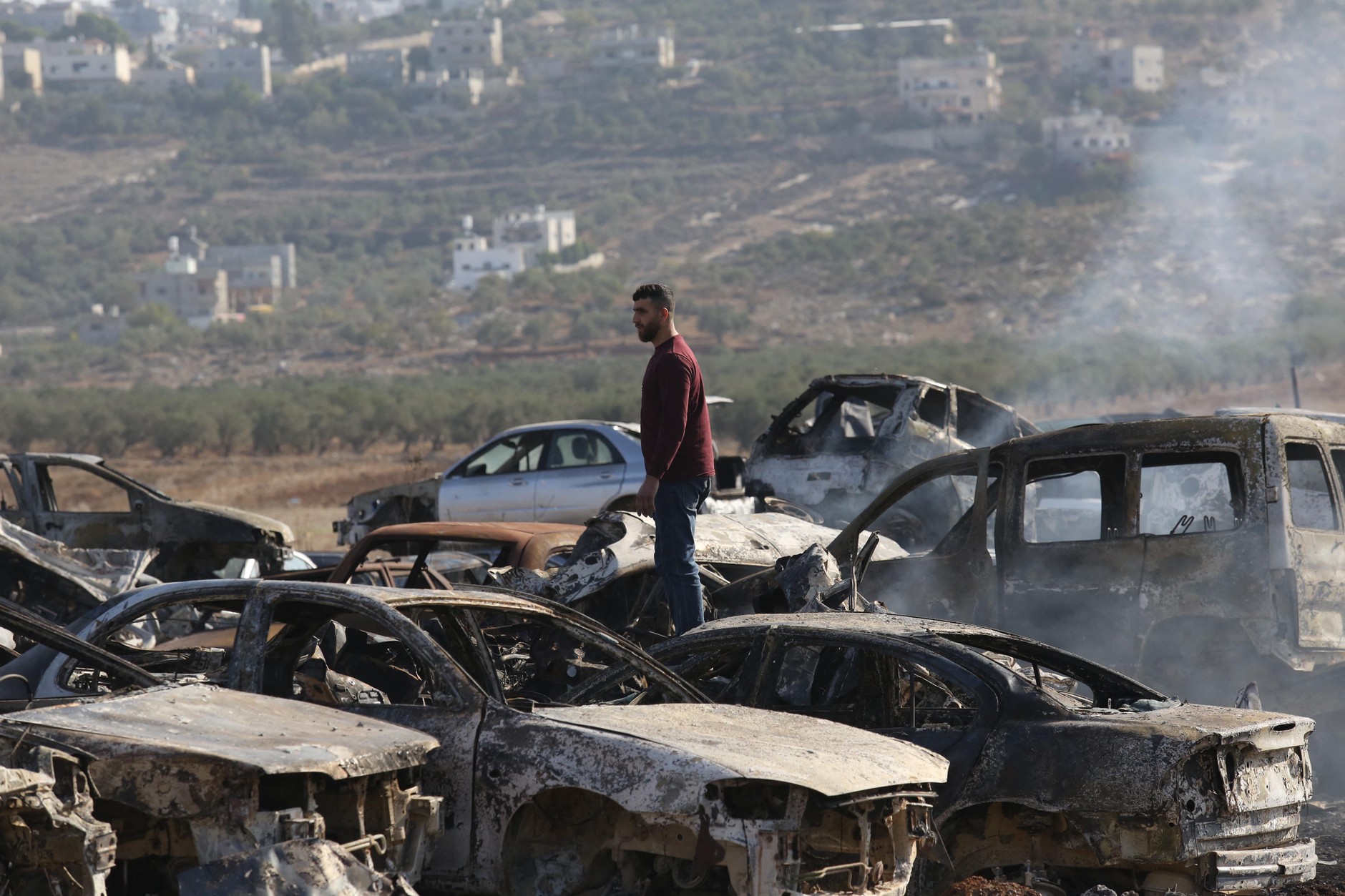
Destruction caused by Israeli settlers in Nablus, West Bank, November 21, 2025.NEDAL ESHTAYAH / AFP
Hassan Abu Sariya, a 33-year-old on crutches due to a torn Achilles tendon, planned to stay in the house he shared with seven other family members, as he had during previous military operations.
— But then drones came along. One of them hung by the window and a voice was heard saying, “Leave the camp. We're going to blow it up,” he said. – As soon as the message ended, we heard a loud bang on the roof. Another drone dropped a sound bomb. Then we decided to leave the camp.
In just four days, virtually all 20,000 people left the camp. inhabitants.
“Gasification” of the West Bank
— They seemed to be taking place in the West Bank the same scenes as in the Gaza Stripespecially in terms of closing and sieging hospitals, preventing movement to and from hospitals, and attacks on medical staff, said Dr. Wissam Baker, director of the Jenin Government Hospital, in September.
He added that at the beginning of the Israeli operation, the hospital, which serves 370,000 people, inhabitants, was besieged and all roads leading to it were closed. — Five doctors were injured and staff, patients and visitors were unable to leave the hospital. Only after intensive talks with the Red Cross and other humanitarian organizations were they allowed to leave the hospital, he said.
Israel's “gasification” of the West Bank, as some call it, involves destroying infrastructure, basic services such as water and electricity, raiding homes, preventing doctors from reaching injured Palestinians, and attacking large groups of residents refugee camps.
The destruction of Gaza has raised questions about whether it can be rebuilt and at what cost. — In Gaza, Israelis have normalized attacks on hospitals, destruction of refugee camps and killing of civilians. That's why we see what we see now in the West Bank. It has become commonplace, said Diana Buttu, a lawyer and former negotiator with the Palestinian delegation who led peace talks with Israel.
Thorn in Israel's side
Many West Bank residents believe the operation is a way for Israelis, still angered by the October 7 Hamas attacks, to further revenge against the Palestinian people despite the ceasefire in Gaza. It is also an Israeli attempt to remind Palestinians that they do not govern their territory and that their movement between cities and towns, even within Palestinian areas, is restricted by as many as 900 military checkpoints. Others say it is an act of collective punishment against refugees and their homes get rid of the “Palestinian issue” once and for all.
UN experts warn against intensifying the expansion of Israeli settlements and armed settler violence against Palestinians.
The Jenin refugee camp, one of 19 across the West Bank, has always been a thorn in Israel's side as it remains a major center of Palestinian armed resistance.
In 2002, in the largest military mobilization in the West Bank since the 1967 war, Israeli soldiers stormed the camp, killing at least 54 people and displacing over 4,000. inhabitants and destroying over 35 percent infrastructure.
Some people still remember those days. Khaled Mansur was a teenager then. — In 2002, I experienced similar suffering. Israeli soldiers forced my family to leave their home and detained me. But even despite everything that happened then, I still think it's worse and more difficult this time — the 41-year-old recalled in January.
The married father of three was worried he would have no home to return to. Over the decades that families lived in refugee camps, they transformed these places into neighborhoods with houses of their own construction. — We don't know if the Israelis will let us return. We left the house that my three brothers and I built, brick by brick. We left the neighborhood we grew up in. We left all our memories behind, says Mansur. According to the daily “Le Monde”, after several months, many Palestinians still cannot return to the camp.
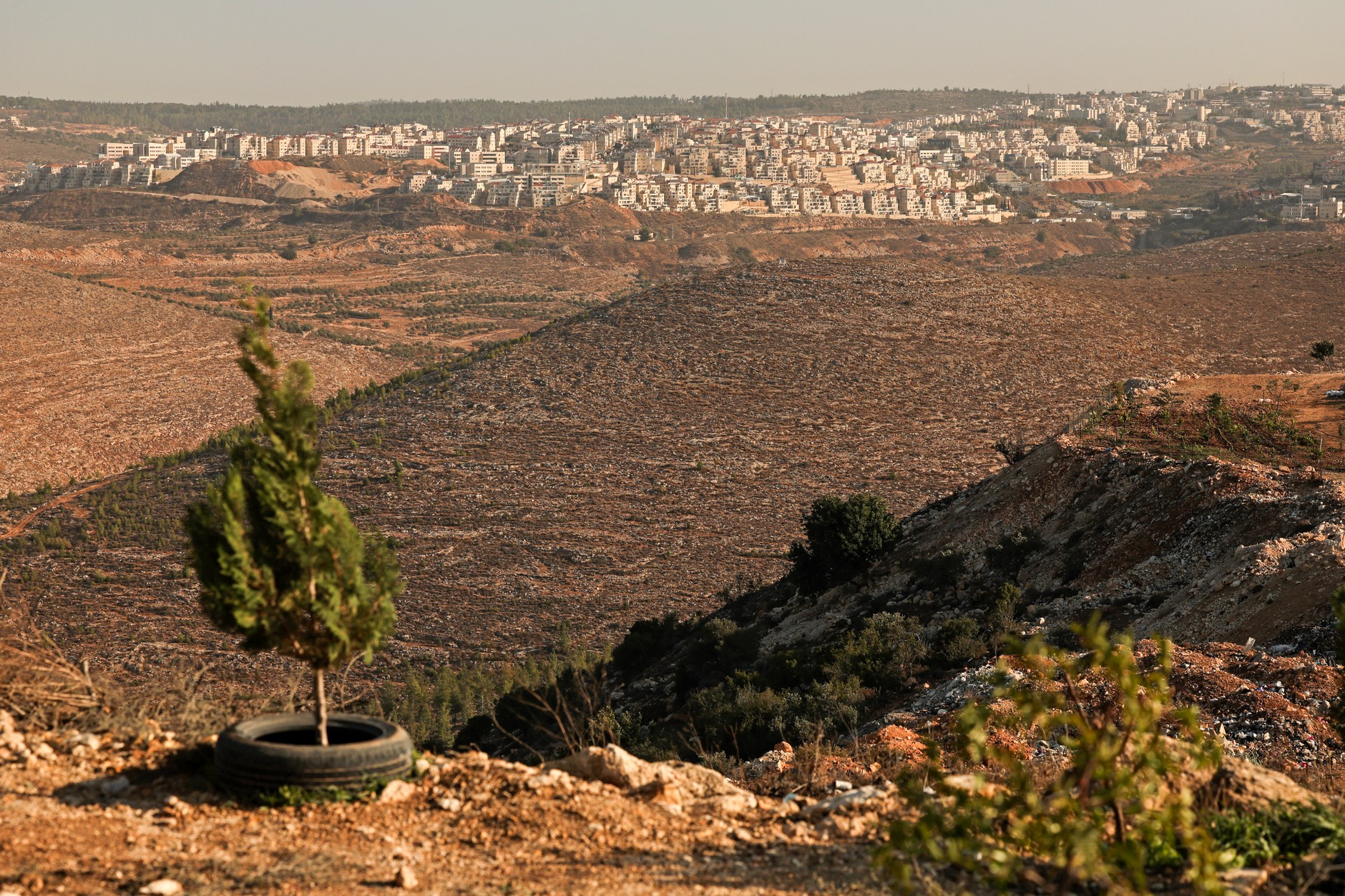
West Bank, November 18, 2025AHMAD GHARABLI / AFP
A reminder of violence
Another thing that made this military operation worse than previous ones is that Israeli forces not only evicted the residents from their homes, but ordered them to gather in a place outside the gate that has deep both symbolic and historical significance. This is the place where, more than two years ago, an Israeli sniper shot and killed Palestinian-American journalist Shirin Abu Akila.
It is not only the site of her death, but also a place that embodies the camp's decades-long struggle against Israeli military incursions and displacement. There is a makeshift monument there that has been repeatedly destroyed and desecrated by Israeli forces. Forcing residents to flee and gather there was a stark reminder of the violence that refugees had endured since they were forcibly evicted from their original homes in 1948 — and reinforced the feeling that nowhere was safe, even for journalists.
Abu Sariya said the message before the January attack was transmitted from a military quadcopter that was hovering over his home, and a disembodied voice instructed him to go to the location with his family and neighbors.
— When we finally got there, the soldiers separated the women from the men who had been photographed. My brother was detained along with several other men, while others were allowed to leave, the Palestinian recalled. — Now we're going to my aunt's house in Wadi Burqi with only the clothes we're wearing and our ID cards.
His regret at leaving his home and camp was immediately apparent. — We should take pictures of our house. We should say goodbye to him. Better yet, we should just stay, he added.