5 books recommended by Romanian historians for those nostalgic for the communist period. From “a story of a system against the individual”, to a novel by an American writer


HotNews asked three contemporary Romanian historians what books they recommend to learn and understand the real history of Romania, especially that of the communist regime. Mădălin Hodor, Marcel Bartic and Bogdan Caranfilof responded with several recommendations. There are, in total, five books that show the true face of the regime for those who tend to forget.
- A 2024 poll shows that 41 percent of 18-34-year-olds believe a totalitarian regime would be good for their country, according to research by GlobSec.
- Another survey, carried out by INSCOP Research, in partnership with IICCMER, shows that more than half of Romanians believe that the communist regime meant “rather a good thing for Romania”
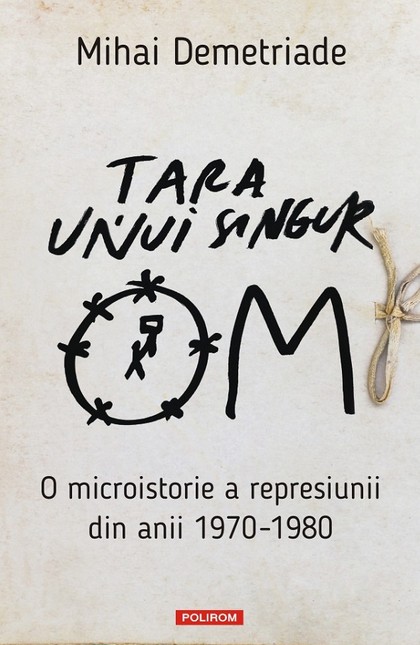
“One man's country. A micro-history of repression in the 1970s-1980s”
by Mihai Demetriades
Mădălin Hodor, historian and member of the National College for the Study of Security Archives (CNSAS): I recommend the book “Country of one man. A microhistory of repression from the 1970s-1980s”, by Mihai Demetriade. Totalitarianism is ultimately a story of a system against the individual.
The fight is always unequal. The individual is crushed by the administrative apparatus, but also by the complicity of society, and this is the line of the book. A simple, unassuming man starts a fight alone with the communist system and loses it mainly because those around him conform and act each in turn as an agent of the regime. A story that is about Romania in the 70s and 80s, about what a totalitarian regime means.
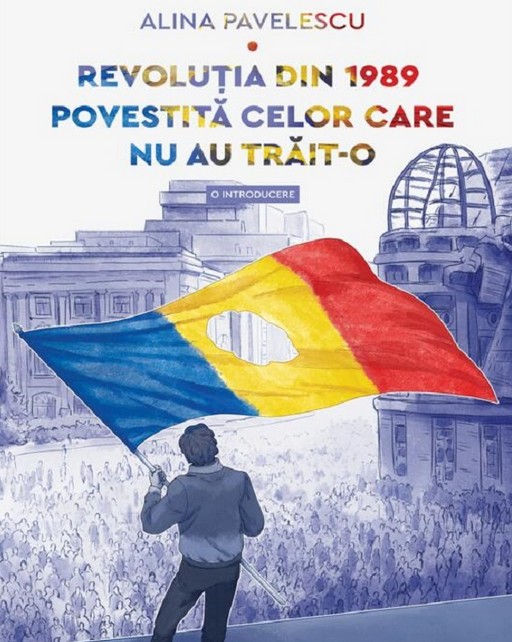
“The Revolution of 1989 Told to Those Who Didn't Live It. An Introduction”
by Alina Pavelescu
Marcel Bartic, history teacher and civic activist: One of the myths related to the history of the communist regime, the Revolution of 1989 and the period of transition to a democratic regime, is the one that circumscribes the lack of information regarding these historical events.
We still don't know enough, some lament, we'll never know the truth, others claim. This attitude represents nothing but another form of mystification, one that is as self-interested as possible, of historical truth.
One that discourages the knowledge and proper attribution of responsibility to the guilty, as well as the cultivation of respect for victims and those who have suffered. Moreover, this myth gives the measure of a horrifying historical illiteracy, specific to a generation that grew up with Sergiu Nicolaescu's films, convinced that this is the historical truth.
Sure, it's easy to form opinions when you're only informed by social media, ignoring the fact that libraries are just steps away. I would be happy to know that the efforts of Alina Pavelescu, reproduced in a captivating personal note and embodied in the book published a few months ago by the Art publishing house, “The Revolution of 1989 told to those who did not live it” will be appreciated by the students in Romania, because it is intended for them.
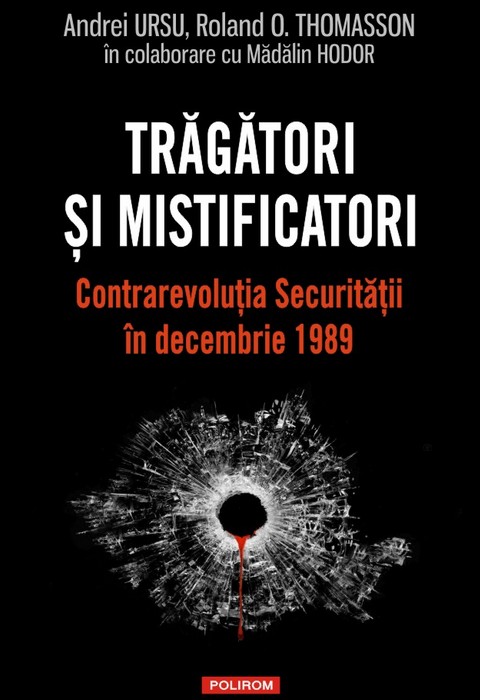
“Shooters and Mystifiers. The Security Counter-Revolution in December 1989”
by Andrei Ursu, Roland O. Thomasson, Madalin Hodor
A very detailed addition could be the study signed by Andrei Ursu, the son of the dissident Gheorghe Ursu, and the historian Rolland O. Thomasson, in collaboration with the CNSAS researcher Mădălin Hodor. “Shooters and mystifiers. The counter-revolution of the Security in December 1989” highlights the role and responsibility of this institution in the massacre that accompanied the transition from a totalitarian regime to a democratic one, answers the question “who shot us, after 22?” and dismantles the historical falsehoods propagated by the former security forces in order to erase their traces and integrate into the new post-December power structures.
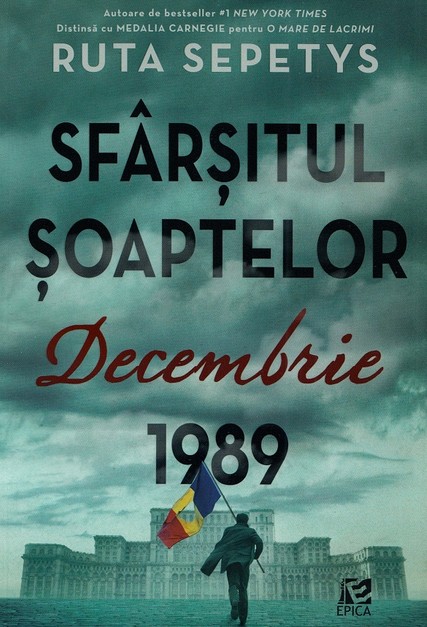
“The end of whispers. December 1989″
by Ruta Sepetys
I also recommend reading the book written by Ruta Sepetys, “The end of the whispers. December 1989”, a literary book experience this time, not a rigorous historical study, but an admirable documentary effort by the American writer. It is a novel that reproduces the tangle of complicity and relations with the Securitate. The main character, Cristian Florescu, is even a high school student, which would help today's young people to identify more easily with the hopes and fears described in the book, in the context of the events of December 1989.
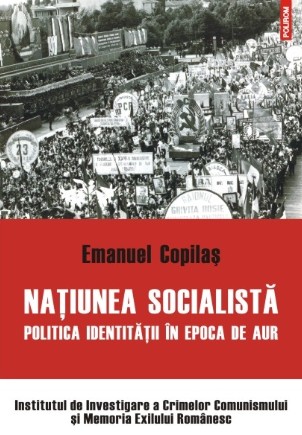
“The Socialist Nation. Identity Politics in the Golden Age”,
by Emanuel Copilas
Bogdan Caranfilof: The Romanian national identity appeared as a result of a huge political and bookish effort of some generations eager to build a national state articulated on solid ideological dimensions, which had to be discovered and strengthened permanently, and it traveled a winding route during which it was reconfigured according to various contexts, more or less volatile.
It was instrumentalized in the modern period, in the interwar period, after the Revolution of 1989 and, certainly, during the communist regime, especially in its second part.
On an important temporal sequence, that of the communist regime in Romania, the researcher Emanuel Copilaș focuses his attention, in the work “Socialist Nation. Identity Politics in the Golden Age”, published under the auspices of ICCMER, at the Polirom publishing house, in 2015. National Romanian Communism, otherwise known as pseudo-hegemonic nationalism, is traced by the author according to the main coordinates on which it was structured: the political dimension, the economic dimension, the historical dimension, the dimension cultural and military dimension, just as the “ethnification strategies” of minorities during the Ceaușescu regime are analyzed or aspects of everyday life are captured.
Practically, not a single episode of our history remained untouched by this stormy and harmful nationalist mystique, which seriously vitiated the scientific character of history and induced outdated or inept concepts to which, however, numerous historians remained tributary, even after the collapse of the communist regime.
In parallel, the personality cult of Nicolae Ceaușescu, which also reached aberrant and delusional heights, gave him the feeling that he could make Romania a first-rate state actor.