Growing problems in Russian oil industry after US sanctions: falling prices, hesitation from China and India. Lukoil risks being taken over by Rosneft


Three weeks after the US Treasury Department introduced sanctions against Russia's main oil exporters – Lukoil and Rosneft – the effects on the entire Russian energy sector are becoming visible. The price of Russian crude oil is falling, major buyers in Asia are reducing imports and the future of foreign assets of sanctioned companies remains uncertain. According to experts, the impact of the measures is gradually expanding beyond the oil market, putting pressure on the budget of the Russian Federation.
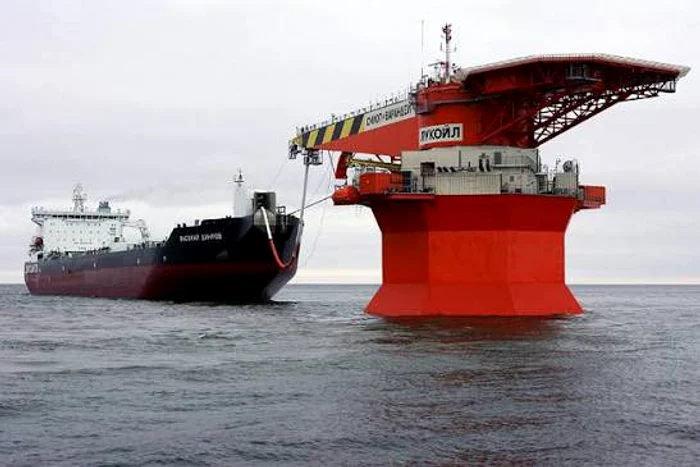
A record volume of oil on oil tanks has accumulated in international waters/PHOTO:X
Sharp decline in the price of Russian oil
After the sanctions were announced, the price difference between Russian Urals crude oil and the international benchmark Brent – known as the “discount” – widened significantly, reaching $19.4 per barrel on November 10, according to industry sources cited by the Kommersant publication. This development suggests that the US restrictions have had a rapid effect on the revenues of Russian energy companies.
Although the impact on the state budget is not yet fully visible, analysts estimate that the drop in revenues from the oil sector will become significant in November and December. The Russian Ministry of Finance predicts losses of around 48 billion rubles this month alone.
China and India reduce imports
The biggest markets for Russian oil – China and India – are wary of the risk of secondary US sanctions. Trade sources cited by Bloomberg and Reuters say several Chinese and Indian companies have reduced or temporarily suspended purchases of Russian crude. In the case of China, imports fell by almost 400,000 barrels per day, while major Indian refiners did not release orders for December.
In parallel, Turkey has also reduced purchases, turning to alternative sources, including Iraq and Kazakhstan. Currently, a record volume of oil sitting on oil tankers with no clear destination has accumulated in international waters – almost a billion barrels – a significant part coming from Russia, Iran and Venezuela.
“Lukoil”, the most affected private company
The sanctions hit Lukoil in particular, which depends heavily on exports and its foreign assets, valued at more than 14 billion euros. An attempt to sell these assets to the Swiss company Gunvor failed after Washington labeled the firm a “tool of the Kremlin”, prompting it to pull out of the deal.
On November 10, Lukoil declared force majeure at the West Qurna-2 field in Iraq – one of the largest in the world – after local authorities suspended payments and deliveries. Other assets of the company in Bulgaria, Romania and the Republic of Moldova are, according to reports, targeted for possible nationalization.
The risk of a takeover by “Rosneft”
Sources cited by the Financial Times state that Rosneft CEO Igor Secin has been looking at the possibility of taking over Lukoil for some time, a scenario that could become realistic if the private company's losses deepen. According to analysts at Columbia University, such a move would strengthen the Russian state's control over the oil industry, but would also signal a new stage of forced centralization of the economy.
Although we cannot yet speak of a structural collapse of the Russian oil industry, the recent sanctions seem to have provoked a wider reaction than previous rounds. China and India, the main buyers, are looking for alternatives, and Moscow will need months to reconfigure trade routes. In this interval, the Russian economy could feel additional pressures, especially against the background of reduced budget revenues and uncertainty in the energy sector.