The European Space Agency is an intergovernmental organization, established for the implementation of a joint European research and use program. Her tasks also include supporting the development of modern and competitive industry in the Member States. ESA consists of 22 Member States; Poland joined her in 2012.
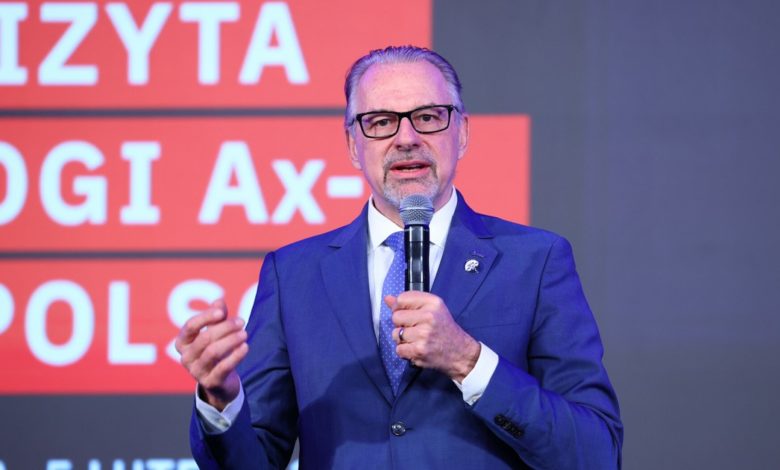
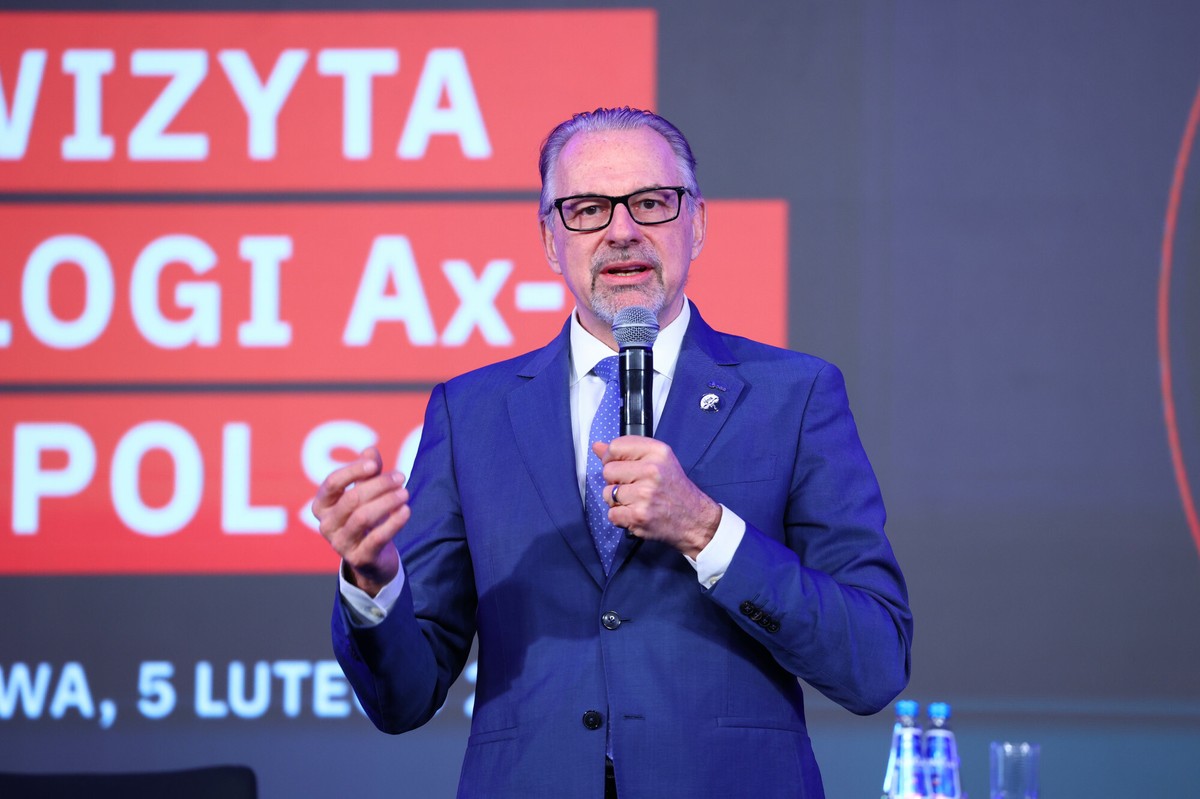
The head of ESA Josef Aschbacher, who visited Poland on the third edition of the ESA Safety Conference, referred to, among others to the cosmic potential of Europe.
“We have one of the best ships or constellations. We can boast of Copernicus or Galileo programs, which are part of the world -class standard ” – he had.
“On the other hand (…), if we consider public financing, it is about five times greater in the United States than in Europe,” he said.
“It is almost unbelievable how much Europe does with relatively small money. (…) Our partners also see it,” he said. As he noted, “However, if we do not increase our investments, the best people will simply leave, e.g. to the Silicon Valley“.
Read also: A long stay in space changes man. NASA is examining the Twin Astronauts
In the strategy published in March this year for 2040, ESA indicatedthat the fact, that Europe is only responsible for 11 percent. global public expenditure on the space sector (at 64 % of the US contribution), which does not reflect its “intellectual and economic force”.
At that time, data from 2023 was analyzed, but those from 2024 show a similar trend – Europe was then responsible for 10 percent. global expenses (spent EUR 12.6 billion), while the USA – 61 percent (i.e. they spent around EUR 74 billion).
ESA data shows that the US advantage over other countries is decreasing anyway – in 2000 the share of the United States in the global budget was over 75 percent.
China strengthens their position, whose financial contribution 25 years ago was 2 percent, and currently amounts to 15 percent.
Europe records a slow downward trend, because five years ago its indicator of participation in global public expenses for the space sector was 15 percent.
According to Aschbacher, a good determinant of the desired level of public investments would be the participation of Europe in the global GDP, especially since space is the economic sector creating added value.
“If we take the EU and add to this, for example, Great Britain, Switzerland and Norway, which are large economies, then this share will be at 18-20 percent. This is a level that in the perspective of 2040 I would consider to be adequate-although of course it can always be higher,” he said.
In the ESA strategy, Aschbacher indicated that due to the changing geopolitical landscape Europe is experiencing a key moment in its history. When asked if In the face of the threat from Russia, the space, like the air or sea, should be treated as a potential battlefieldthe boss of ESA replied that this is not the most appropriate expression, but definitely There is an activity that “is not friendly”.
He pointed out that before the war in Ukraine, in November 2021, Russia conducted a test of ASAT's anti -seatellite weapons.
Read also: NASA astronauts return to earth. Long nine months at the space station
“They called it a test. But basically they simply shot down one of their own satellites, the Kosmos-1408 satellite to show that they can destroy the spacecraft in orbit” – he said.” On the day of the invasion of Ukraine, the Viasat satellites were drowned out, which are telecommunications satellites. Thus, the Ukrainian army could not use signals for communication, “he added.
“Returning to the question – yes, space plays a very important role for security and defense. And yes, there are threats” – said the head of the European Space Agency.