35 years since the beginning of the Internet as we know it today. Specialist: “Lately, it no longer unites us, but divides us”

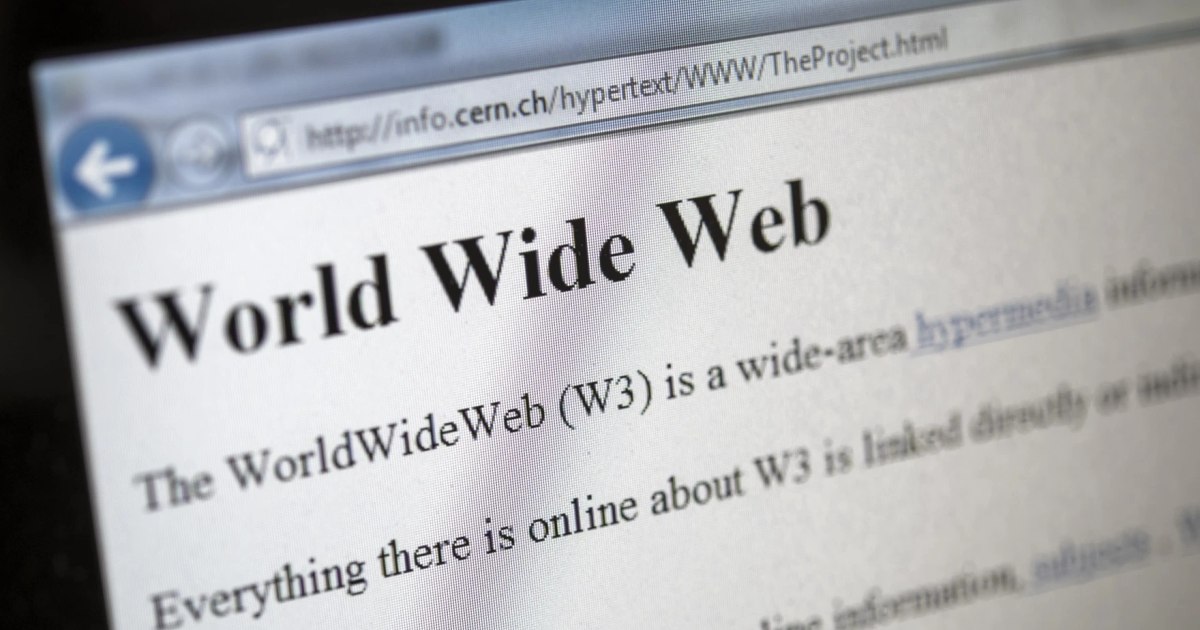
On November 13, 1990, the British Tim Berners-Lee, graduate of Physics at Oxford, officially presented the first version of the complete technical proposal for the World Wide Web. What does this mean? The beginnings of the internet as we know it today. Berners-Lee's goal was clear:To make information accessible to anyone, anywhere, anytime“. How are things 35 years later? “The Internet should have been a tool to unite us, to help us solve challenges faster, to be, in essence, useful for our purposes. But what we see lately is that the Internet, through the wing of the social media “army”, does not unite us, but divides us”says Cristian China Birta, digital marketing expert.
Front page PHOTO Fabrice Coffrini / AFP via Getty Image
How it all started
The beginning of the Internet has its roots in the 1960s, when American researchers, in the context of the Cold War, were trying to create a communication network that could function even if part of it were destroyed.
However, the Internet as we know it today was born in the early 90s. On November 13, 1990, Tim Berners-Lee, a British researcher at CERN (European Organization for Nuclear Research) officially presented the first version of the technical proposal for the World Wide Web, together with his colleague Robert Cailliau. The proposal described how a browser and web server would work and was made on a NeXT computer (developed by Steve Jobs' company).
How did he come up with the idea? As a researcher at CERN he faced the following problem: as each laboratory had its own computers and systems, it was very difficult to find or share information between departments.
“I envisioned a world where everything documented could be linked together, and people could navigate between ideas, not just files.”, said Tim Berners-Lee.
In August of the following year, the first website was officially launched. The purpose was purely informative: to explain what the World Wide Web is and how it can be used, a kind of instruction manual.
35 years later: from information to social media, artificial intelligence and bots
35 years later, the web world is a lot different than Tim Berners-Lee's original version.
“The Internet has changed with an astonishing speed. And it got extraordinarily complicated. As a technology, we can say that it did not necessarily have an explosive evolution until the last few years. But these last few years have each been almost an evolution in themselves. Only if we think about TikTok, the incredible speed with which it has reached one of the top platforms worldwide. Or if we think about the fact that in 2025, for the first time in the history of the Internet, 51% of the world's traffic will be made by bots, not people“, says Cristian China-Birta, specialist in digital marketing.
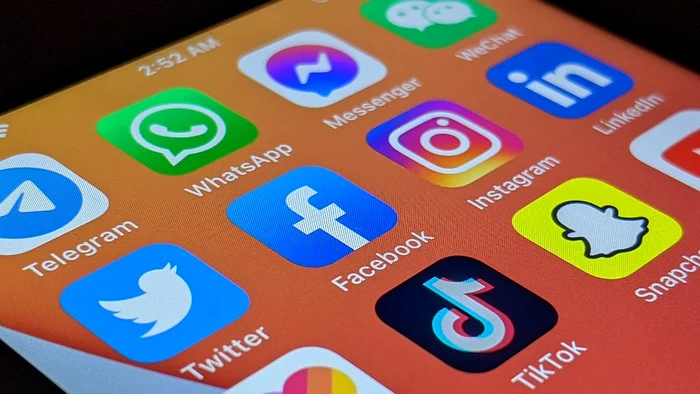
Social media, one of the most important parts of the internet today, has come with new challenges. Of which humanity would not even have thought a few decades ago.
“I think the big change was this: instead of the Internet being a tool that we humans use, it started to become a tool that uses us.
What I mean by that is that, historically, the Internet was supposed to bring us together, help us solve challenges faster, essentially serve our purposes. Or what we see lately is that the Internet, through the wing of its social media “army”, does not unite us, but divides us. It doesn't help us solve challenges, it throws other challenges at us. And unfortunately, it's no longer something useful, but something that takes us out of the mindset of doing something useful.” Cristian China-Birta believes.

Cristian China-Birta, expert in Digital Marketing
From blog to reels. Or how content creators communicate
An important page in the history of today's Internet is also the emergence of blogs, the place where the opinions, impressions and experiences of those who wrote were initially shared. Content creators now express themselves in fewer words, because another form of digital content is the most popular: reels or shorts. And their influence grew.
“Content creators have existed and will always exist. Only the means by which they create content and the platforms they create content on are constantly changing. Plus the trends that “season” both the way content is created and the way it is received. For example the shorts. Which about 15 years ago did not really make sense as a consumption habit, and now they are the most consumed types of content worldwide. Being an influencer or content creator becomes a job in itself. And the more an influencer enters an entrepreneurial mindset, the more successful they will become. We are already witnessing influencers who are true > institutions. The discussion of whether it is good or bad would be advisable to have it. as soon as possible”explains Cristian China Birta.
Benefits and dangers. “What is evil in humanity has succeeded in multiplying and growing”
Today's Internet can be perceived as a mirror of humanity, with its good and bad. The problem, Cristian China-Birta believes, is the speed with which things happen.
“In ancient Rome there was a saying: venenum. Which means, in small doses, medicine. And in large doses it was poison. So with the internet. The best thing he brought to our lives is that he brought us together faster and closer. And the worst thing is that. Because the fact that it brought us together faster and closer meant that what was evil in humanity was able to multiply and grow much faster than it normally would.”
Imagination Exercise: The Internet in Another 35 Years
At the speed of technology today, it's hard not to wonder what things will look like in 35 years. Cristian China-Birta says:
“A battlefield. I think this is what the internet is preparing (and preparing us for). A place where armies of virtual people fight other armies of virtual people. For stakes we can't even imagine yet. But with results in our immediate reality. In other words, we're going to hurt ourselves so much in the virtual that we're going to bleed in reality.”
I did an exercise and asked the ChatGPT AI the same question. The answer:
“The Internet could become completely invisible, present in the background of all human activity.
- Connectivity could be built into everything — clothes, furniture, buildings, bodies.
- Traditional devices (phones, screens) could disappear; in their place, neural interfaces or smart lenses.
- Access to information would be instantaneous, directly in thought or visual field.”