A woman who staged the Virgin Mary crying tears of blood, sent to court in Italy for a fraud of 365,000 euros


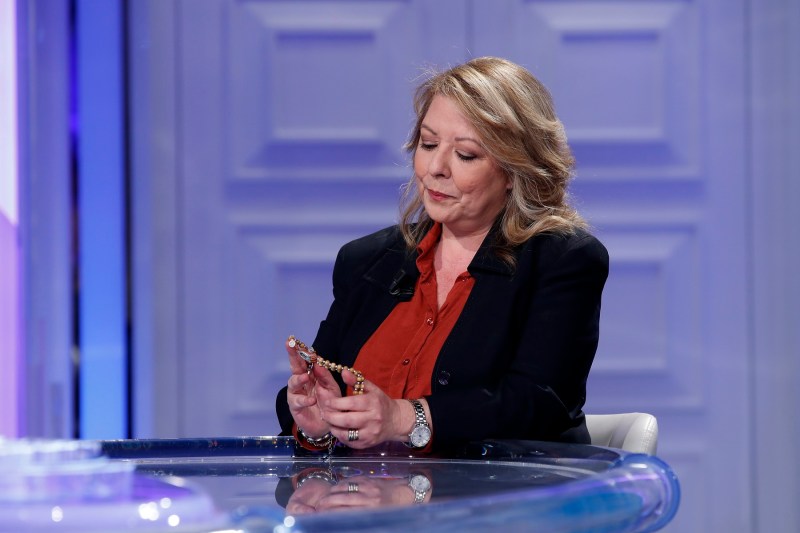
Gisella Cardia, guest in a TV show. Rome, Italy, on May 11, 2023. PHOTO: Massimo Di Vita / Zuma Press / Profimedia
A woman who lured hundreds of pilgrims to a town near Rome by claiming a statue of the Virgin Mary was weeping tears of blood has been sued for alleged fraud. Gisella Cardia, who also claimed that the said statue was sending her messages, will be tried together with her husband, Gianni Cardia, next April, The Guardian writes on Wednesday.
The two are accused of staging false apparitions of the Virgin Mary and making false predictions of catastrophes to attract donations from their Catholic followers.
Gisella Cardia, who called herself a prophet, drew hundreds of people every month to Trevignano Romano, a lakeside town near Rome, to pray before the statue, which had been placed in a makeshift shrine on a hill.
Over several years, the alleged scam generated donations worth €365,000 (about £322,000) from pilgrims who believed their money would be used to set up a center for sick children.
Cardia is also accused of making false prophecies, including that the statue warned her that the devil was preparing disasters, such as an earthquake that would destroy Rome and a communist takeover of the Catholic Church.
Prosecutors in the port city of Civitavecchia opened an investigation in 2023 after a private detective claimed the blood on the statue came from a pig.
Cardia was declared an impostor by the Catholic Church, which later tightened its rules on the supernatural as part of a campaign to crack down on fraud and forgery.
Gisella Cardia's lawyer, Solange Marchingoli, told the Italian news agency ANSA that her client received the news of the trial “with serenity”. “As paradoxical as it may seem, she actually feels a sense of relief, seeing this as an opportunity to reveal the truth about events with transparency and put an end to all forms of speculation, misunderstandings and controversies,” the defense attorney said.
Cardia, who has a previous conviction for fraud that resulted in bankruptcy, bought the statue in 2016 from a Catholic pilgrimage site in Međugorje, a city in Bosnia and Herzegovina.
News of the trial came as the Vatican's doctrinal office said the alleged apparitions of Jesus in the French town of Dozulé in the 1970s were not of supernatural origin. A Catholic woman in the town, Madeleine Aumont, claimed to have seen Jesus 49 times and that he had dictated a series of messages to her, asking her to build a “glorious cross”, 7.38 meters high, on a hill in the town, which would guarantee the forgiveness of sins.
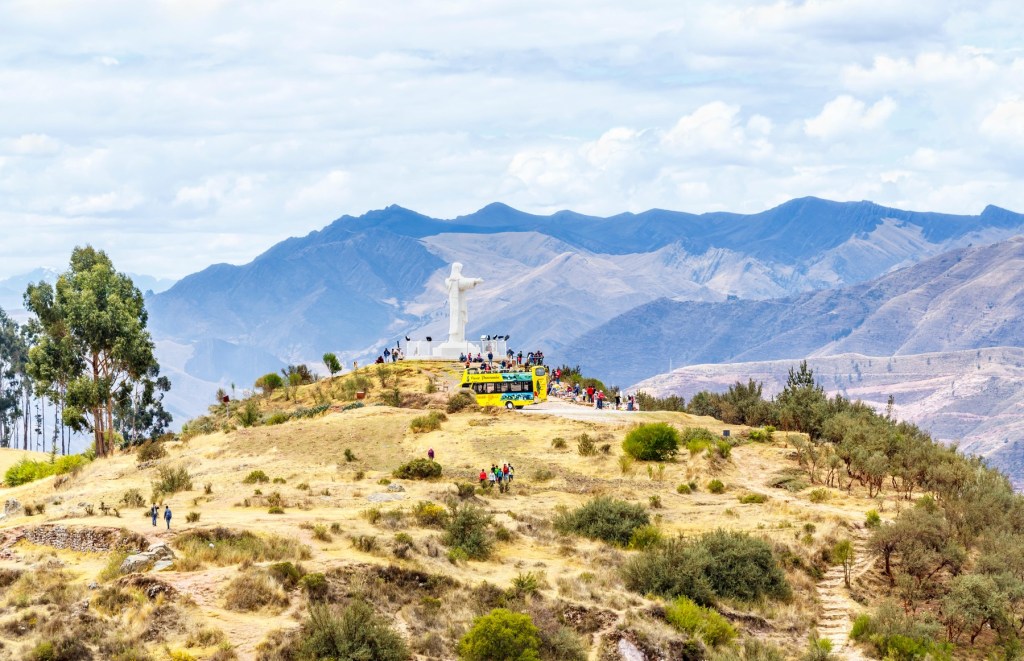 Vatican says Jesus did not appear on a hill in France, “with all the consequences that flow from this finding”
The Vatican said on Wednesday that the alleged apparitions were “definitely considered not to have a supernatural origin”.
Pope Leo last week approved a decree asking Catholics to stop referring to the Virgin Mary as a “co-savior,” meaning she should be considered the one who helped her son Jesus save the world from damnation. The Pope's intervention was aimed at countering the spread of an exaggerated veneration of the Virgin Mary, often on social media, which has encouraged claims of apparitions, weeping statues and the proliferation of self-proclaimed prophets.
Former Supreme Pontiff Pope Francis warned in 2023 that apparitions of the Virgin Mary “are not always real”.