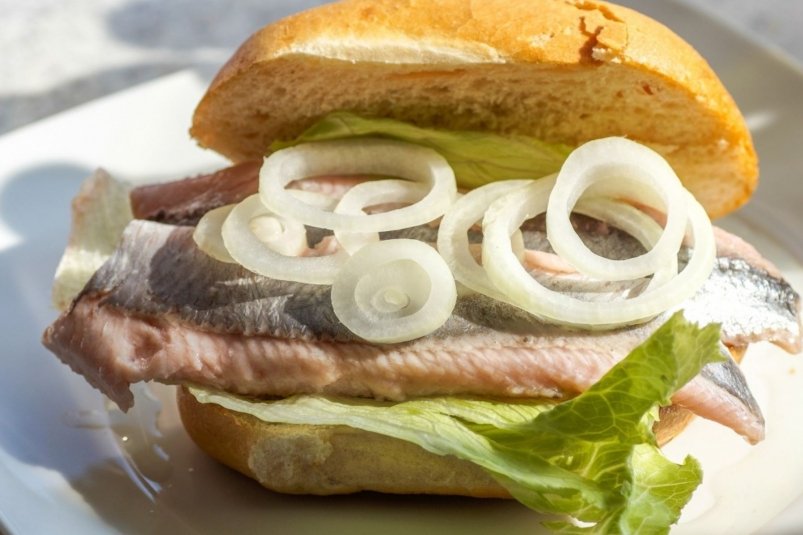
Cutting herring is far from easy. Anyone who has ever tried to remove bones and skin from fish knows that you can’t do it without patience.
But the Japanese, known for their craftsmanship and love of precision, have come up with a method that makes the process almost instantaneous. Just a couple of minutes and the herring is ready to serve.
The method is based on the principles used by sushi chefs and chefs of Japanese cuisine. They prefer not to cut, but to remove the fillet in a single movement, using the flexibility of the fish and the peculiarities of its structure.
What you will need
- sharp thin hacksaw or fillet knife
- paper towels
- cutting board
How to use
Remove head and tail
Make a cut just behind the gills, cut off the tail and carefully remove the entrails. Rinse the fish with cold water and pat dry.
Free your skin
Make a small cut at the base of the tail, pry the skin with your fingers or a knife and remove it in one motion, like a glove. The Japanese do this by gently rocking the fish so that the skin comes off effortlessly.
Divide the carcass into two halves
Run the knife along the ridge, starting at the tail, without cutting through the bone. Then simply unfold the halves – the ridge will move away from the fillet on its own.
Remove the bones
The Japanese have a trick: they press lightly with their fingers along the line of the bones, and they lift up easily without tearing the meat. If desired, you can go through it with tweezers.
The final touch
Pat the finished fillet dry with a paper towel – and the fish is clean, neat, without bones or skin.
The secret of Japanese technology is understanding the anatomy of the fish. Herring is very fatty and elastic, so its skin peels off easily and the bones come off with minimal pressure. This method preserves the structure of the fillet and prevents the meat from spreading.
In Japanese cuisine, herring is used for sushi, rolls and pickled snacks. To do this, it is important that the fillet is smooth, whole and boneless. So if you master this technique, your homemade “herring under a fur coat” or snacks on toast will look like in a restaurant.