What do we know from research about social media and mental well-being? At the population level, the association between social media use and mental health can be small but consistent. A large meta-analysis from 2024 covering 143 studies and over a million teenagers showed positive correlations between time and engagement on social media and internalizing symptoms (depression, anxiety). The effects were small but significant, also in clinical trials. This suggests that the risk increases with the method and intensity of useand does not apply only to the “most severe cases”.
More recent research from this year indicates that more time on social media at the beginning of adolescence is associated with an increase in depressive symptoms in subsequent measurements. In turn, the European Commission's review shows that the impact strongly depends on the characteristics of the person, type of activity and platform design. In other words it's not the internet itself, but how and when we use it.
Check also: A new way of learning with AI support. “I wish I had started sooner”
Feeling worse due to doomscrolling
One of the better documented mechanisms is doomscrolling. Research from 2024 links persistent consumption of short (often negative) content with higher existential anxiety, decreased trust in others and worse well-being. Employee data also shows a decline in engagement in tasks. So there are both emotional and behavioral effects.
The next part below the video:
Short videos exacerbate the attention-switching problem. An article in the “Journal of Experimental Psychology” showed that quickly switching between videos or scrolling through the same material paradoxically increases the feeling of boredom and reduces satisfaction with the content. In parallel, work on short video addiction (short video content addiction) connect heavy use of reels with poorer executive control and attention difficulties. Studies among college students report a decline in concentration and learning performance with frequent exposure to short clips.
All this gives a convergent picture. The habit of small dopamine hits over time perpetuates an unfavorable way of regulating attention.
The next axis is sleep. Activity recordings show that interactive use of screens in bed (games, multitasking, chat) shortens sleep and worsens its quality. Reviews and meta-analyses from 2024–2025 associate intensive evening smartphone use with a greater risk of insomnia and indirect mechanisms such as social comparison and cognitive arousal just before sleep. In turn, the effects of sleep transfer to mood and functioning the next day.
At the same time, market data shows that short videos take up an increasing share of attention span. TikTok is the fastest growing news source, and the average daily time spent on the phone exceeded classic TV. This is not only an individual problem, but also a systemic one. The design of video platforms and their metrics, however, favor the engagement loop and not necessarily the quality of the experience.
Read also: Humanoids are supposed to replace us. AI keeps a close eye on people
What do we know about the brain on autopilot? Relying on AI and cognitive load relief
AI clearly increases productivity and equalizes the performance of weaker performers in a limited range of tasks, but in parallel, there are collateral costs for cognitive effort, motivation, and critical thinking. BCG research shows that generative AI, such as ChatGPT or Claude, can significantly improve the quality of short, schematic tasks, and inequality of results decreases. However, improper use runs the risk of making easy tasks easier and difficult tasks… even more difficult.
In turn, experiments and surveys from 2025 describe decrease in internal motivation after working with AI and lower declared cognitive effort. In the literature on human-AI cooperation, there is a growing body of evidence for the so-called Automation bias, i.e. excessive trust in the algorithm's suggestions, even when they are wrong. The ability to think critically and question is one of the most important competencies we should develop today.
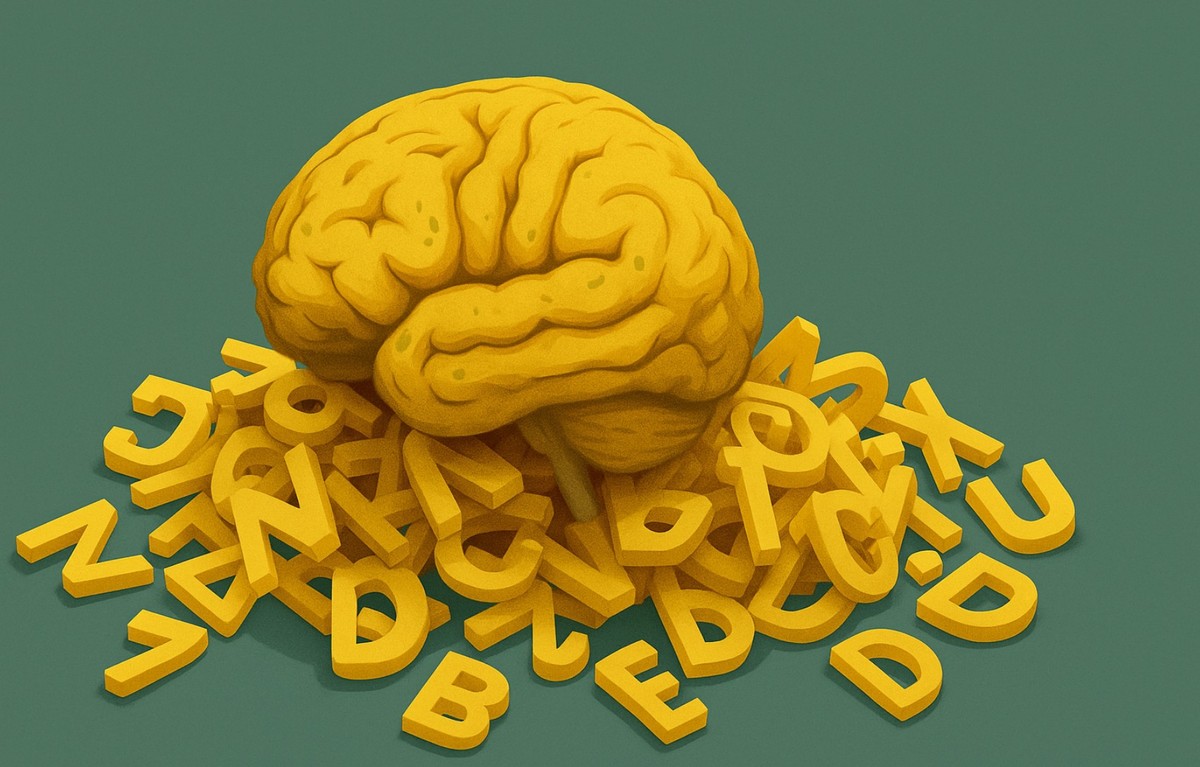
When it comes to memory and learning, there is emerging evidence that over-outsourcing thinking to AI models may undermine the persistence of knowledge. In the 2025 material, students who learned with the unlimited help of ChatGPT achieved worse retention of the material (57.5 vs. 68.5 percent of correct answers) than the group learning traditionally. These results are not yet peer-reviewed and are not conclusive in the context of educational meta-analyses, but the direction is consistent with research on cognitive relief. When the tool performs the most important effort for us (e.g. the main task is to write a text and AI writes the text for us), the brain exercises less. And so it's easy to develop brain rot, a colloquial term for deterioration of mood and concentration in people who consume short, low-quality content and rely excessively on AI models instead of their own thinking.
Moreover, the information mix we consume is becoming more and more synthetic. Research and reports from 2024–2025 prove the ease of creating value-free news content farms, and discussions about AI slop (a flood of low-quality content, massively generated by AI models) indicate the contamination of feeds and search engines with materials generated only for clicks. However, it is not only a matter of quality. An oversupply of secondary, predictable content weakens the incentives for deep processing.
See also: Denmark bans children under 15 from using social media
Three intertwined mechanisms, i.e. the anatomy of brain rotation
The first mechanism is stimulus engineering. Autoplay, infinite scroll and ranking under “predicted engagement” they reinforce short-term choices (novelty, surprise, emotion) rather than long-term (understanding, knowledge, peace). The effect is a loop in which the more often we “jump” through content, the harder it is to “immerse” ourselves to learn something deeper. We are more often looking for the next impulse, not high-quality knowledge. Studies about boredom while skipping through hundreds of movies capture this paradox very specifically.
The second mechanism is emotional overload. Doomscrolling and social comparisons increase anxiety, anger and a sense of lack, and these states they narrow the field of attention and weaken regulation. This is a vicious circle that may lead to a trend of feeling worse.
The third mechanism is cognitive relief through tools. AI shortens the path to the result, but if we entrust it with planning, source selection and quality assessment, we turn off our own working memory and critical thinking training. The result doesn't have to be an immediate loss of productivity – more often it's an erosion of the ability to deal with new, unstructured tasks and a decrease in motivation to work deeper.
What to do with all this?
The most important thing is the architecture of your own habits. Sleep data clearly shows that interactive screens before going to bed shorten and disrupt sleep. Therefore, it is worth moving active content outside the bedroom and closing the stimulus window at least an hour before bedtime. During the day, the railway works well immersion instead of jumping — one longer material, without scrolling, is more satisfying and less boring than five short, interspersed jumps.
And finally, it's worth using “AI as a helper, not a ghostwriter” approach. Tools should be used to check, ask questions and explain, not to provide ready-made answers that bypass the effort of learning.
Author: Grzegorz Kubera, journalist of Business Insider Polska