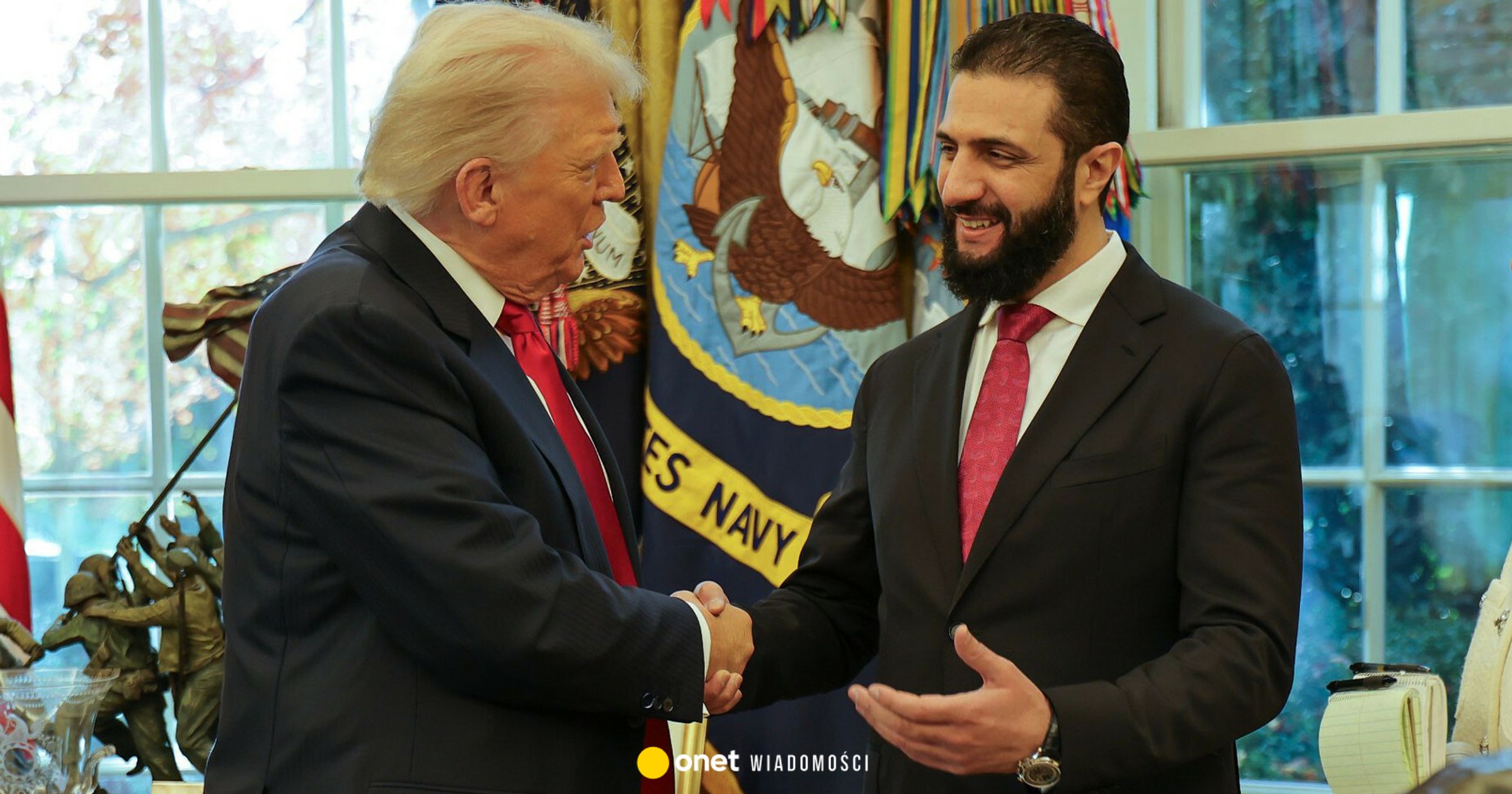
Ahmad al-Shara, the president of Syria, symbolizes the cracks in the order in the Middle East like no other. He fought against US troops in Iraq, later commanded the Syrian branch of Al-Qaeda, the Jabhat al-Nusra front, and then the Hayat Tahrir al-Sham militia— the forces that overthrew dictator Bashar al-Assad in December 2024. Eleven months later, this man was in the Oval Office.
His international rehabilitation began shortly after the fall of al-Assad. The U.N. Security Council lifted sanctions and Washington removed him from its terrorist list last week. Since then ash-Shara presents himself as a statesman, talking about elections, the constitution and national reconciliation. Critics ask: real change or tactical masquerade?
For Donald Trump, this visit was more than just a diplomatic meeting. He presents himself as the architect of a new balance in the Middle East. As the motto goes: America is negotiating again, not at war. Together with al-Shara, he wants to demonstrate that even former enemies can become allies if they play by Washington's rules.
Behind closed doors, the stakes are high. Syria is to officially join the US-led coalition against the Islamic Stateits intelligence services are to cooperate more closely with Washington. It is to distance itself geopolitically from Iran, Hezbollah and Russia. In return, they receive money for reconstruction, rapprochement with the West and international legitimization.
According to diplomats The US is also planning a military base near the Syrian capital, Damascus. According to reports, it will be used to “coordinate humanitarian aid” and “monitor developments in the situation between Syria and Israel.”
The West needs Syria, Syria needs the West
After 13 years of civil war, Syria lies in ruinsand the World Bank estimates reconstruction costs at over $200 billion. [ok. 730 zł]. Russia offers protection but almost no capital. So al-Shara went to Moscow in October to meet with Vladimir Putin — a signal to Washington that Syria had an alternative.
However, Putin's help remains symbolic, not financial. The Persian Gulf countries give money but do not provide security. The US could provide both and at the same time open access to international financial institutions.
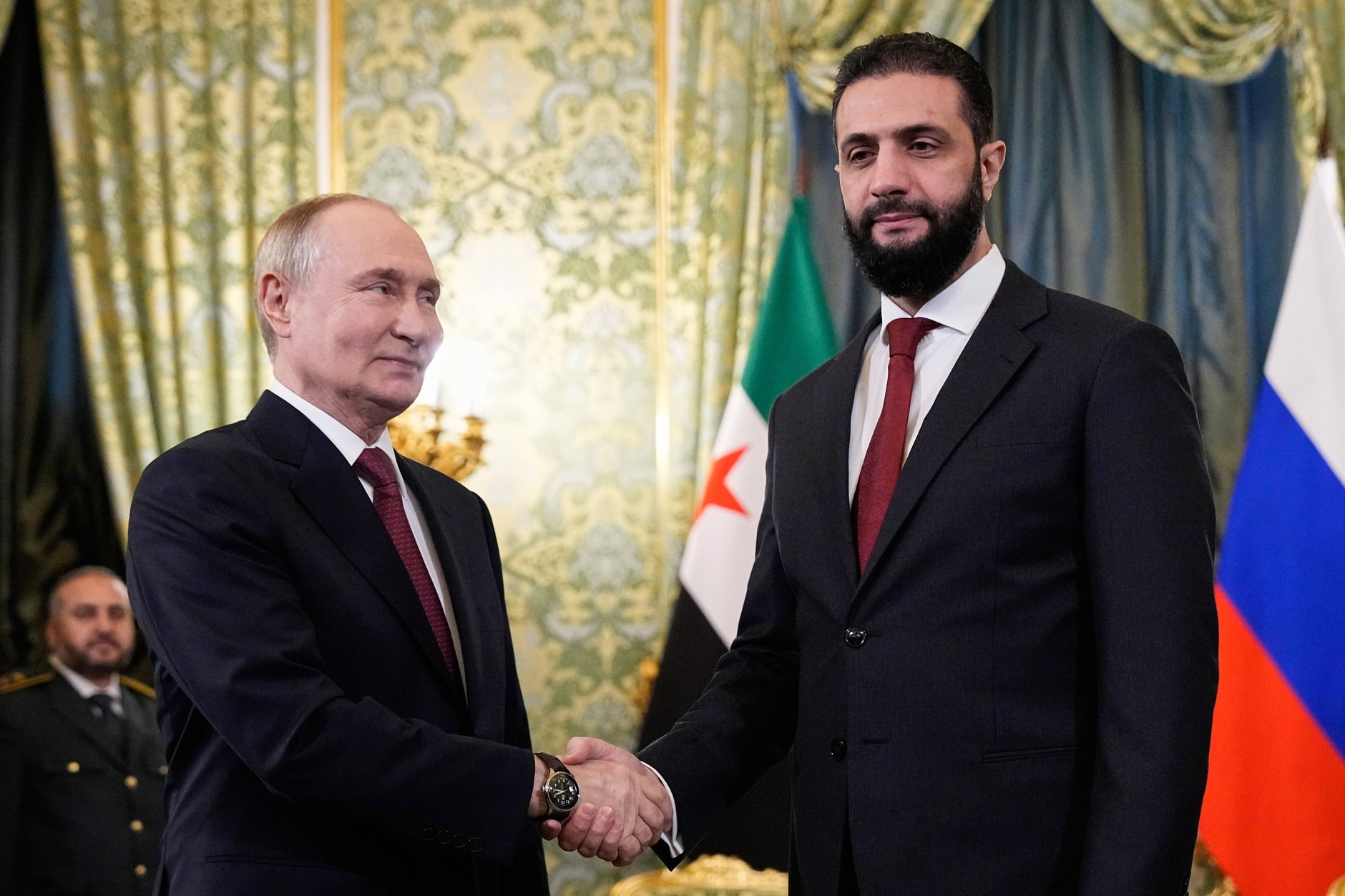
Vladimir Putin, president, and Ahmad al-Shara, interim president of Syria, Moscow, October 15, 2025.EPA/ALEXANDER ZEMLIANICHENKO / POOL / PAP
However, while al-Shara presents itself as an innovator, it carries a high internal political burden. In the spring, over 1,700 civilians were massacred in Alawite areas and over 1,000 people were killed in Druze regions. Kurdish forces refuse to include their militias in the new army. Islamic hardliners are already accusing al-Shara of “betraying the revolution.” His power is based on weapons and the loyalty of militias, not on social unification.
Israel also has something to say
Israel also plays a key role in this network. Since the fall of al-Assad, it has controlled the Syrian border zone in the south and regularly bombs Iranian positions. Washington is trying to defuse this explosive situation.
As “The Guardian” writes, it is being considered behind the scenes a US-brokered security agreement between Israel and Syria. There is no question of peace, but of some kind of agreement – for example, on joint surveillance in the area of Mount Hermon.
For Israel Syria without Iran-sponsored militias would be a strategic gain. For al-Shara, this would be the price of international recognition. However, he knows that getting too close to the US and Israel may cost him his head in the country.
This visit is therefore more of a symbol than a solution. Trump is showing his voters that he can bring peace where others have failed. Al-Shara wants to prove to the world – and above all to his own people – that he is more than just a militia leader, and that he is the head of a state of international importance.
But behind this show lies a dangerous game: anyone courting a former terrorist loses his moral credibility. Anyone who approaches the West risks the hatred of their own hardliners. AND anyone who promises stability must also deliver itć – in a country that is still stuck between ruins, militias and distrust.