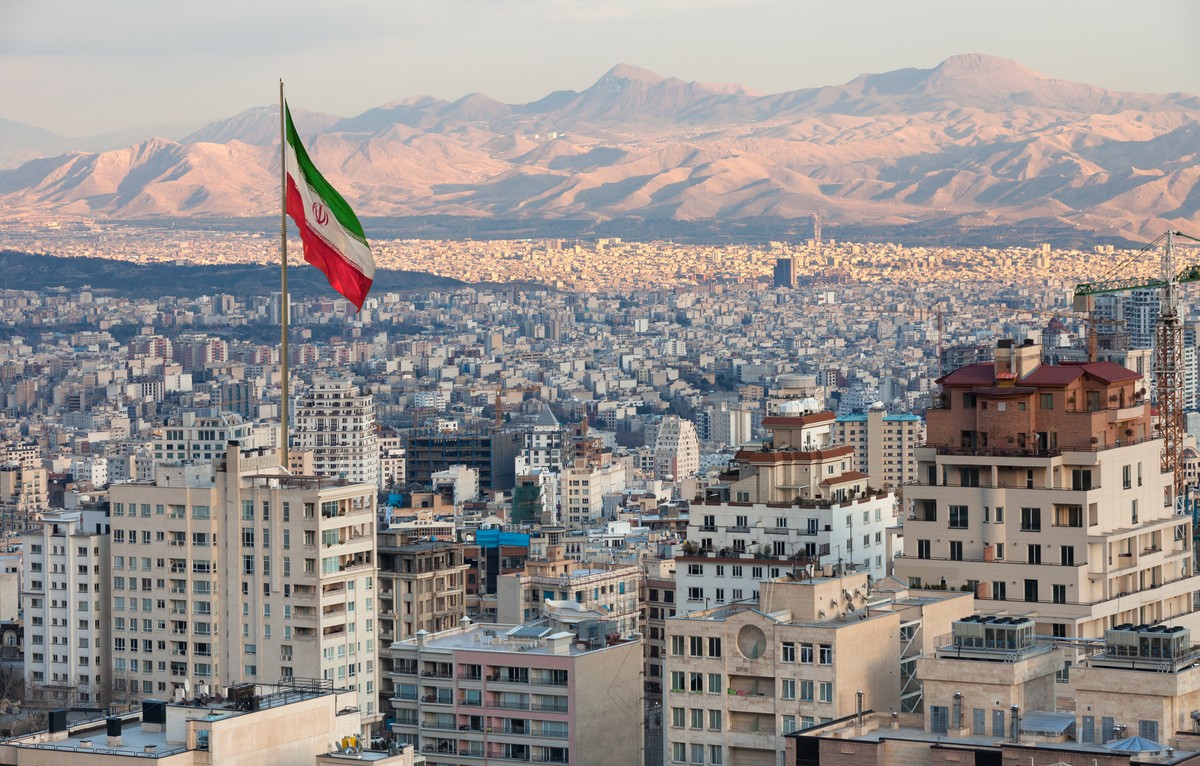
Iran's president, Massoud Pezeshkian, warned last week that if there is a further lack of rainfall, the authorities may be forced to introduce water rationing and, in extreme situations, even evacuate Tehran. This statement was criticized in the Iranian media. The former mayor of the capital, Golamhoseyn Karbashi, dismissed the president's words as a “joke” and said that evacuating the city “doesn't make sense.”.
According to meteorologists Iran is experiencing one of the driest periods in the last 50 years. Rainfall decreased by over 85%. compared to last year, which led to a record low level in the capital's water reservoirs. The national drought crisis center assessed the situation as “serious” and warned that no significant rainfall was expected for the next 10 days.
The rest of the article below the video:
Similar problems affect Mashhad, Iran's second largest city. The general director of the local water and sewage company, Hosejn Esmeilian, announced that the water level in the city's main reservoir had dropped below 3%.
Growing concerns about the future
Iran, with a population exceeding 90 million, is struggling with a long-term shortage of water resources. According to Atlantic Council analysts, the country's renewable water resources have decreased by about 35 percent. over the last decades, which, combined with the population explosion, poses the country to face serious challenges.
Ali Moridi, a scientist from Tehran's SBU University, estimated that the problem results not only from difficult climatic conditions, but also from the lack of cooperation between state institutions and the scientific community. In an interview with Iran International, he emphasized that the depletion of groundwater leads to soil salinization, which forces the migration of people from the countryside. Since 2013, approximately 10 million farmers have left their farms and moved to the outskirts of large cities.
Read also: This deal was supposed to stop Iran. Right tobneedle of the end
Moridi pointed out that a key step in the fight against the crisis is to reduce water consumption in the agricultural sector. Without this, Iran may not be able to survive the current situation.
Hope for rain, but the forecast is not favorable
The Iranian authorities are counting on rains that could come in late autumn, but the meteorological forecasts are not optimistic. In the meantime, penalties have been announced for households and companies that exceed water consumption limits. Even Ayatollah Ali Khamenei, Iran's supreme spiritual and political leader, has repeatedly warned in recent years about the growing threat of water scarcity.
Read also: Iran open to a “fair” US proposal regarding its nuclear program
Currently, over 16 million inhabitants of Tehran, its satellite city Karaj and Mashhad are facing a serious water crisis. If the situation does not improve, the consequences for the country could be disastrous.