On November 10, in 1940, for 46 seconds, Romania was shaken by the first great earthquake of the contemporary period, resulting in significant loss of human life and significant material losses. Also on November 10, in 2009, the great actor Gheorghe Dinića dies, and in 2020, the actor Vladimir Găitan.
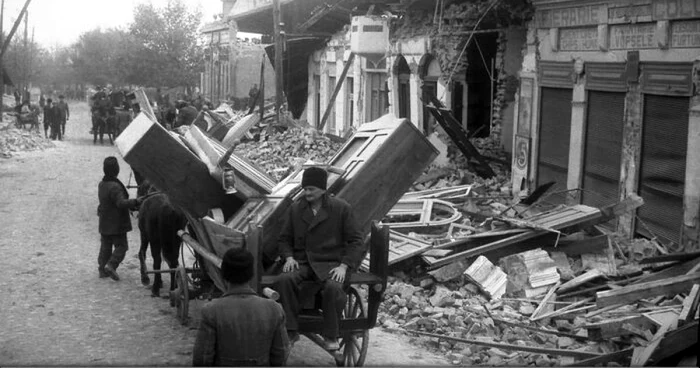
Romania was shaken by the first great earthquake of the contemporary period. PHOTO: Archive
1483 – Martin Luther, German writer and religious reformer, was born
Martin Luther (b. November 10, 1483, Eisleben, Saxony – d. February 18, 1546), pastor and doctor of theology, was the first Protestant reformer whose reforms led to the birth of the Evangelical Lutheran Church. The first ideas of the Protestant Reformation were stated by Martin Luther in 1517, in his capacity as a Catholic priest and professor of exegesis at the University of Wittenberg. His excommunication from the Catholic Church occurred in 1521.
1508 – The first book printed in Wallachia
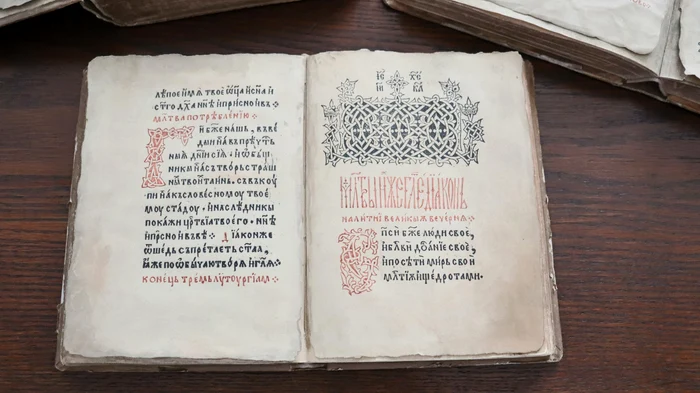
The liturgist is exhibited at the Târgovişte Museum. Archive photo
On November 10, 1508, after approximately 50 years since Johannes Guttenberg had published his first large work, the first printed book appeared in Wallonia.
It is about the “Slavonic Liturgy”, which appeared on the initiative of the ruler Radu cel Mare (1495-1508), being printed by the monk Macarie at the Deagu Monastery, located near the city of Târgovişte.
Born in Serbia, the monk Macarie had learned the printing technique in Venice and was brought to Wallachia by Radu cel Mare to establish the first printing house.
1688: The printing of the Bible in Romanian was finished
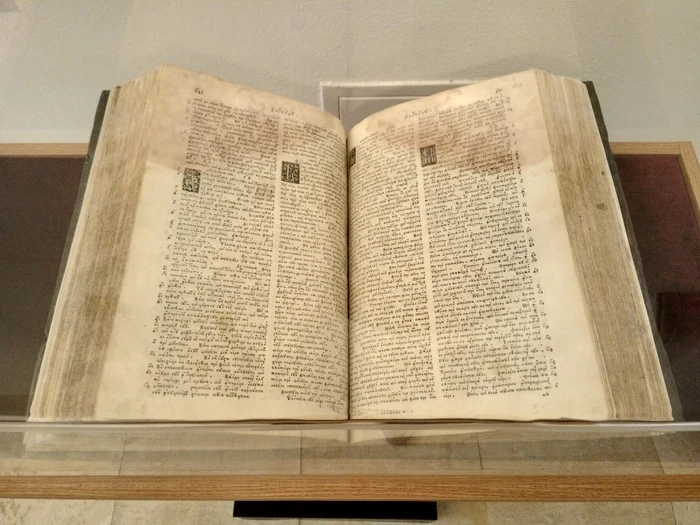
The first Bible in Romanian with the Cyrillic alphabet. PHOTO: Pană Filipescu Mansion Museum
The Bucharest Bible (also known as the Cantacuzino Bible) was the first complete translation of the Bible into Romanian, being published in Bucharest in 1688. The text was finalized on the initiative of Șerban Cantacuzino, Mr. Munteniei, by a group of scholars, including the Șerban brothers and Radu Greceanu.
1895: Romanian writer and archaeologist Alexandru Odobescu committed suicide
Born in Bucharest, Alexandru Odobescu is one of the most acclaimed Romanian writers and archaeologists, holding the position of Minister of Monuments for a year (1863-1864).
Professor of archeology at the University of Bucharest, Alexandru Odobescu is considered the father of archeology in Romania, being the author of an important treatise on the history of archaeology, “History of Archaeology” (1877) and of a monograph dedicated to the Pietroasa hoard.
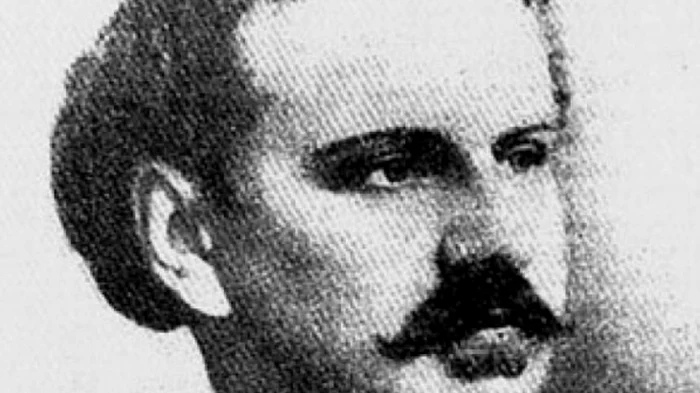
Alexander Odobescu. Archive photo
Trained in the school of French classicism and that of antiquity, a man of taste and science, founder of archeology in Romania and historian, Alexandru Odobescu wrote an admirable prose in elegance and purity. Following the ideas of “Junimii”, he understood that true literature must express the spirit of the Romanian people as it is reflected in history, in language, in folklore. To be honest, Maiorescu, who respected him a lot, regarded him as one of their own.
Author of a literary and scientific work of real value, in his personal life he faces great difficulties when, being married, Alexandru Odobescu falls in love with a geography teacher 30 years younger than him, the ex-wife of Alexandru Davila, and, rejected by her, chooses to end his days with an overdose of morphine, to which he had become addicted.
1925: British actor Richard Burton was born
The famous actor Richard Burton was nominated for an Oscar seven times, but he never received the award.
Together with Liz Taylor, he formed one of the most publicized couples. Their relationship has been the subject of numerous speculations on the Hollywood scene. Their story began in 1963, during the filming of “Cleopatra”. A year later, the two were getting married. In 1974 they divorced, but the separation did not last long, as they remarried in 1975.
Liz Taylor and Richard Burton appeared in 11 movies together and were in the public eye for a long time. “I have been extremely lucky all my life, but the greatest luck was Elizabeth”Burton wrote in the opening of the 1968 journal.
He died in August 1984, due to a cerebral hemorrhage, just as his father died.
1940: Romania was hit by a devastating earthquake of 7.4 degrees
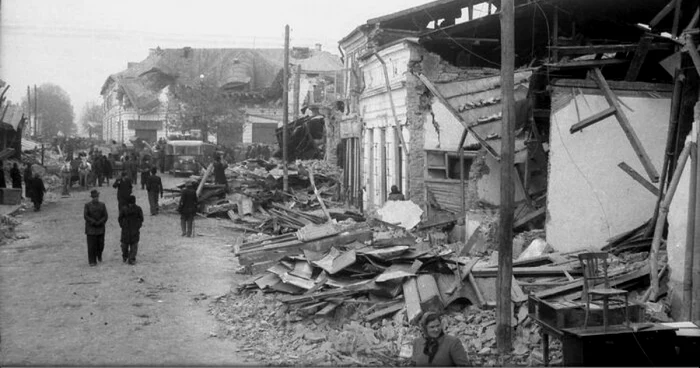
PHOTO: Archive
On November 10, 1940, an earthquake with a magnitude of 7.4 on the Richter scale shook Romania for 46 seconds. The epicenter of the earthquake was in the Vrancea area, at a depth of approximately 133 kilometers.
Because at that time the Second World War had started in Romania, there is no very precise information, so the number of victims was only estimated. It is estimated, however, that they would have been 1,000 dead, most of them in Moldova, and around 4,000 wounded. In 1982, the memoirs published by the Deputy Prime Minister of Romania at the time of the event indicated 593 dead and 1,271 wounded throughout the country.
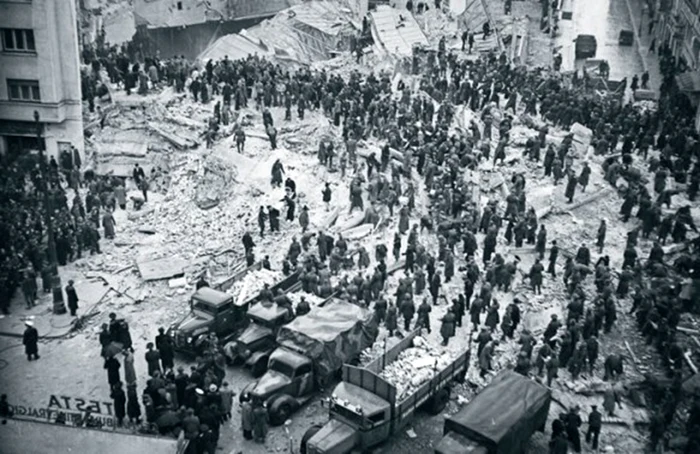
PHOTO: Archive
The most affected were the cities in the south and center of Moldova and the north-east of Muntenia, where material damage and loss of human life were recorded, the city of Panciu being almost completely destroyed, as well as the penitentiaries in Doftana and Mărgineni.
In Transylvania, the most affected city was Brașov, where several buildings and part of the Bod Sugar Factory collapsed, followed by Sfântul Gheorghe, Covasna and Târgu Secuiesc.
The earthquake was also strongly felt in Bucharest, where it caused significant destruction and caused hundreds of deaths. Dozens of buildings in the Capital were affected, including architectural monuments such as the Romanian Athenaeum, the National Theatre, the Opera House, the National Bank, the Depository House or the Palace of Justice.
Then the tower of the Carlton complex collapsed, a symbol of interwar Bucharest and one of the most modern buildings of the time, built of reinforced concrete on 14 levels, over 45 meters high. There were more than 200 people in the building at the time of the earthquake, most of whom lost their lives.
At the beginning of November, before the 7.4 earthquake, however, there were several earthquakes above 4 degrees on the Richter scale. Thus, on November 8, 1940, one of 5.5 degrees was recorded and a day later, in the afternoon of November 9, 1940, several weak, local earthquakes were recorded in the Panciu area,[1] movements that went almost unnoticed by the population.
The earthquake of November 10, 1940 had several aftershocks, since the first moments, six of which reached magnitudes above 5 degrees, according to wikipedia.
The strongest aftershock was recorded in the morning of November 11, 1940, at 8:34 a.m., with a magnitude of 5.5 degrees, maximum intensity VI, an aftershock that was, apparently, easily felt in Bucharest as well. The series of aftershocks continued until early December 1940, after which it gradually died down.
Subsequent studies concluded that the great earthquake of November 1940 broke the lower, deepest segment of the lithospheric block, somewhere between 135-160 km deep.
The official total account of the 1940 earthquake was never completed and made public.
2009: The actor Gheorghe Dinică died
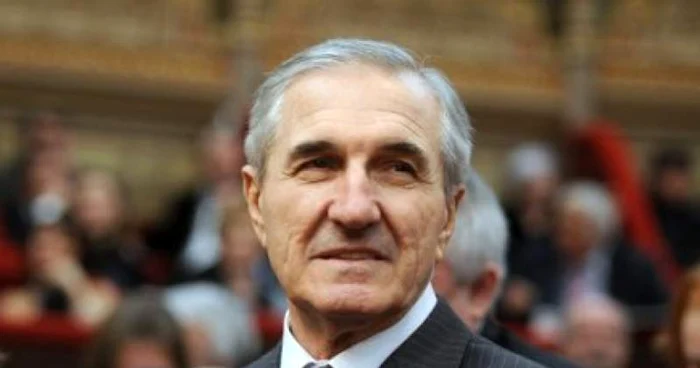
PHOTO: Archive
On November 10, 2009, Romania lost one of its greatest artists.
Gheorghe Dinića remained in the public's consciousness as a perfect actor. Throughout the 75 years of his life, he acted in 73 films and in several plays, television series.
The actor, Although his date of birth is January 1, 1934 in the civil status documents, the actor said he was born on Christmas Day 1933.
The love for film came, as was the case with the children of interwar Bucharest, by attending the capital's cinemas where they played films with the sacred monsters of the world's big screen.
At the age of 23, in 1957, Gheorghe Dinića saw his dream with his own eyes, being admitted to the IATC, after having played in (amateur) theater groups since 1954. He graduated from the Institute in 1961, in the class of the great actress Dina Cocea. In the same year, he debuted in the theater with the role of Commissioner Goole in the play “Police Inspector”.
Two years later, he made his debut in cinematography, in 1963, appearing in the film “The Stranger”.
The monumental Gheorghe Dinića was considered the type of “bad boy”, who always acts with a smile on his face. By far, the role of the Paraipan legionnaire in the films “A Commissioner Accuses” and “Revanşa” made him famous.
The role in which he best entered the skin of the character is that of the lawyer Stănică Raţiu from “Felix and Otilia”, film inspired by the novel “Otilia's enigma”.
He also played memorable roles in films with subjects from the life of workers and peasants, and gave life to such characters on the big screen
“confident butler”.
After the Revolution, he returned to the roles of “bad boy”, playing the role of a trafficker in “High school students on the alert”, the role of a cinema director in “The marital bed”, the role of a “protector” of illegal beggars in “Philanthropy”.
The last role of his career was in the series “Aniela”, in which master Gheorghe Dinića gave life to the old general Grigorie Vulturescu.
2020: The actor Vladimir Gaitan died
Born on February 2, 1947, in Suceava, the actor Vladimir Gaitan made his debut on the stage of the Comedy Theater, where he played roles in plays such as “Three Sisters”, “12 Angry Men” and “Ivory Tower”.
In 1969, he was cast in his first film role, in the film “The Reconstitution”. He also played on the Nottara Theater stage in the following plays: “Meeting at Sunles” and “Angels of America”. In 2001, he became director of the Nottara Theatre.
He had numerous collaborations with director Sergiu Nicolaescu, who cast him in many of his films, such as ““Hot Days”' (1975), “Accident”' (1976), “For the Fatherland” (1977), “The Last Night of Love” (1979), “The Duel” (1981), “The Meeting” (1982), “Wilhelm the Conqueror”, French-Romanian co-production (1982), “We, those on the front lines” (1985), “Francois Villon – the poet vagabond” (1987), “Mircea” (1988), “Crown of Fire” (1990), “'Oglinda – The Beginning of the Truth” (1993), “15” (2005), “Goldberg – The Survivor” (2008), “Poker” (2010).
He also acted in series and telenovelas: “Roberta”, “Impossible marriage”, “Daria, my love”, “One step forward”, “Gypsy heart”, “State of Romania – Student at Sorbonne”.