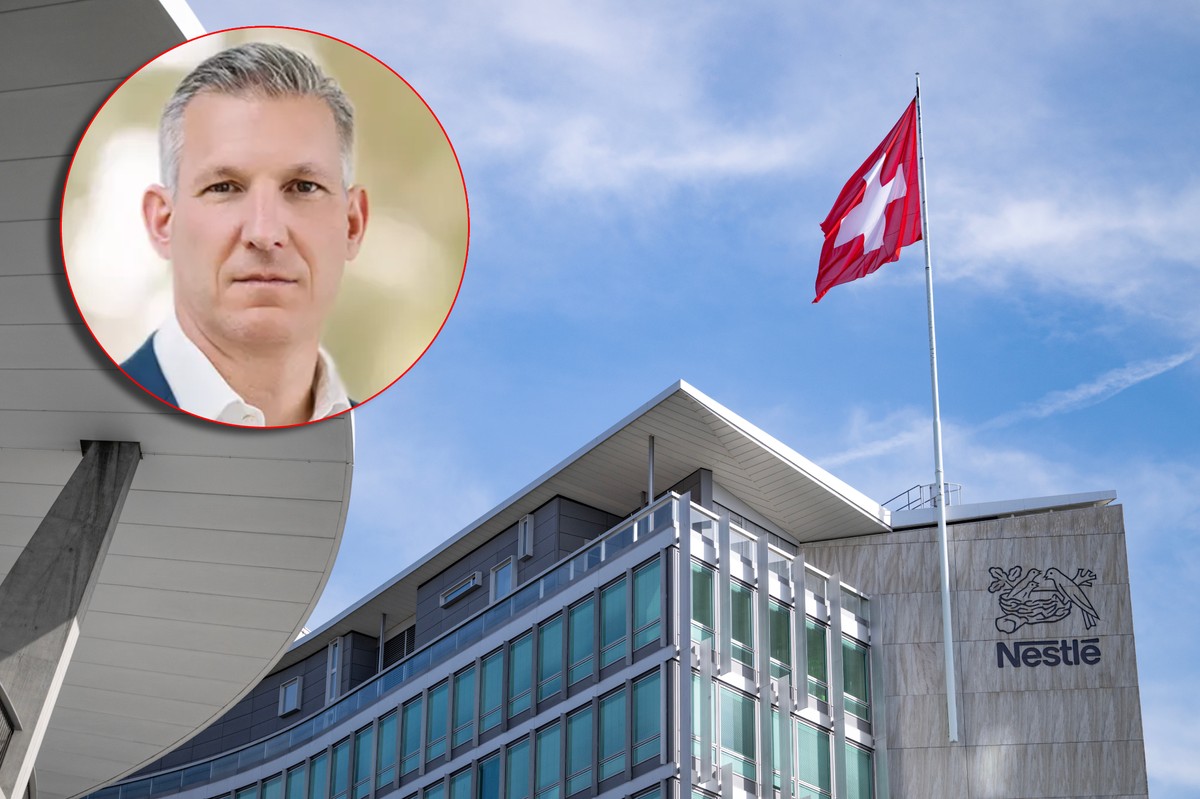
Philipp Navratil's word carries weight – and considerable weight at that. After his first appearance before the media in mid-October, Nestlé's market value increased by exactly 17 billion francs (over PLN 77 billion) within a few hours. His announcement was responsible for this record growth from 277 thousand employees expect greater willingness to achieve results. He expects a “high performance culture” in the future.
The message to staff is clear: whoever delivers will be rewarded; whoever hesitates must face an uncertain future. Navratil is currently analyzing pay and bonus systems to link them even more closely to performance – including individual performance.
— We will ruthlessly judge our people according to their performance – announces the head of the Swiss corporation.
Read also in BUSINESS INSIDER
This is a new tone in the Nestlé empire, which for decades was dominated by pride in achievements and where the share price was of little interest to anyone – because it was almost always rising. Now it's getting serious: after Navratil's speech, there was a bolt from the blue – a reduction of 16,000. full-time positions, including 12 thousand office space. This is an unprecedented step in the 159-year history of the food concern.
This tough course is met with approval at Switzerland's largest company – both among shareholders and ambitious managers across the country. “Finally someone is saying it straight” – you can hear in companies. Instead of talking about “inclusion and diversity”, someone is finally talking about the will to achieve results, pace and numbers. A fierce wind is now blowing over Nestlé headquarters, where for years a culture of well-being prevailed.
UBS: results come first
“At last!” – Sergio Ermotti might have thought. Someone finally said what he himself has been preaching for a long time. This spring, the head of UBS made the performance-based approach his guiding principle. “Meritocracy is at the forefront of our decisions,” says the banking giant's “2024 Sustainability Report.” At the same time, Ermotti withdrew the diversity goals that his predecessor Ralph Hamers had promoted with great commitment. The new password is: more work, less “woke”.
The break with the past is clearly visible. In annual reports from Hamers' time, the word “diversity” appeared 35 times; in the latest version, almost not at all. The approach to bonuses has also changed: under Hamers, one of the “main tasks”, and therefore also a bonus element, was to achieve the level of 25% by 2025. ethnic minority workers in the UK and USA. In Ermotti's work, ethnic minorities are no longer mentioned – instead, they are priorities results, customer focus and risk management culture. The position of global director of diversity, equity and inclusion, which Hamers created, no longer exists.
The change in thinking in global corporations began a year ago, when American courts recognized supporting minorities as a form of discrimination and a violation of the principle of equality. As a result, companies such as Meta, JP Morgan, Citigroup, IBM, McDonald's and Disney have limited or completely eliminated their DEI programs (an acronym used in the USA and derived from the phrase diversity, equity, inclusion).
Swiss companies such as Novartis and UBS reacted when Donald Trump called for a fight against “woke”. Here the website about diversity was modified, there the support program for black women entrepreneurs was abolished.
See also: They built a million-dollar business on cinnamon rolls. Without paying for marketing
Factuality instead of ideology
Today, the new corporate culture is shaped by pragmatism, which is increasingly visible also in Switzerland. In the face of deteriorating economic conditions and tariffs increasing export costs, specific questions arise: Are we innovative? Where do we grow? How do we improve margin? Where do we cut costs? And: how do we increase the dividend?
This path is also an element demanding results. That's why companies like Nestlé are reviewing their performance targets, rewarding individual effort more strongly. This is confirmed by Timon Forrer, remuneration expert at Kienbaum: – We see a trend of returning to individual variable remuneration.
When companies moved away from individual bonuses a few years ago and increased the fixed part of salaries, salaries became less flexible, but whoever has to save on personnel costs quickly encounters limits. Moreover, only a smaller part of employees makes a real difference – the key ones need to be retained. This requires targeted performance programs that, as Forrer says, clearly communicate: “For us, the effort pays off.”
Partners Group: entrepreneurial company culture
Commitment is valued today – remote work days have become a symbol. Companies such as Raiffeisen, Sulzer, Schindler and Stadler Rail have limited the legacy of the pandemic. UBS has banned working from home on Fridays and Mondays – no more long weekends on full pay. It is possible that Nestlé's boss, Navratil, will also tighten the screw and reduce the current 40%. working time possible in home office mode. He has already proven that he can be decisive at the headquarters in Vevey.
How this is done is shown by companies that have already taken a stricter course – in addition to UBS and Novartis, also Swisscom and Sulzer. In the latter, Suzanne Thoma develops the exemplary “Dynamo” program. Under her leadership, revenues and margins increased significantly, with only slightly increased employment. In other words: Sulzer's team significantly increased the pace of work under the supervision of “fitness trainer” Thoma. Many people are happy about this because they participate in the growth of the share price, which has doubled in three years. It's no wonder that despite the increasing pressure for results, the employee turnover rate has decreased.
Companies that are accelerating even further include the Partners Group in Baar. The investment company is proud of its “entrepreneurial corporate culture”, and work-life balance is a foreign concept there, part-time work – an exception. Of the 2,032 employees, only 34 people work part-time. This mentality is reflected in pay-for-performance plans. 2024 was an exceptionally successful year: more profit with less employment, which increased bonuses for everyone – including the CEO, whose remuneration increased from 8 to 16.9 million francs, which is 2 million more than the head of UBS Ermotti.
“We need people who want to give their all”
Success stories show one thing: whoever delivers is rewarded. But dark clouds are gathering on the horizon – the economic situation is weakening. In the Swiss corporate world, job cuts are announced every day: Sika is eliminating 1,500 jobs, Kühne + Nagel is introducing a strict savings program and consolidating central functions, Migros is undergoing a complete restructuring, and at Thermoplan, 350 of the 500 employees in Switzerland are working reduced hours because crazy American tariffs have made exports unprofitable.
The changing market climate affects those looking for work the most. The search period is getting longer – even for young specialists who were recently attracted by various “bonuses”. This is clearly visible on the labor market: the number of offers is falling and companies are refraining from recruiting. “In uncertain times, intelligent cost management is needed,” says Stefan Michel, professor of strategy and marketing at IMD Lausanne. This also limits bonuses.
Not only the industry, but also the financial sector is cutting employment: UBS, Bank J. Safra Sarasin, SIX and Postfinance are reducing hundreds of jobs. In the canton of Zurich alone, approximately 1,300 bankers are already registered as unemployed – a record.
Even in stable state-owned enterprises, the pressure is mounting. “Swisscom wants to move hundreds of jobs abroad,” Blick recently reported. Reason for relocating the software development department: cost pressure. Changes are also underway in marketing – Zurich Pride sponsorship was canceled this summer because funds are needed “for other projects.”
The Post Office is also cutting jobs – this time 50 in IT – and there is a hiring ban until January 2026. “We are currently dealing with an employer's market,” says remuneration expert Urs Klingler. Power passed from the employee to the employer. Companies are still looking for specialists, but those who will actually move them forward. “We need people who want to give their all” — not those who count commuting as work time and demand matcha lattes at the canteen.
This has consequences.
“Since the captains of the economy are once again feeling the harsher headwinds – US tariffs, tight monetary policy, innovation pressure from artificial intelligence – there has been a clear change in course: a return to core business and value creation that is reflected on the balance sheet,” explains strategic advisor Frank Bodin.
But this is not surprising: Top athletes and professional musicians know – without concentration, there are no results, he says. This principle also applies to companies. — In recent years, however, the focus has often shifted in favor of symbolic politics – on internal well-being projects and media-glamorous topics, rather than on the performance of products and services – adds the expert.
The result matters – more and more. And it starts from the very top, as the head of Nestlé knows perfectly well. And there, it seems, there is an urgent need for action. Because it is difficult to talk about a remuneration system based on results if – as in Nestlé in 2024 – turnover and profits decline, the share price collapses, and management remuneration remains unchanged. Is this the “high performance culture” that Navratil requires? Not really.
The above text is a translation from the Swiss website Handelszeitung.