

This factory produces 160 thousand. footballs per month. Bola Gema Pakistan is located in Sialkot, the city that produces most of the world's soccer balls – almost 70 percent. Even when team sports were halted during the coronavirus pandemic, these manufacturers continued to operate.
– Our industry has been operating for over 100 years, thanks to which we have perfected our skills – says Waseem Shahbaz Lodh, managing partner at Bola Gema Pakistan.
Read more: The prince's dream melts in the sun. The world's largest construction project is stuck in the sand
How are soccer balls really made?
|
Business Insider
How are footballs produced?
It all starts with this machine that creates sheets of hot rubber. They are cut into round shapes and form the bladder, i.e. the inside of the football. The bubbles are then inflated and placed into metal steam engines, where they are fired for several minutes, which hardens the rubber.
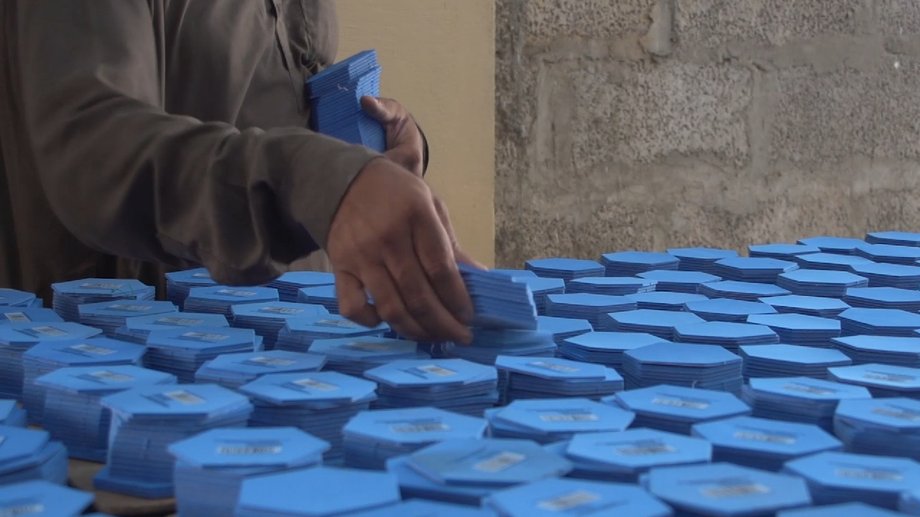
In another part of the factory, workers cut out patches for the ball's outer covering. Leather was once used for the outer surface, but it can absorb water. That's why factories now use a synthetic substitute. Each ball consists of 20 hexagons and 12 pentagons. There are several ways to combine them.
The traditional way of producing footballs is hand sewing, now times have changed
|
Business Insider
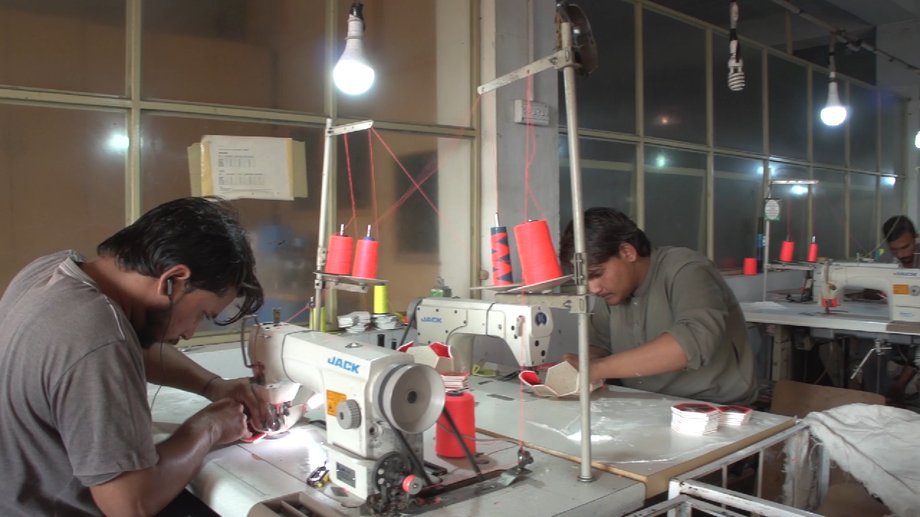
The traditional way of producing footballs is hand sewing. This is a very old method. It has been used in Pakistan for almost 100 years. There was a time when these types of balls were very popular all over the world
Waseem explains.
However, this process is slow and expensive, which is why Bola Gema has adapted to the new times.
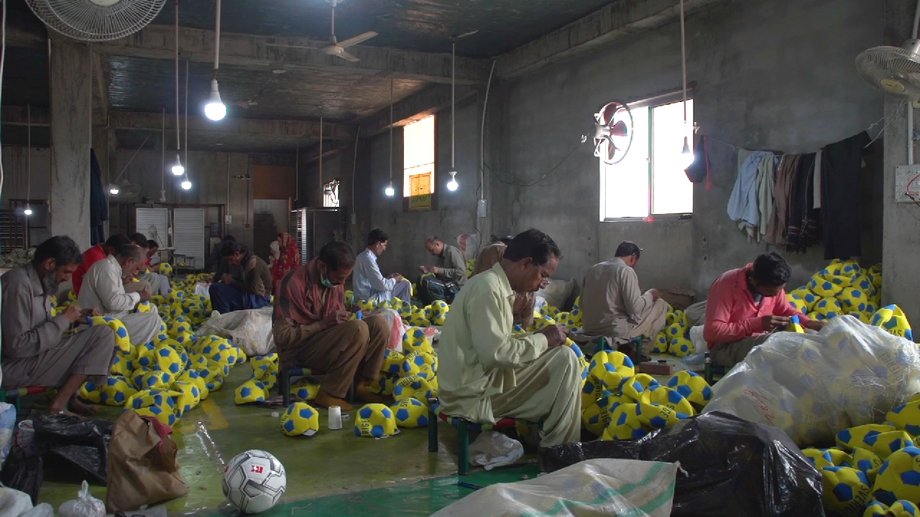
— Currently, low-end training balls and soccer balls are manufactured by machine sewing, and high-end soccer balls are produced by thermal bonding, which means there are no seams on themand the entire ball is connected using advanced technology, he says.
Saeeda Bibi works with thermally bonded balls. It's like putting together a puzzle. He looks at the diagram and then manually connects the individual elements using a special glue. The ball is then placed here and the inner lining is glued on.
— I'm holding the two halves of the outer layer in my hands. I need to fit them to the machine, but first I need to weigh the ball. The weight must be between 420 and 440 g, and this one weighs 433 g. This is the ideal weight for a FIFA-approved ball. In the US, it can cost over $100, which is more than the monthly salary of some of the workers who produce these balls, says Shafiq Butt, an employee of Bola Gema Pakistan.
The weight of the football must be between 420 and 440 g
|
Business Insider
Read more: This job will kill 90 percent. of them before they turn 50. On a good day, they earn PLN 15
Work in a football factory and income from exports
We are a fully export-oriented company and we sell our balls all over the world. We also have a FIFA license and produce the highest quality professional balls in our factory, which are mainly shipped to Germany, Spain, the Netherlands and Belgium. Ahead of the 2018 World Cup, Pakistan exported over 37 million soccer balls around the world. To this day, this industry remains the main source of income, and in Sialkot alone there are at least 1,000 ball factories employing almost 60,000. people. However, before the balls are exported, they undergo one last durability test
Waseem explains.
Each ball undergoes rigorous testing
|
Business Insider
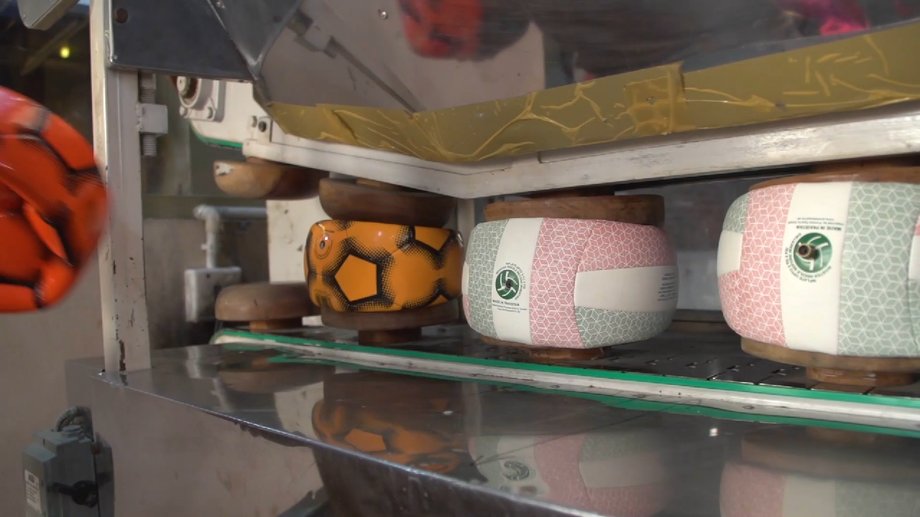
— We test each ball 2000 times. Then we check whether the seams have burst, whether the ball has not been scratched and has not lost its shape – explains Mohammad Maqsood, an employee at Bola Gema Pakistan.
Machines then deflate the balls so they can be easily packaged and shipped.


