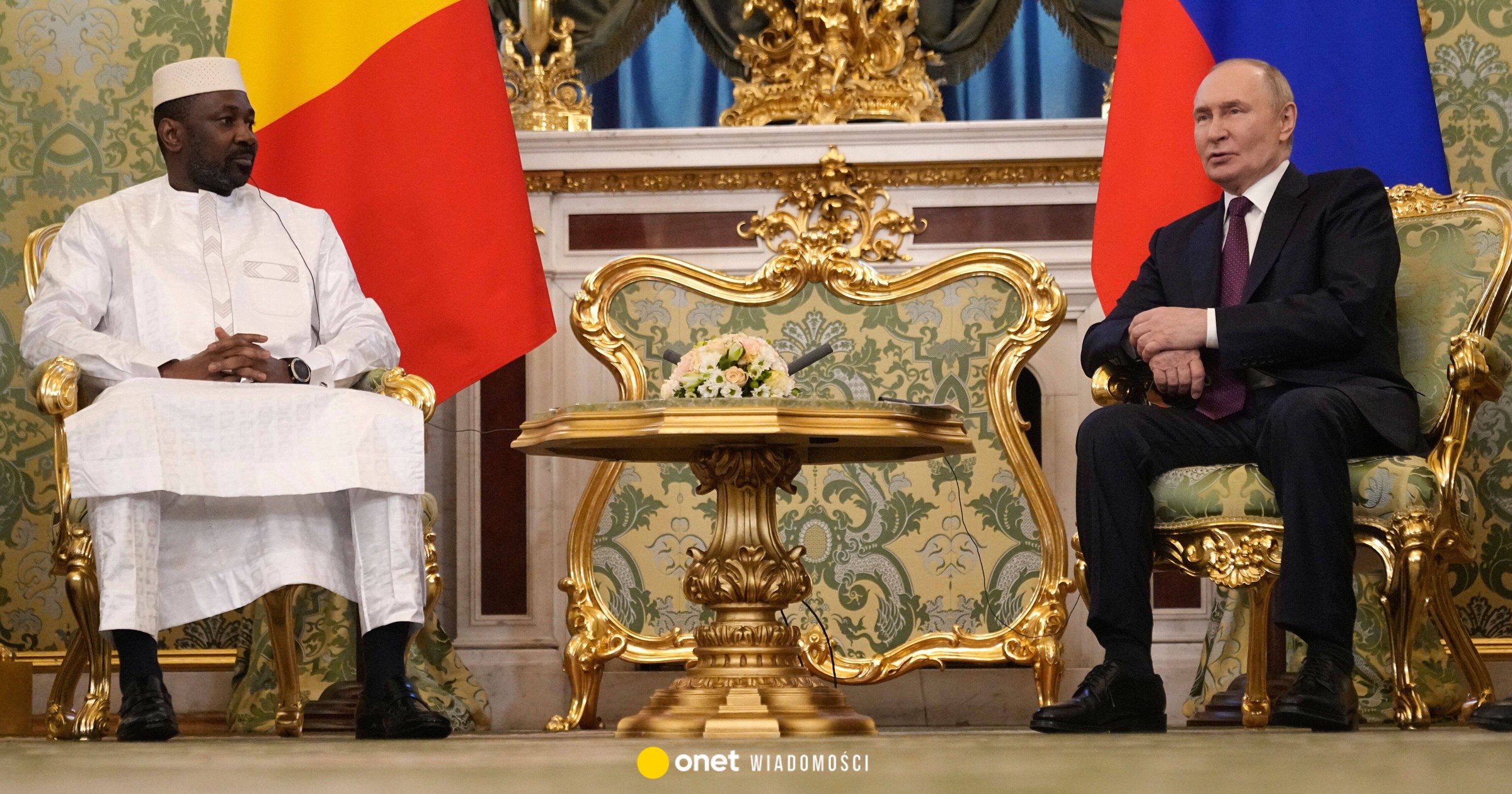
The curtains were drawn, the chairs were placed, and the projector was turned on. More than 30 people gathered in a crowded room. The movie starts. He tells a story that Moscow has been repeating for years: about the “return” of Crimea to Russia in 2014.about how many residents supported this annexation and how the peninsula is now a desirable tourist destination.
For many people in the room, the politics of the Russia-Ukraine conflict have little relevance to their everyday lives. But at this branch of the cultural agency known as the Russian House in Bamako, the capital of Mali, a West African country, it was important that people left the show with the Kremlin's view in their heads.
These institutions exist a key element of Russia's diplomatic and cultural cooperation with non-Western countrieswhich, according to critics, is tantamount to spreading pro-Russian propaganda.
“The growth in the number of Russian Houses that we have seen in recent years must be understood as part of the broader strategic efforts in which Russia is engaged,” says Joseph Siegle, a senior research fellow at the University of Maryland's Center for International and Security Studies.
In October, the head of Rossotrudnichestvo, the Russian cultural agency overseeing the program, said that the organization wants to develop and has signed contracts for 14 Russian Houses in African countries.
The Moscow Times found evidence that both official and “partner” Russian Homes are currently operating or will soon open in at least 22 African countries. None of these countries' embassies in Washington responded to requests for comment.
Cultural legacy of USSR diplomacy
Many of these institutions have their origins in Soviet cultural programs. – They often fit in exactly the same buildings where they were located during the Cold War – says Iwan Kłyszcz, a researcher at the International Center for Defense and Security in Tallinn, Estonia.
Often, these institutions were used to showcase national successes, which “is still present in the background of all Russian public relations and public diplomacy messages, especially through these venues,” Kłyszcz adds.
Not surprisingly, some of Russia's most developed homes are located in major cities of historic allies such as Egypt and Tanzania.
However, the creation of a Russian cultural center may also indicate warming ties. Recent years have brought an avalanche of contracts with Sahel countries such as Burkina Faso, Mali and Chad, and sub-Saharan countries such as Equatorial Guinea and the Central African Republic.
Evgeniya Tikhonova, head of the Russian House in Burkina Faso's capital, Ouagadougou, told The Washington Post that the organization's mission is “showing that Russians are not aggressors, but are here to help and be hospitable”. She claimed that the organization was financed from private funds.
Burkina Faso, like other countries in the Sahel, made a foreign policy shift when a military coup toppled the pro-French government in late 2022. Russia stepped in to fill the vacuum, agreeing to provide humanitarian and military assistance.
In Equatorial Guinea, the announcement that a new partner Russian House had been established in late 2024 was preceded by reports that The Kremlin sent up to 200 military advisers to the country. They reportedly trained the presidential guard of Teodoro Obiang Nguema Mbasogo, the West African country's longtime authoritarian leader.
“Russia is not trying to gain influence through traditional statecraft: investing more, trading more, even in terms of conventional security cooperation,” Siegle explains. – Uses asymmetric tools to try to get above his league. And in this sense, Russia succeeded because it gained influence.
Russian scholarships for thousands of African students
As Moscow seeks to attract allies with military and political support, experts told The Moscow Times that Russian Houses offer a different kind of incentive. The concept of the Russian House – a place that aims to promote the country's cultural profile abroad – has its equivalents in other countries. China runs the Confucius Institute, Great Britain the British Council, and Germany the Goethe-Institut. Each of these organizations runs hundreds of centers. In comparison, Russian Houses have a modest scope. Rossotrudnichestvo claims to run 87 “foreign missions” in 71 countries.
And while the function of cultural centers may be to spread the Russian narrative about current events, this does not always seem to be the only goal. Rossotrudnichestvo claims that its main mission is improving “Russia's humanitarian influence in the world”.
Publicly available materials indicate that this is done mainly by conducting language classes, organizing events devoted to Russian literature and history, and supporting the arts. The Russian House in Alexandria, Egypt, regularly hosts musical and theatrical performances.
Last year in Tunisia, 400 local students participated in an exhibition on science and robotics. Many centers regularly organize chess tournaments. But perhaps the most attractive feature of cultural centers is providing tips on studying in Russia — often with the help of scholarships. This month, Yevgeny Primakov, head of Rossotrudnichestvo, announced that the government would finance the studies of more than 5,000 African students at Russian universities.
According to Siegle, the opportunity for educational opportunities is a particularly important factor motivating residents to engage in the organization's activities. “For Africa, where young people have limited educational opportunities, scholarships and educational opportunities are very welcome,” he said. “I think they have been very positively received in Africa.”
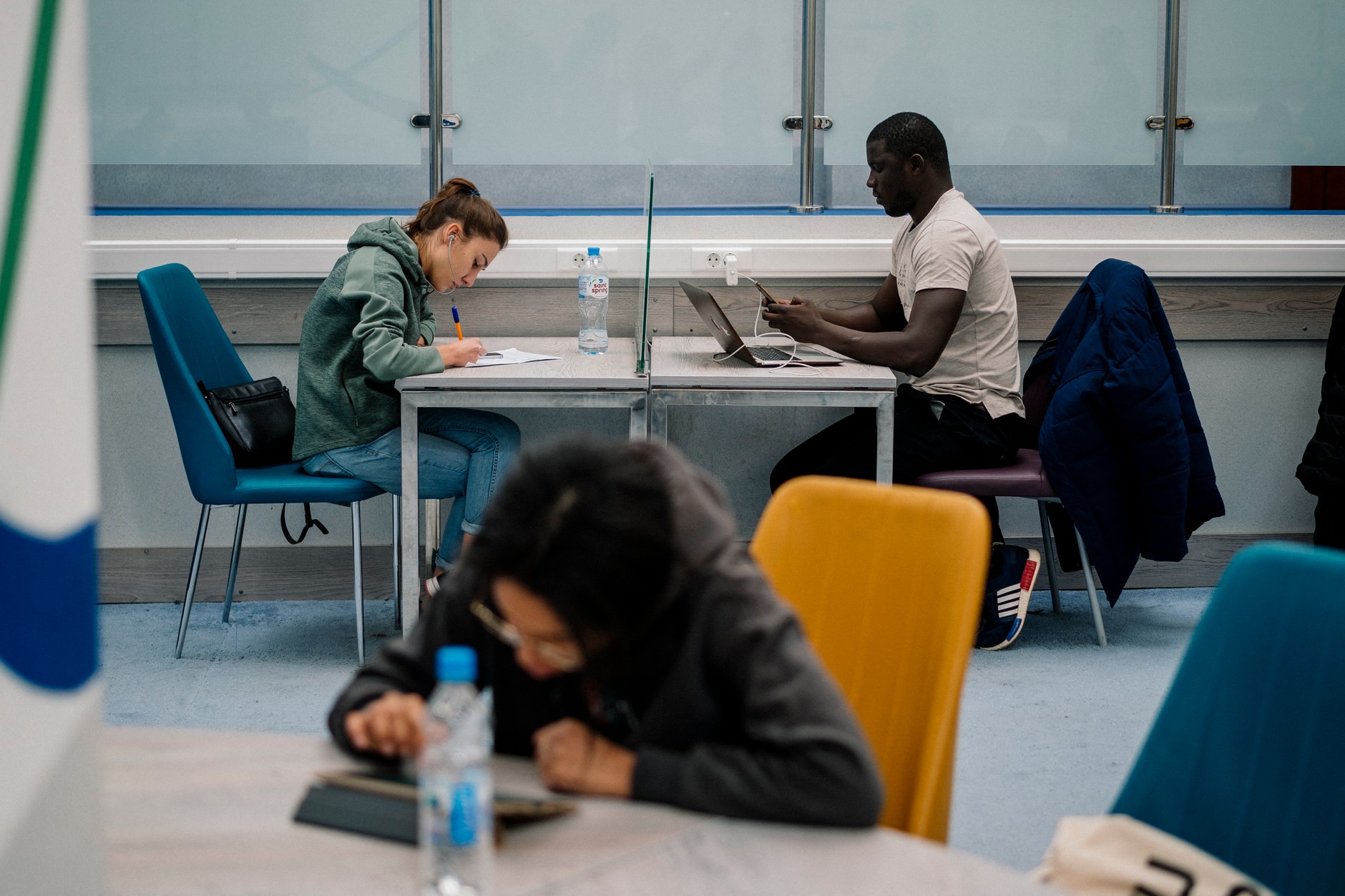
Students of Russian Universities of Friendship of Peoples. Moscow, October 8, 2019Dimitar Dilkoff / AFP
Efforts to attract young Africans to Russia have also drawn criticism from some analysts who say cultural and diplomatic activities promote jobs related to the Russian war effort.
“Dead Spot”
Philani Mthembu, director of the Institute for Global Dialogue in Pretoria, South Africa, told The Moscow Times that people from the region are attracted to Russia for various reasons.
Some people look fondly at their country's historical ties with the Soviet Union positioned itself as an ally of decolonization in Africa. Others respect Russia's alleged strength on the international stage.
For Mthembu, the surprise at Russia's skill in establishing new contacts reflects the inaccurate assumptions of officials in the West when it comes to contacts with African partners.
In a recent discussion, Mthembu recounted how a member of the European Parliament once asked him: “Why should anyone be interested in Russia? Russia is a dictatorship, it is not a modern economy,” etc.
Mthembu replied that this was a “blind spot” in the official's perspective. – Thinking that [Rosja] will not be of interest to people who grow up on a continent where their states do not exercise full sovereignty over their territories, where people demand a greater role for the state because they simply do not feel its presence…
He left this thought unfinished. “In other parts of the world,” he concluded, “it's completely different.