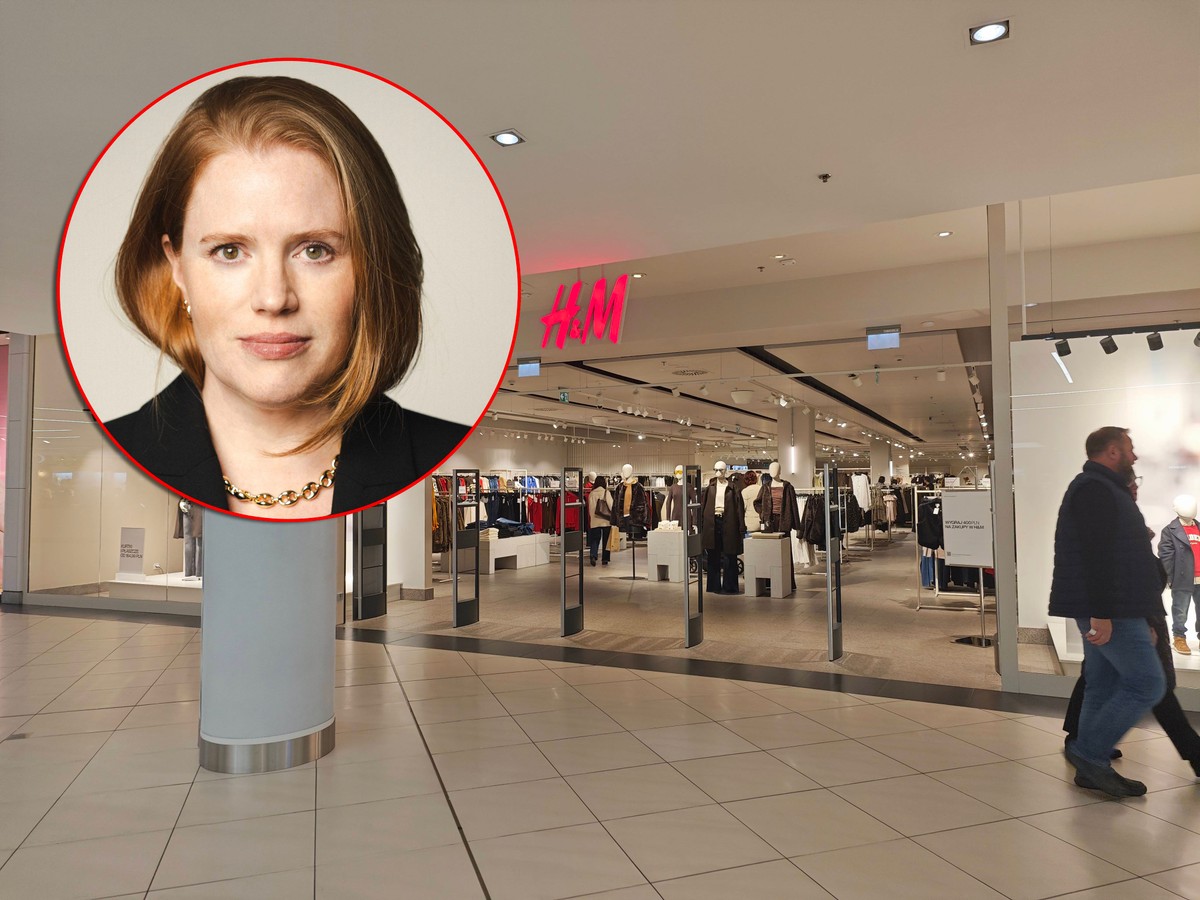
— Throughout the HM Group, we offer a range of services related to the resale, repair, rental and collection of clothing. Resale is of the greatest commercial importance and volume, and most of the volume comes from Sellpy, a recommerce platform majority owned by H&M, says Sofia Måhlén, H&M Project Lead Circular Business Models, in an interview with Business Insdier Polska.
Therefore, more and more Pre-Loved sections appear in H&M stores – with second-hand clothes.
— These in-store locations are becoming more and more popular – he says. There are also independent Pre-Loved stores, although they have so far avoided our region.
— We will soon be opening the first such point in Eastern Europe, in Prague, Czech Republic. It is supposed to happen in mid-November, preparations are very advanced. This will be the 13th Pre-Loved location in our stationary stores. This is a concept under which Pre-Loved departments appear in traditional H&M stores, says the H&M manager.
Can we expect such a store in Poland? — We already have other locations in Central Europe. More stores will be added in 2026, but unfortunately I cannot comment on their locations yet. We certainly see great potential when it comes to Central and Eastern Europe. So we don't want it to end in Praga, he notes.
Second-hand is already mainstream
We also ask the H&M manager whether second-hand has already become mainstream. — I don't think I'll surprise anyone when I say that young people have been driving this trend in recent years – but after all, those young people from a few years ago are getting older, their purchasing power is increasing – so the trend is only deepening. So you could say it's mainstream now. But I want to emphasize that new clothes will definitely not disappear. These two worlds will develop in parallel. However, consumers attach and will attach more and more importance to how these new clothes are made. And they will also increasingly wonder how to give their “new” clothes a “second life” in the future, he replies.
We also asked how clothes get to Pre-Loved points. — They come to us in different ways. A large part of it comes, of course, from the Sellpy platform, which is part of the H&M Group. Most of the range is personally selected by our Pre-Loved team in Stockholm from the Sellpy platform, but we also work with other second-hand partners who deliver carefully selected, high-quality clothes directly to our stores. The analysis and selection of clothes is very fast and partially automated – we hear.
Are customers afraid of second-hand shops?
— We know from research that many consumers have doubts about buying second-hand clothes. One of them is whether such clothes are of sufficiently high quality. The Pre-Loved concept is intended to be an answer to these doubts, because the quality of these clothes is simply checked by us. But there are other things that distract customers from such clothes. For example, many people are afraid that they will not find products that will match their style or current trends. That's why we place clothes from Pre-Loved next to these current collections, so that everything fits together and inspires the customer. In terms of colors, but also in terms of the “character” of the clothes. When entering an H&M store, a customer can be sure that he will find clean, high-quality second-hand clothes that will suit various styles. Another thing is that thanks to our Pre-Loved selection, many people discover the world of second-hand stores and buy such clothes for the first time – Sofia Måhlén also tells us.
The network is also experimenting with other “circular” ideas. For example, with mending clothes. — At H&M, we debuted this service in 2018 in Paris. You could bring any clothes from any brand – not necessarily H&M – there and have them repaired. But also change or remake. For example, some people brought a dress to turn it into a set. We have such a service in several places – in Sweden, in Vienna, although they have not been widely adopted everywhere. Perhaps it depends on customer habits in a particular place. However, customers come to us to repair and change their clothes, they trust that we will do it tastefully and quickly. It is worth noting that all these changes and repairs are made directly in H&M stores, the clothes are not sent anywhere for repair. This was the original idea – that a client who comes with such an order can talk and describe his needs to a person who will then deal with it – says our interlocutor.
See also: “Care” of clothes and materials from the laboratory. The director of H&M tells us about the future of fashion
The company also tried to rent clothes. — This service started in 2019, but recently we closed the last “rentals” and converted them to Pre-Loved. We thought that renting clothes, especially “bargain” clothes, would be very popular, and indeed this was the case with some customers, but overall this was not the case – there was less interest than we thought. It's hard to say why – maybe the timing was just wrong, says Sofia Måhlén.