Day in the history of the Jewish Autonomous Region
Photo: Regional Library
November 8, 1941
A meeting of the city and regional executive committees of workers' deputies was held. They discussed issues of involving the population in digging trenches. At that time, the population was predominantly women. Over 600 housewives and 428 women working at enterprises in the region and city were urgently mobilized on the twentieth of November. This was done in case of an attack by militaristic Japan on the Soviet Union.
1935
In November 1935, the discoverer of the Jewish Autonomous Region, Boris Bruk, was awarded the title of shock worker “for exceptionally valuable work in the development of agriculture in the Jewish Autonomous Region and extensive public work in the region.”
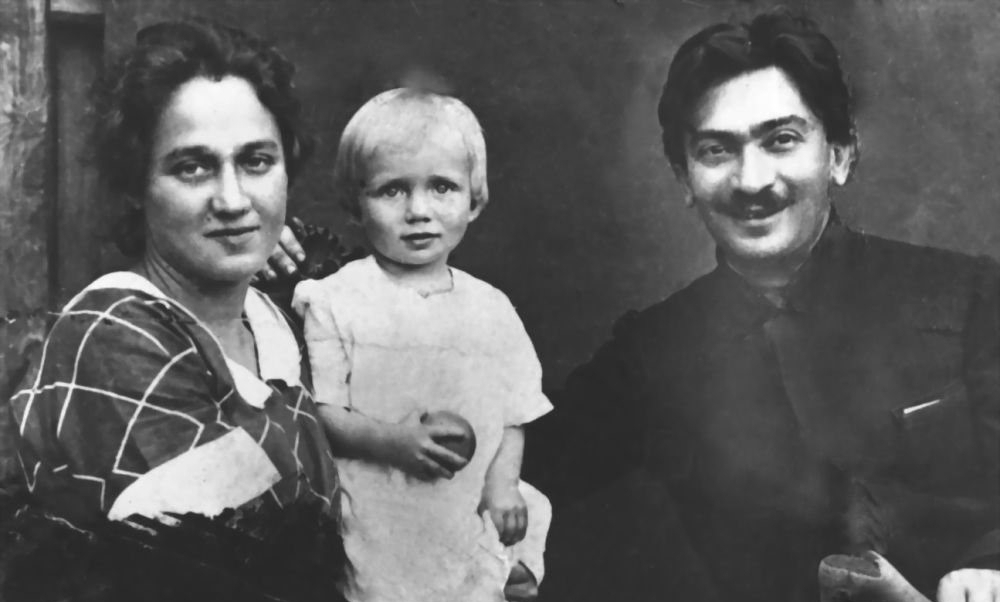
Professor B.L. Brooke with his wife and daughter. Photo: Photo: State Archive of the Jewish Autonomous Region
Professor Boris Lvovich Brook led an expedition in 1927, the results of which became the basis for the decision of the Presidium of the All-Russian Central Executive Committee to create a Jewish autonomy in the Far East.
Brook was born in 1885 in the family of a shoemaker. He graduated from the classical gymnasium with a gold medal, and then from the agricultural department of the Kyiv Polytechnic Institute, receiving the title of scientist-agronomist. When KomZET was formed, he was appointed chief agronomist.
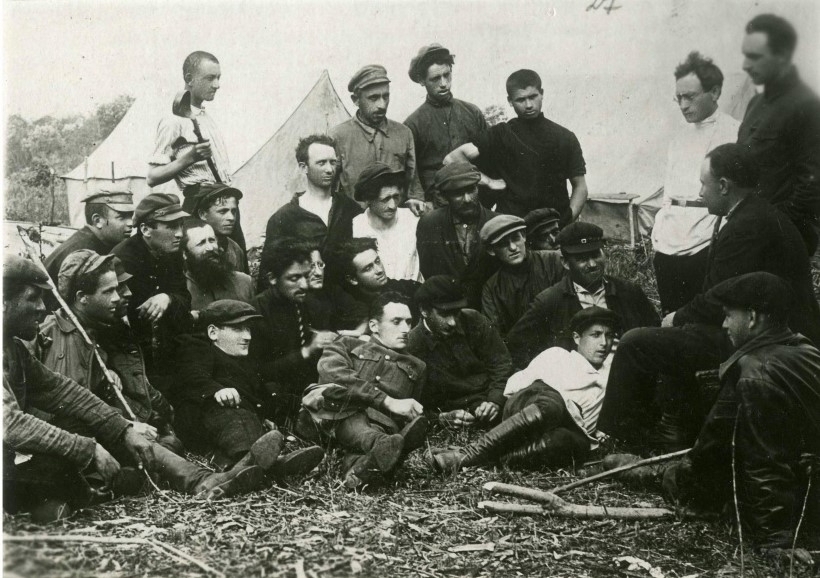
Meeting of KomZet representatives with displaced people. 1928. Photo: Photo: from the archives of the Russian Ethnographic Museum
Loving precision, Boris Lvovich calculated that during the expedition soil scientists covered 1,559 km, made 147 soil sections, took up to 2,000 samples, and collected a herbarium of 1,500 plant samples. Hydrologists examined 20 water arteries at 54 points, described 12 dams and 5 water mills, and studied the water regime on 280 hectares of land. Brook and his assistant personally examined 300 households in Ekaterino-Nikolskoye, Bidzhan and other villages, and collected data on the budgets of 150 families. The expedition came to the conclusion that the area of the future region is promising, primarily for the development of agriculture.
In 1929, a book by a researcher entitled “Birobidzhan” (6+) was published in Moscow. This and subsequent printed works of the scientist, without a doubt, contributed to the widespread attraction of Jewish settlers to the Far East. In the same year, Boris Brook himself and his family moved from Moscow to the Amur region.
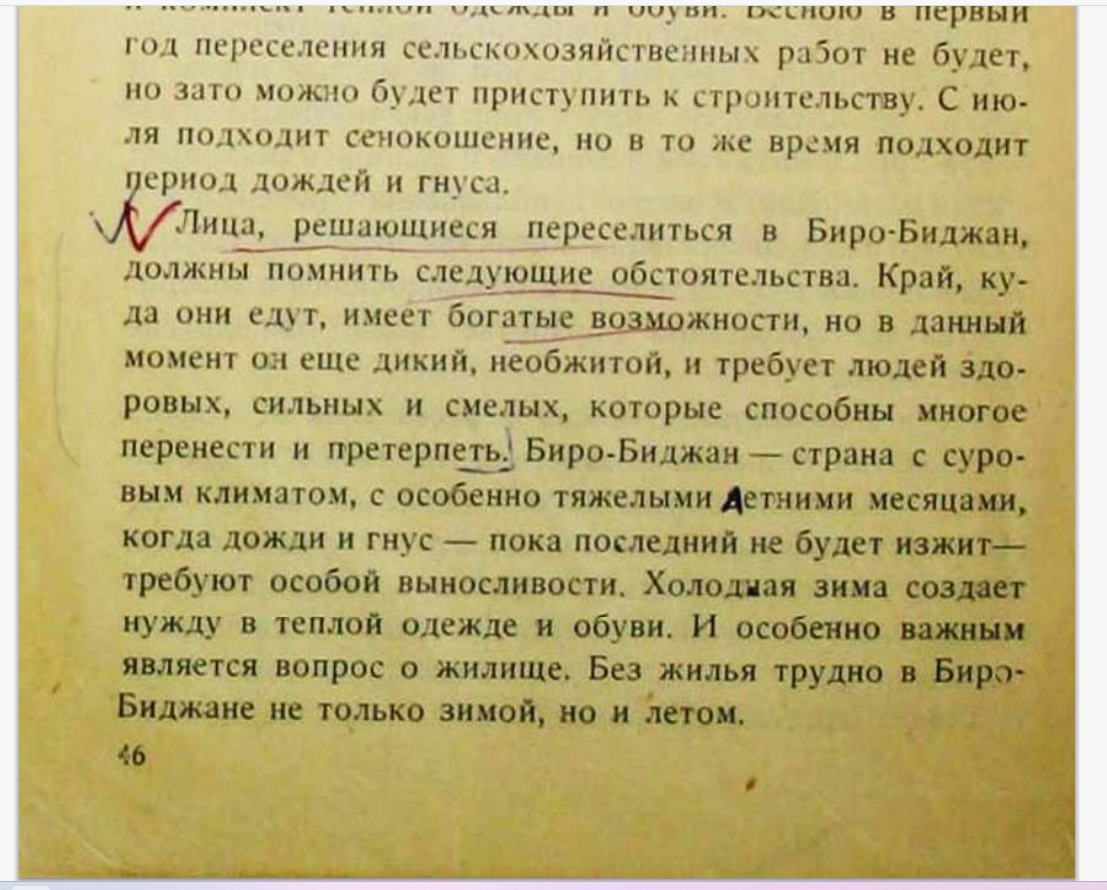
A page from B. Brook's book “Birobidzhan (6+).. Photo: Photo: Heritage of the Jewish Autonomous Region
However, already in 1930, for far-fetched reasons, he was arrested along with academician Alexander Vasilyevich Chayanov and only three years later, after rehabilitation, he returned to the region again. Here he settled in one of the barracks 12 km from Birofeld and devoted himself entirely to work.
After the creation of the region, Brook received the position of deputy director for scientific work of the regional agricultural experimental station.
In November 1935, an entry appeared in his work book: “Awarded with the title of shock worker for exceptionally valuable work in the development of agriculture in the Jewish Autonomous Region and extensive public work in the region.”
In the tragic year for the country, 1937, when innocent people fell under Stalin’s repressions, the leaders of the experimental station were also arrested, and Brook was fired from his job. For several years he taught mathematics at Birobidzhan school No. 1, and in 1943 he was invited to Khabarovsk, to the Institute of Agriculture and Livestock. There he wrote many scientific papers on pressing issues of agricultural development in the Far East.
The discoverer died in Khabarovsk at the age of 94.
Boris Lvovich went down in the history of the region as a researcher, scientist, as a person who gave his best years to the Far Eastern land. On the eve of the 75th anniversary of the region, he was posthumously awarded the title “Honorary Resident of the Jewish Autonomous Region.”
From the book by Valery Gurevich and Vladislav Tsap “About the Jewish Autonomous Region seriously and with a smile” (0+)