The chief economist of the BNR: “We must ensure self-sufficiency in energy and food.” Why pensions should not grow faster than wages


In order for Romania to reach the convergence criteria with the European Union, salaries and pensions must be correlated with productivity, the economy must be integrated into European production chains, said Valentin Lazea, chief economist at the National Bank of Romania.
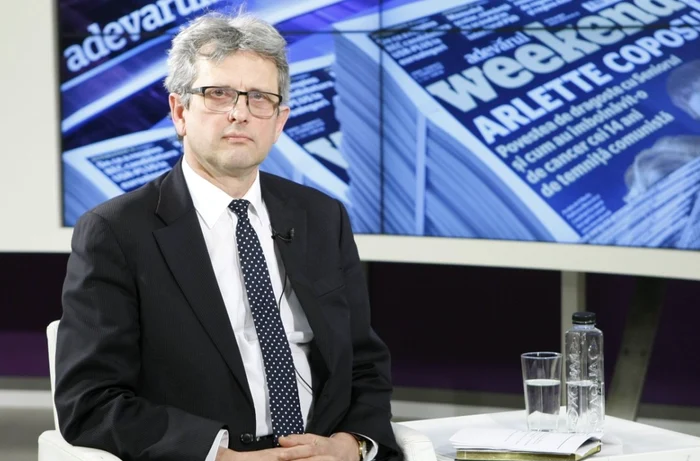
Valentin Lazea PHOTO: Archive, The Truth
“There are several preconditions to be able to resume convergence at a higher level. One- wages should not grow faster than productivity, year by year, in the long term. Two- pensions should not grow faster than wages. Three- the fuller integration of the economy into European production chains, even if the trends and temptations are for each economy to do as it can. And, last but not least, ensuring self-sufficiency and even a surplus in terms of energy and of food products, because a state must have this minimum of existence, energy and food, to satisfy its internal needs and even export”explained Friday, November 7, Valentin Lazea, at the Smart Development, European competitiveness summit, according to Agerpres.
According to the economist, the convergence process was slowed down by the neglect of macroeconomic balances.
“If we talk about the causes of the slowdown of the convergence process, they can be found in the fact that, until now, convergence has been done by completely ignoring macroeconomic balances. The budget deficit, the current account deficit, inflation were indicators that hardly interested anyone among the decision-makers. As such, Romania came last in the European Union in these three indicators. You cannot hope to continue to converge when you have these millstones hanging on of feet”, the BNR economist sent.
According to the cited publication, among other obstacles identified by Lazea are the dominance of the political over the fiscal and the belief that the Central Bank can correct any imbalances created by fiscal policies.
“It is the dominance of the politician over the fiscal. Too few times in governments the voice of the Minister of Finance is heard. In any developed country, the Minister of Finance is the one who has the right of veto in the Government. He has the bread and the knife. With us, the Minister of Finance, as a rule, in the Government, is the man who takes the requests and tries to accommodate them as much as possible. He is not second in power to the Prime Minister, as usual it should be. So we have a serious institutional problem. Then, not only is the finance minister not listened to, but we have fiscal dominance over monetary policy.
In other words, ignoring the inflationary consequences of various fiscal policies, including election gifts, etc. There is also the absurd belief that the Central Bank could correct any imbalances created by fiscal policies. And the habit of over-contracting sometimes by 200% or 300%, something that, is valid not only for European funds, is also valid within the Romanian budget… The prevailing philosophy is:
The summit, organized by the Concordia Employers' Confederation, brought together business, academic and political leaders to debate how Romania can move from an economy based on competitive costs to one based on innovation and added value.
Guests of honor were the president of Romania, Nicușor Dan, and the president of BusinessEurope, Fredrik Persson.