Romanians, among the most distrustful of Europeans in the advantages of the EU. Controversial opinions on forums


A new Eurobarometer shows that 73% of Europeans believe that their country has gained from membership of the European Union. In Romania, the percentage drops to 67%, one of the lowest in the EU bloc, along with Greece and Bulgaria.
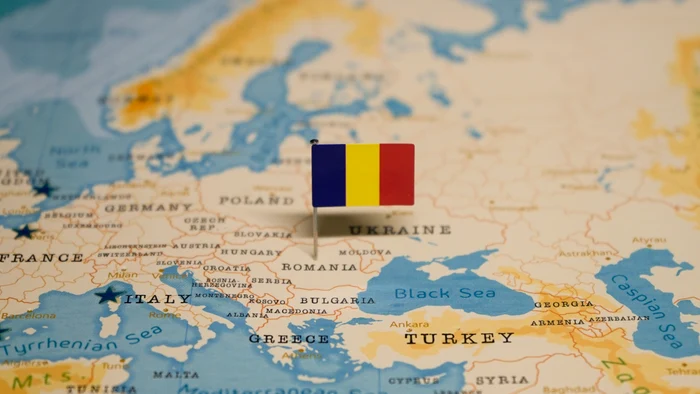
Photo credit: Shutterstock
On forums, discussions about how much the European Union has changed the lives of Romanians have become a barometer in itself of public trust.
“The European project is the most successful political project in the world”
“The European project is the most successful political project in the whole world: it managed to integrate into a confederal system countries with different cultures, with different spoken languages, and to bring prosperity for decades”writes a user on Reddit. “Even though we are in a difficult time for the Union, we must realize that this project has done very, very good. Without the EU it was bad. Yes, the EU is not perfect, but it is the best we have now. There is no better alternative.”
Another voice notes the fact that Romania has not fully capitalized on the financial advantages: “The EU gives it to you, but it doesn't put it in your pocket. Maybe if we accessed those tens of billions, we would be 80-90% like Poland, but the average Romanian has no idea that even if we didn't make any investment, we would still be making money.”
The reply refers to an economic reality often cited by analysts: the reduced absorption of European funds and the gap with the Central European states that have managed to transform EU investments into infrastructure and competitiveness.
“If we weren't in the EU, we wouldn't have access to the European market”
For small entrepreneurs and independent professionals, membership of the Union has become more than a geopolitical matter, it is a working condition, users write. “Me, for example, if I wasn't in the EU, I didn't have access as an individual to the European business market. I have a PFA and I provide services to clients in the EU. At interviews, they ask me if I have a commercial entity in the EU. It's usually the last question and I kind of know that I got the contract”. recognize a user.
The comment was supported by several reactions confirming the practical impact of the single market on professional mobility. “They probably implicitly think that I am in the EU since I am based in Romania, but I think they are asking to be sure”, continues the author of the conversation.
Others go further and link perceptions of the Union to cultural and religious heritage. “Orthodoxy is the main vector of anti-European attitudes. For this reason we cannot apply the Polish model. Historically, the Poles were Westerners. We are not.”
Another user's reply continues the point from a historical perspective: “Capitalism left the Protestants, we are pulling from the Russian chain, where there was feudalism until the communists.”
For part of the community, cultural and educational differences remain the explanation for the heightened skepticism towards the EU in Eastern Europe.
“In what luxury we luxuriated in the 90s… Then the Union came and ruined everything”, one panelist comments wryly. Prompt reply: “We were all poor. Now some are not.”
The exchange of remarks captures the internal disparities created after accession: visible economic growth in urban areas and in regions connected to European investment, but slower in rural areas and dependent on agriculture.
“In 20-30 years, Bulgaria will surpass us in any category”
Other reactions express disappointment at the slow pace of change. “Because we are fixed cabbage. In 20-30 years, even Bulgaria will surpass us in absolutely every category. The vast majority of Romanians are far too tame for Europe.”
Another commenter adds pointedly: “In 30 years, Romania will be a champion of Nepali workers and natives in palaces with turrets. The Bulgarians are certainly not capable of that.”
This is how these reactions summarize the social cynicism of a part of the population, which perceives the Union as a missed context rather than as a source of progress.
There are also voices that criticize the evolution of the European Union from an ideological perspective. “Apart from some quality standards for food and drink, standards that any man should have applied on his own initiative, the EU has brought me nothing, in fact it has taken away from me. The only ones who benefit are either the super poor who went to work from the bottom in Germany, Italy, Spain, or the super rich who benefited from free trade. The middle class has not benefited at all.” write a user.
Another answers him that “The EU is not possible, I don't think any country would want to lose its cultural identity. Chat Control failed in Parliament and is only wanted by some idiot MPs.”
The dialogue, while heated, shows a real polarization: between those who fear a centralized Europe and those who see it as a necessary protection in an unstable world.
The European Union remains, for the majority of Romanians, the only possible framework of stability. But behind the 67% who still see the benefits, there is a fatigue: that of a generation that, although it entered Europe, continues to feel peripheral.