2025-11-01 18:00
publication
2025-11-01 18:00
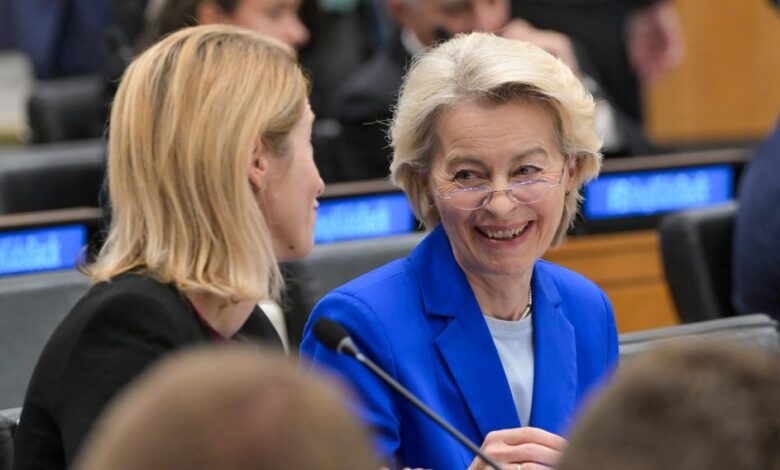
EU foreign policy chief Kaja Kallas wanted to strengthen the EU's diplomatic service, but European Commission President Ursula von der Leyen thwarted her plans, reports the German newspaper “Die Welt”. The dispute concerned the role of former EC Secretary General Martin Selmayr.
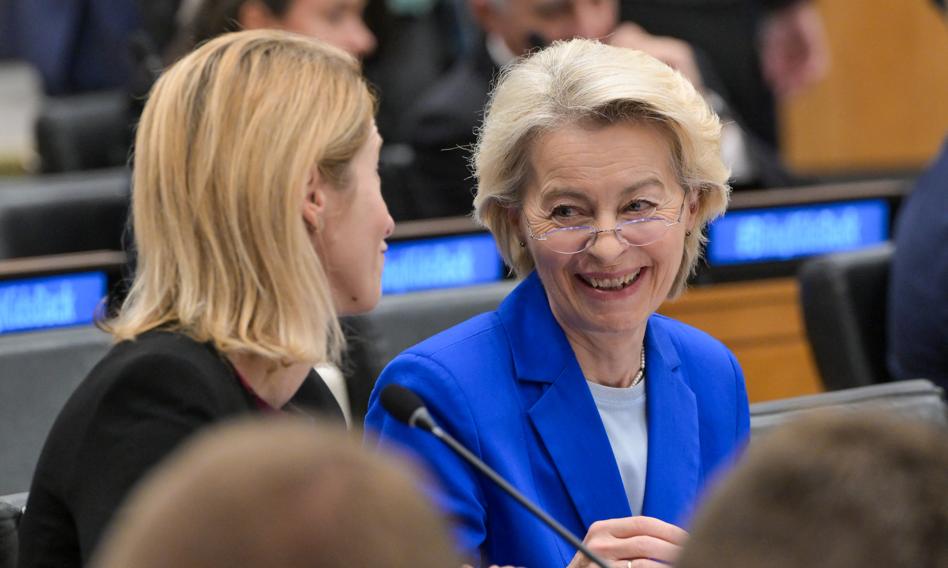
“The President of the European Commission, Ursula von der Leyen, has resolved in her favor the power struggle with the head of EU diplomacy, Kaja Kallas,” writes Christoph B. Schlitz on Wednesday on the “Die Welt” website.
The author noted that the dispute, which was resolved only a few days ago, was “something more than just a psychodrama in the Brussels political bubble.”
After taking over as EU foreign policy chief, Kallas came to the conclusion that the EU foreign service (European External Action Service, EEAS – PAP) was not efficient enough to meet the challenges resulting from the new situation in the world, and above all caused by the policy of US President Donald Trump.
Kallas came to the conclusion that the person who would be able to reform the “ossified structures of the sluggish diplomatic service”, consisting of 75,000 employees, is EU official Martin Selmayr.
According to “Die Welt”, Kallas underestimated the outrage that her proposal would cause in the capitals of EU countries and among the head of the European Commission, von der Leyen.
The newspaper recalled that Selmayr was the main advisor to the then head of the European Commission, Jean-Claude Juncker, in 2014–2019. He was considered “the most powerful official in the history of the EU Commission”. Due to his enormous influence in Brussels, he was nicknamed “Rasputin”.
Born in Bonn, a professor of law, he is considered a man who implements his projects with great strength, but also as someone who “puts his ego above everything else.” At the end of his term, Juncker appointed him Secretary General, and therefore the EC's highest official. The European Parliament described the nomination as a “coup-like action”.
“Die Welt” recalled that in 2019, von der Leyen dismissed Selmayr “within a few minutes”, and during his farewell he allegedly threatened: “I'll be back”. Von der Leyen sent him to Vienna, where he took over as head of the “small and insignificant” EU delegation. The 54-year-old official made numerous attempts to return to Brussels, but von der Leyen successfully blocked his plans. A year ago he became ambassador to the Vatican.
A few months ago, a new opportunity opened up for Selmayr – in the EU diplomatic service – he was to become deputy secretary general in the new Department of Geoeconomics and Interinstitutional Affairs. Taking up this position, he would become Kallas's “strong man” in EEAS, responsible for direct contacts with all ambassadors, the European Parliament and EU countries.
Does Kallas not know what a great provocation Selmayr's nomination would be for von der Leyen? Or maybe she consciously sought confrontation, believing that the most important thing was the result? – Die Welt wonders.
Last week, von der Leyen proposed to the College of Commissioners the creation of a new position – plenipotentiary for religious freedom, offering this position to Selmayr. It was – according to “Die Welt” – a “poisoned offer”. Von der Leyen deprived Kallas of the opportunity to use the official according to her plan. Selmayr now has a choice – accept a third-rate position, remain in a meaningless position in the Vatican, or leave the EC after 22 years.
“Using a technocratic trick, von der Leyen countered the plans of Kallas and Selmayr,” concluded “Die Welt”. (PAP)
lep/ mal/