After a long period of weakness, the Middle Kingdom has regained its former strength – and is now sending further shockwaves. China's undisguised ambition to become world power of the 21st centurypose a challenge to the United States. How much – the escalation of the trade conflict in recent months has shown.
It has long been clear to US President Donald Trump that the People's Republic of China exists the only significant opponent in the global fight for first place. And despite the agreements reached this week at the US-China summit in South Korea, this conflict – which is also increasingly affecting Europe – has neither been resolved nor ended.
However, Trump and Chinese leader Xi Jinping prevented the trade dispute from escalating into… world economic war. Both sides have already used their most dangerous weapons. The US president threatened his rival with tariffs of over 150 percent, which in practice would mean a blockade of imports of Chinese goods. In addition, Trump has tightened regulations on the transfer of technology from Western countries to China. Beijing, in turn, not only responded with counter tariffs, but also threatened to completely suspend the export of rare earth metals. These metals are essential for the production of batteries, cars, military equipment and many other goods. For decades, China has systematically built its monopoly position in the production of rare earth metals.
If Beijing halts exports of these sought-after metals, production lines in many factories in the United States, but also in the European Union and other countries, they will stand still. Both sides wanted to take decisive action. Instead, Trump and Xi withdrew their threats on tariffs and rare earths. It's not a trading room, but at least it's kind of trucewhich provides some détente – not only for the powers directly involved, but also for the entire world.
The article continues below the video
World relations in chaos
Now the hope is that this balance of fear will keep both sides at bay unilateral escalation of the situation.
The prevailing view in Germany is that Trump has turned the rules-based global trading system upside down with his destructive tariff policies. After all, the Republican introduced high trade barriers this year also for EU countries and other countries. Although criticism of Trump's aggressive unilateralism remains justified, the thesis that the US president wants to destroy the previously intact global trading system out of national selfishness is wrong. International economic relations were in chaos long before Trump's targeted fury. And not only that, but to a large extent it's China's fault.
During its transformation from a poor country into the world's second-largest economy, communist authorities used the international division of labor to their advantage. First, they flooded the world market with mass-produced goods which, thanks to unrivaledly low wages, could be offered at dumped prices. Thanks to its huge market, China has attracted many foreign companies, but they always have to cooperate with local partners.
Foreign technologies and know-how have thus accelerated the stunning catch-up process. Today, the country is also so strong in the field of machinery, cars and many future sectors that it has significantly overtaken Germany, once the world leader in exports, on the world market.
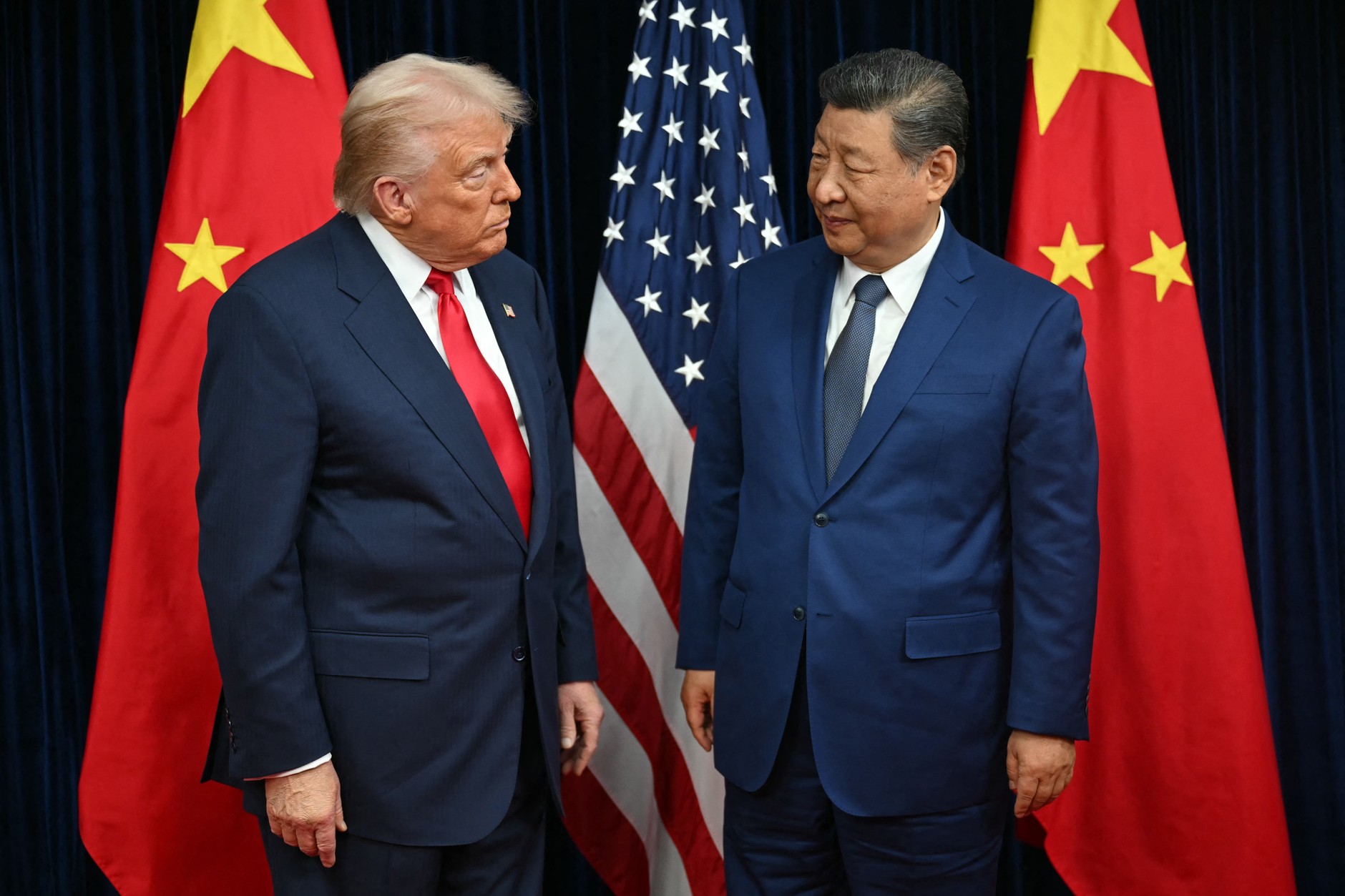
Donald Trump and Xi Jinping, Busan, South Korea, October 30, 2025.Andrew Caballero-Reynolds / AFP
Trading fair play
This “China shock” is bothering both Americans and Europeans, and voices are becoming louder on both sides of the Atlantic demanding protection of domestic industries. Already during his first term, Trump accused Beijing of not playing according to the principles of fair play. Europeans also realized that the US president was right.
Globalization, which brought ever-increasing prosperity to the West after World War II, works only if all participants play by the same rules. The People's Republic of China does not do this. In this state-controlled economy political leadership decides prices, wages, investments and market access. Fair competition is also impossible because China can undercut all competitors with subsidies.
Moreover, the West is currently experiencing another shock related to China. The People's Republic of China is brutally using its monopoly position not only in rare earth metals but also in certain chips as a means of pressure to force other countries to comply. Even the United States is vulnerable in this regard, as are Germany and the EU.
Therefore, it is high time for the West to jointly develop a strategy towards China and free itself from unilateral dependence on the Asian hegemon. Trump is pushing for it. Japan, South Korea and other Asian countries also fear Beijing's dominance. Europe should join this club of Chinese realists in its own interest. Only together we are stronger than any dangerous foul player.
I’m Ashley Davis as an editor, I’m committed to upholding the highest standards of integrity and accuracy in every piece we publish. My work is driven by curiosity, a passion for truth, and a belief that journalism plays a crucial role in shaping public discourse. I strive to tell stories that not only inform but also inspire action and conversation.